AP Sensing has launched its third generation LHD product
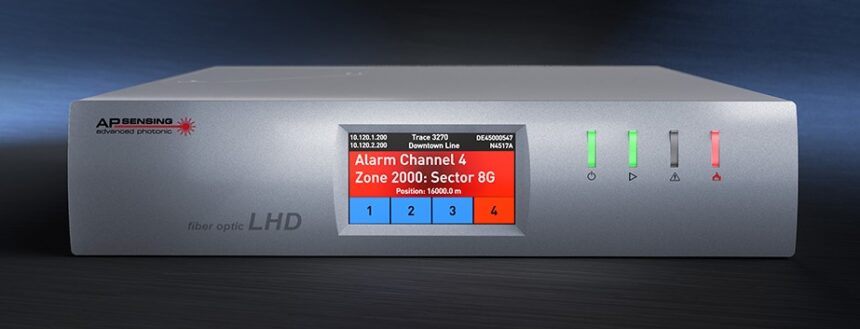
AP Sensing has launched its third-generation fibre optic linear heat detection (LHD) system, the N45 series. "We are excited to introduce the LHD N45 series to the market. With its performance, reliability, safety, and ease of use, the system raises the bar for fiber optic linear heat detection, giving our customers the peace of mind needed to operate safely and efficiently," said Clemens Pohl, CEO of AP Sensing.
Its maker states that the LHD N45 series boasts the longest certified distance range on the market, with up to 16km and four channels for all distance ranges. It is intuitive to use with a fully integrated web server offering simple configuration via browser, one-click validation of compliance configuration settings, 2,000 configurable alarm zones per channel and up to 98 integrated relay contacts. Additionally, the system offers a cost-effective solution that is easy to install, low maintenance, immune to electromagnetic interference (EMI), and provides precise location and monitoring of fire events.
Safety and system reliability are a key feature of the new LHD system, with an MTBF of 35 years, extensively tested rugged housing design, advanced IT security standards, and benchmark levels of quality. The system offers a complete set of type tests and certifications, including EN54-22 (VdS), UL 521 (UL), CAN/ULC-S530, SIL-2, and ATEX and IECEx for critical areas.
What Is fibre optic LHD?
Fibre optic LHD technology uses a fibre optic sensor cable to measure the temperature at every point along the entire cable, detecting changes in temperature and hotspots along an entire asset. For example, for 10km of cable, the system measures 10,000 temperature points every 5 seconds. This technology detects hotspots and fires, alarming quickly and providing precise information on fire location, size and spread. It is used in a wide range of applications including traffic and utility tunnels, car parks, conveyors, cable trays, solar farms and battery storage.