
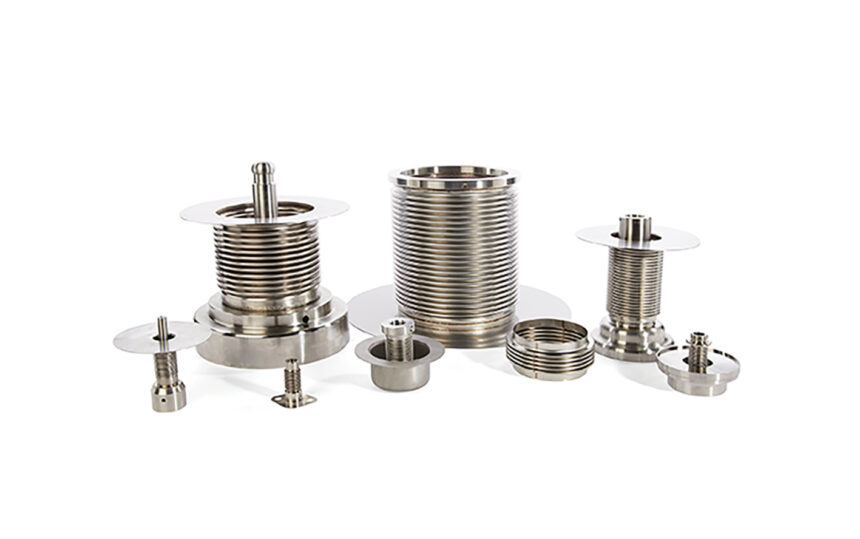
How one metallic bellows assembly manufacturer revamped its design principles to meet customer demand
How one metallic bellows assembly manufacturer revamped its design principles to meet customer demand.
The pressure relief valve market requires specific bellows operating parameters for each individual valve installation. As such they require the manufacturers of metallic bellows assemblies to be acutely aware and responsive to their requirements.
In recent years the required operating parameters for pressure relief valve bellows has increased, and this looked like it might be an issue for leading bellows manufacturer Senior Bird Bellows given its existing design principles.
Existing design principles
Senior Bird Bellows has been designing and manufacturing metallic bellows assemblies for nearly 50 years. The assemblies were originally supplied as expansion joints for oil and gas pipelines and then further developed for use in pressure relief valves.
In trying to understand how the company could meet these higher requirements, it discussed the costly and time-consuming introduction of an alternative method of producing the bellows, but this would not have suited small production runs across many different bellows designs.
It was then that the engineering team decided to challenge the long-standing design principles to see if the new requirements could still be met with its current manufacturing process.
Existing design principals were based around the guidelines set by the industry standard EJMA (Expansion Joint Manufacturers Association) as well as the experience of selling to this market..
In revisiting these principles when applied to pressure relief valves, it became clear that pressure is exerted on the bellows in a way which is different to how pressure is applied to an expansion joint. Since no specific data existed for this pressure application, a development programme to produce a specific set of guidelines was initiated.
New guidelines
Senior Bird Bellows utilised their specialist in-house test facility to run an extensive test programme to produce specific parameters for a wide range of bellows designs.
An initial test campaign of pressure and fatigue tests was run, and the results were compared with data generated from existing design guidelines. The data clearly showed that existing bellows designs tested in this way could achieve much higher operating parameters than existing data predicted.
From this initial test data, a more comprehensive test programme was developed, increasing the number of bellows designs across different bellows materials. The follow-on test data once again confirmed higher operating parameters were achievable with the current manufacturing process.
Senior Bird Bellows has now fed this information back into the design guidelines thereby enabling the company to meet the higher demands being specified by the valve market.
The future
The Senior Bird Bellows engineering team are now using the same approach to challenge existing design principles for bellows usage in cryogenic applications, given the increased interest in using hydrogen as a fuel source. Building on their in-house test capability, modifications have been made enabling bellows testing to be carried out at cryogenic temperatures and an ongoing test programme is now under way to generate specific design guidelines for these extremely low temperature applications.
The process of challenging existing guidelines has enabled Senior Bird Bellows to meet changing market needs, while still being able to offer the advantages of quick turnaround times facilitated by their production process.