
New technology set to revolutionise ammonia production
Robert Gordon University (RGU) and McAlpha have developed a new advanced Catalytic Membrane Reactor (CMR) technology, which they hope will revolutionise ammonia production. It will provide cleaner, more efficient, and environmentally sustainable solutions, helping in the effort against decarbonisation.
Ammonia is currently responsible for nearly 2% of global carbon dioxide emissions, being about 450 million tonnes per year. This is greater than the aviation industry, meaning traditional methods need to be left behind.
Benefits of the new CMR technology also decentralise ammonia production, providing a low-emission alternative which is powered by renewable energy sources.
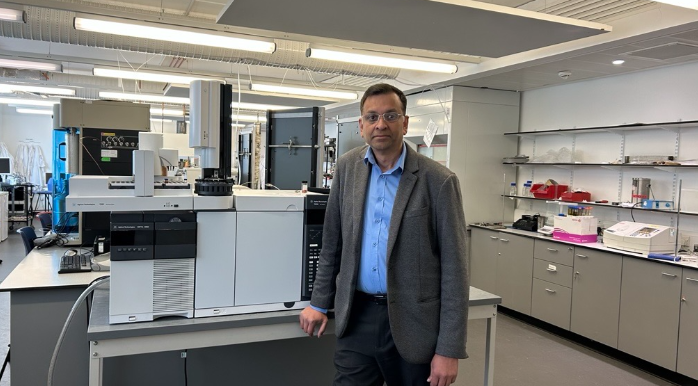
Professor Radhakrishna Prabhu of RGU’s School of Computing, Engineering and Technology said: “We’re changing the way fertiliser is made, making it cleaner, cheaper, and better for the planet. This innovation empowers communities to support food security while combating climate change.”
Net Zero Technology Centre supported the project, which combined electrocatalysis with advanced membrane technology which creates a modular and scalable green ammonia synthesis using hydrogen from water and nitrogen from the air.
Ayo Giwa, president of McAlpha, said: “The dedication of RGU’s research team has been instrumental in moving this technology closer to commercialisation. Our collaboration has inspired the creation of McAlpha UK, as we see the UK as a leader in clean energy and net zero development.”
Agriculture, energy storage, and global decarbonisation strategies can all use this new technology to their advantage. Rural communities can also locally and sustainably produce fertiliser.
Paul Robb, project manager at NZTC, said: “The Net Zero Technology Centre is proud to be part of this groundbreaking collaboration between Robert Gordon University and McAlpha UK. The development of the CMR represents a significant step forward in our mission to achieve net zero emissions. This innovative technology not only addresses the urgent need for cleaner ammonia production but also exemplifies the power of partnership between industry and academia to drive sustainable solutions.”
The project received funding from the Net Zero Technology Centre’s Net Zero R&D Programme, which is financed by the Scottish Government, the Scottish Funding Council, and Scottish Enterprise.