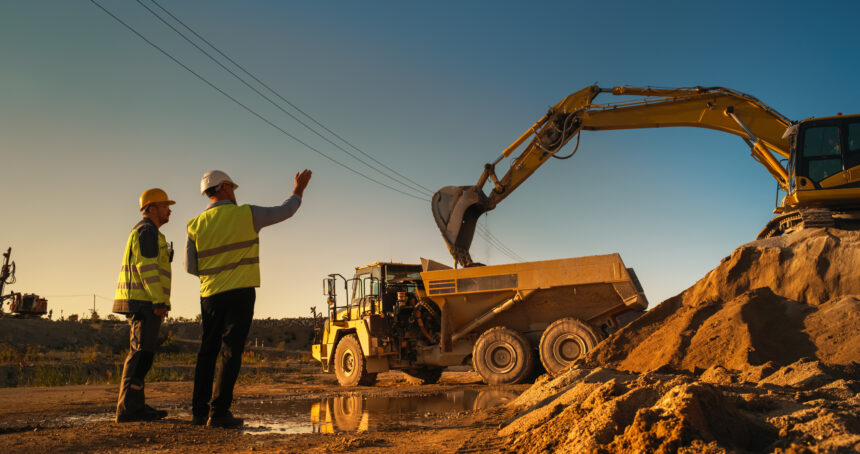
After years of underinvestment, the EMEA region faces a surge in mining projects driven by the EU’s Critical Raw Materials Act, by national-level supply-security policies and by growing demand for minerals needed for data centres and the energy transition.
Even with record investment, most of these projects are likely to suffer from overruns and delays. McKinsey’s analysis of mining megaprojects found that only 8-10% avoid both cost overruns and schedule delays; on average, costs exceed estimates by 79% schedules run about 52% longer.
Mining projects across EMEA are especially vulnerable to delays and cost overruns because of geological uncertainty, complex permitting processes, infrastructure constraints and geopolitical risks. In Africa and parts of the Middle East, projects often face limited access to reliable power, water and transport, and permitting challenges, community engagement and evolving environmental requirements can further delay execution. In Europe, stringent environmental regulations and lengthy approval processes can extend project timelines. These factors are compounded by volatile commodity prices, capital-cost inflation and skilled-labour shortages.
Fragmented data as a driver of overruns and rework
Under these pressures, owner operators must find new ways of working that break traditional information silos. Engineering docs, P&IDs, 3D models and equipment specs often live in different systems owned by different departments, partners, EPC firms or subcontractors, with little automatic linkage between them.
One of the most visible consequences is that contractors must rebuild information or resolve data inconsistencies across disciplines. An instrumentation engineer may manually reconcile instrument lists with P&IDs produced by the process team, and a construction manager may have to re-enter material quantities from CAD models into spreadsheets. Each hand‐off and each instance of manual rekeying is a source of error.
The problem becomes more acute when projects are subject to frequent change requests. When design tools and supply-chain software are poorly integrated, bills of materials updated by engineering do not reach procurement in time. The result is material shortages or excess inventory, procurement delays, schedule slippage and higher storage costs.
What a single source of truth means in practice
The industry now recognises that fragmented data hinders effective communication and process automation. This is one reason why digital twin solutions such as Octave InConcert are gaining traction in the sector. InConcert serves as a “single source of truth,” spanning project design & execution and operations & maintenance.
Two points about digital twin technologies are worth emphasising.
First, a single source of truth doesn’t mean replacing existing software with a single platform. Mining projects still rely on specialised applications for different tasks, from design and engineering tools to project controls, materials management solutions such as Octave Loop, construction systems and ERP. A platform like InConcert acts as the information management layer connecting those systems and organising their information within a common asset context. Engineers can continue working in their design tools, while project and operational teams gain a consistent view across disciplines and departments.
Second, the role of that information management layer does more than centralising data, as traditional data lakes do. InConcert offers automated data validation and contextualisation, as well as flexible workflows to reflect existing work processes. The value of documentation and engineering data depends on being fully characterised by related equipment, location, system, work package, and project phase. Large capital projects can run for years and generate tens of thousands of documents, many of which undergo multiple revisions. The digital twin’s value therefore resides in its ability to provide trusted data. Governance must live in the information management layer itself, via integrated workflows for business processes such as document submittals, QA reviews, transmittals and technical queries. This ensures that only approved, official revisions reach end users.
When strong governance is in place, handover from projects to operations is smooth and transparent, supporting decades of safer, more efficient and reliable operations.
A copper mine as a case in point
Vale’s Salobo copper-mine expansion provides a concrete example. Salobo III aimed to add 12Mtpa of mill capacity, by building a new processing plant and power lines.
Vale identified recurring issues with fragmented engineering data, material bottlenecks and late clash detection, and addressed them by adopting an integrated suite of engineering, 3D design and construction tools, including InConcert, Forte 3D and OnSite.
These tools centralised the data flow. InConcert served as the single source of engineering data: all disciplines helped build a high-fidelity digital twin of the plant by uploading and contextualising datasheets, equipment lists, drawings and 3D models.
The 3D models brought together information from multiple sources in a BIM environment, allowing teams to visualise progress, review design details and detect clashes before construction. Vale reported that early clash detection “significantly reduced rework, as potential problems were identified and resolved during engineering.”
In parallel, Octave Loop and OnSite brought supply-chain discipline and gave managers an accurate, real-time view of materials on site. Missing pipes or delayed bolt deliveries were flagged early, easing pressure on procurement teams and ensuring that the necessary parts were available when needed.
On the execution side, the integrated platform supported real-time reporting and early warnings. Project controllers could compare planned-versus-actual engineering output; for example, an approved equipment datasheet or an issued construction drawing could be logged as an earned milestone. This offered an evidence-based progress measure that surfaced potential cost overruns and schedule drift before they affected the project.
The benefits were evident where connected data has the most leverage: fewer surprises in engineering, tighter materials control, and earlier visibility of schedule delays. Salobo III, a brownfield expansion alongside Vale’s existing complex, has come online with expanded capacity, and Vale credited the integrated digital environment with helping to optimise execution and ensure greater operational efficiency, with reduced risks and greater control.
Connected data does not replace disciplined front-end planning and estimating, but it significantly reduces the risk of rework and enables real-time coordination across teams and organisations.
Many EMEA projects face the same challenge. They may differ in geology, geography, timelines and cost structures, yet all require tight control over vast amounts of information. A single change request or design update can affect hundreds of documents, and if that information isn’t continuously synced, it generates additional costs, delays and potentially safety and environmental risks.
Nobody controls the geology, the commodity cycle, or the regulator. But data governance is a variable Owners can control. In a sector where nine in ten megaprojects miss their budget and schedule commitments, the winners will be those that treat information as critical infrastructure, engineered as carefully as the physical plant itself.