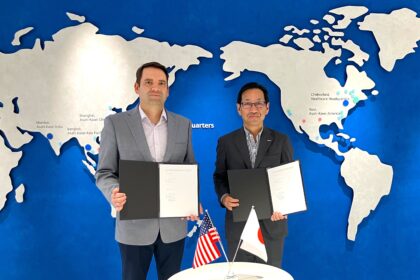
Asahi Kasei, a diversified global company, and US-based Power to Hydrogen (P2H2) have signed a memorandum of understanding (MoU) to evaluate manufacturing scale-up and commercialisation of water electrolysis systems utilising anion exchange membrane (AEM) technology to produce clean hydrogen
As the hydrogen industry works to reduce production costs, secure material supply, and enhance compatibility with the variable output of renewable energy sources, AEM water electrolysis has emerged as a promising solution. It combines lower-cost materials and non-critical metals with the operational flexibility needed to support efficient hydrogen production using renewable energy.
Asahi Kasei and P2H2 are jointly developing AEM water electrolysis technology. Under the MoU, the companies will explore how to combine P2H2’s AEM electrolysis expertise with Asahi Kasei’s broad capabilities developed across its existing electrolysis businesses over the next few years. The two companies aim to leverage the results of the joint development and assess pathways toward future manufacturing and commercial deployment of AEM water electrolysis systems.
Kenji Takeda, lead executive officer of Asahi Kasei and head of the company’s Green Solution Project, said, “We see this MOU as an important opportunity to explore the commercial potential of next-generation water electrolysis technologies. By bringing together P2H2’s expertise in AEM technology and Asahi Kasei’s capabilities in manufacturing and commercialisation, we will evaluate the challenges and opportunities associated with commercialising AEM water electrolysis technology and support ongoing business growth.”
Asahi Kasei positions its hydrogen-related business as a future driver of strategic growth. Building on its technical expertise and strong position in chlor-alkali electrolysis, the company has gained extensive expertise through large-scale hydrogen demonstration projects. While strengthening its established electrolysis technology and business platform, Asahi Kasei is evaluating next-generation water electrolysis technology such as AEM to support long-term market growth beyond 2030.