How cladding can help manage boiler corrosion
In waste-to-energy (WtE) plants, operational efficiency and minimal downtime are crucial for both environmental and financial reasons. A recent case study from Turin, Italy demonstrates how innovative technology can significantly improve plant performance and extend maintenance intervals.
The Challenge
The WtE plant in Turin, commissioned in 2014, faced a common problem: corrosion of boiler pressure parts. After several years of operation, water wall pressure part metal wastage was identified in the second pass of the boiler. The plant needed a solution that would protect the carbon steel tubes without causing extended outages or delays in their turnaround schedule.
Finding a solution: HVTS cladding
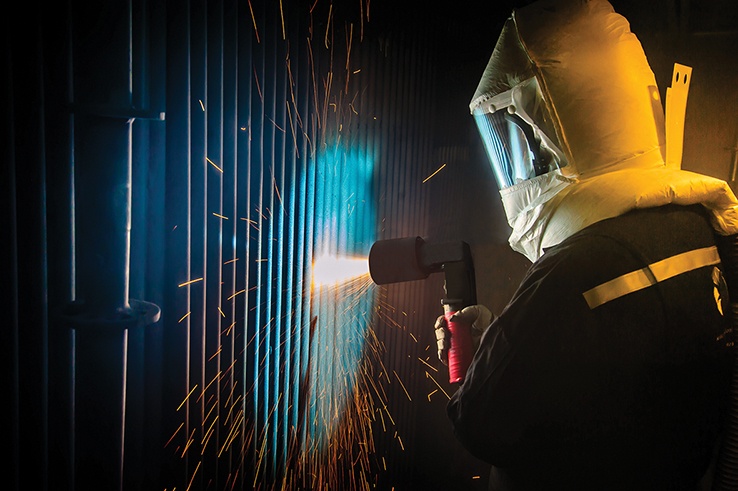
High Velocity Thermal Spray cladding, provided by IGS, emerged as the preferred solution. Unlike traditional weld overlay methods, HVTS is not a welding process and doesn’t require the same rigorous approvals. This meant the plant could proceed with its planned outage without delays.
In 2019, IGS Europe was contracted on an emergency basis to apply their proprietary HVTS alloy cladding to a 159m2 area in the second pass of the boiler. The application covered four water walls, including the division wall, providing a protective barrier against degradation.
Unexpected challenges and quick solutions
During a follow-up inspection in 2020, while the HVTS cladding was found to be in good condition, the plant identified degradation in the unprotected pendant screens in the same area. IGS quickly mobilised to protect these hanging panels, according to the company, This demonstrated the flexibility and rapid response capabilities of the HVTS solution.
Impressive results
The implementation of HVTS cladding, along with other strategic measures, led to significant improvements in the plant’s performance between 2019 and 2023:
1. Extended maintenance cycles
The interval between turnarounds increased from 12 to 18 months, reducing downtime and enhancing operational continuity.
2. Improved plant availability
Overall plant availability rose from 88% to 93%, representing a crucial 5% increase in operational capacity.
3. Cost efficiency
Despite inflationary pressures, maintenance costs decreased, contributing to improved financial performance.
4. Increased waste processing
The 5% boost in availability translated to an additional 18 days of operation annually, enabling the facility to process an extra 10,000 tons of waste through the boiler.
This case study highlights the potential of HVTS cladding as a preventative maintenance solution in the power industry. By protecting critical components from corrosion and degradation, HVTS technology allows plants to optimise boiler performance, extend operational periods between planned maintenance interventions, and enhance overall efficiency.
In conclusion, the Turin case study serves as a compelling example of how targeted technological interventions can yield significant improvements in plant performance. The rapid application of HVTS cladding, compared with the time-consuming process and approval of weld overlay, proved crucial in minimising downtime and maximising operational efficiency.
For more information visit: www.integratedglobal.com