AI is transforming chemical engineering training
Nicola Brittain attended a recent tour of ABB’s Imperial College carbon capture plant and heard how a new AI product, and generative AI more generally, is helping to transform training for chemical engineering students
Like many large companies, technology megalith ABB works closely with universities to help them provide undergraduate chemical engineers with the skills they need to be able to work in industry.
12 years ago the company built a carbon capture plant within the chemistry division at top research university, Imperial College, and journalists were recently invited to an open day demonstrating how the plant is being used to train students using both generative AI tools, installed at the end of 2023 and a recently launched tool called My Measurement Assistant Plus website (see boxout).
The carbon capture facility was created to ensure that engineering students at the university would be equipped for roles as chemical engineers in the workplace.
How AI is helping change the chemical industries
Professor Omar Matar, head of chemical engineering, Imperial College, who presented on the importance of AI in industry at the open day, cited a 2021 paper from Accenture on AI. It reported that one third of daily tasks will be positively impacted by use of generative AI, he added that to make it work well, you need a combination of good data and qualified experts.
Matar when on to explain what was required of AI for it to be useful: “It is essential that this technology is quick and agile and imbued with the right information to help engineers make the right decisions. In the longer term it will help them determine whether their production or process facility is running optimally.”
Influence of AI
Matar also said that the influence of AI on STEM education and the STEM industries more generally is multifaceted and being felt across all sectors: “AI tools are transforming research by automating data analysis, running complex simulations, and even generating hypotheses. He explained that this work helps to accelerate experimental cycles and potentially uncover insights that might have been missed.
LLMs are driving innovation
Large Language Models which are trained on large amounts of information and constitute a type of AI are driving innovations in data analysis simulation and decision making as well as helping researchers to share codes and methodologies in ways that were not possible before.
Algorithms are being used for things like Google DeepMind’s work with protein folding. Similarly the technology is being used for advanced climate modelling.
Interestingly Matar went on to say that AI is helping to foster interdisciplinarity within the sciences. He said that different branches have tended to operate in silos, and that they are being brought together by AI as long as departments are recording data and insights in a transferable way. Matar explained that AI is also useful for monitoring systems for faults – potentially reducing accidents and improving safety.
My Measurement Assistant Plus
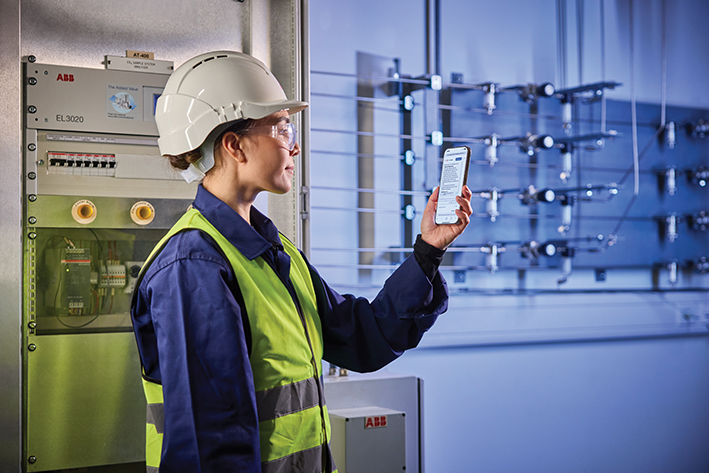
The tour of the carbon capture plant at Imperial College, London was used to launch a new technology called My Measurement Assistant plus. The solution, an AI website accessed via a tablet, is projected to help resolve many technical support issues in minutes, boosting first-time fix rates by up to 50% according to the company
The product was designed for maintenance and troubleshooting of measurement devices at industrial sites. Leveraging generative artificial intelligence (GenAI), cloud computing and Augmented Reality (AR), the web application brings together data from multiple IT and operational technology sources, providing a single access point for information retrieval, device diagnostics, and remote support in industrial operations. The tool is integrated with ABB Ability Genix Copilot, a GenAI solution developed by ABB in collaboration with Microsoft to help industrial companies improve efficiency, productivity and sustainability by contextualising vast amounts of data.
At the event, Dave Lincoln digital lead for measurement and analytics at ABB explained that the company realised that many of its customers were struggling to maintain their measurement devices. He said: “When we looked at the technical support data collected by our factories and global service centres, we found that a staggering 80% of the questions that were being asked could be answered using the device documentation that is available now. The company therefore created a device with commissioning checklists, complete with videos, YouTube video shorts that contain information about how to perform particular tasks.
Lincoln explained that tools like this help young graduates to take on more complicated tasks than they might be trained for because they are aided by the co-pilot. Lincoln explained that this also helps with the skills shortage in industry: “With literally thousands of engineers retiring each year, tools like this become increasingly important because young graduates are having to take on way more responsibility than they could have imagined. He continued: “The copilot website helps young engineers take on this responsibility. It also means customers don’t have to worry about cybersecurity, the product doesn’t need software and engineers need no discussions with the IT department.”
For more information visit: www.global.abb