
Electric powertrain technology continues to evolve at pace
Electric powertrain technology continues to evolve at pace, with recent developments in axial flux motor design demonstrating step changes in power density, torque delivery and packaging efficiency
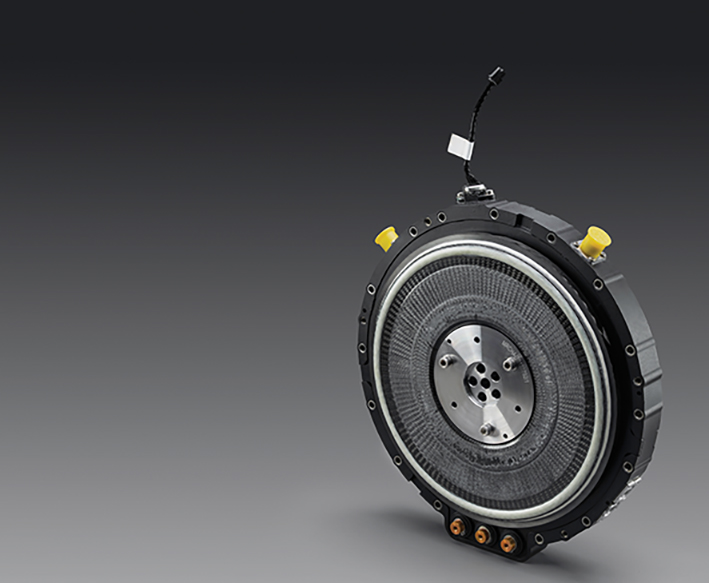
Among the most significant advances is YASA’s latest prototype electric motor, which has set a new unofficial benchmark for power density and highlights how alternative motor topologies are moving from niche applications into mainstream high-performance automotive powertrains.
In October 2025, YASA announced that it had surpassed its own earlier achievements by recording a short-term peak output of 750kW from a motor weighing just 12.7kg. This equates to an unofficial power density of 59kW/kg, a 40% increase over results achieved only months earlier, when a 13.1kg prototype delivered 550kW, corresponding to 42kW/kg. While the headline figures focus on peak output, YASA also estimates continuous power capability for the new motor in the range of 350kW to 400kW, underlining its relevance for sustained vehicle operation rather than brief laboratory demonstrations.
THE AXIAL FLUX PROTOTYPE
Designed and developed at YASA’s Oxford Innovation Centre, the prototype is a fully functioning unit undergoing extensive dynamometer testing. The company emphasises that the results are derived from physical hardware rather than simulation alone, with performance gains achieved through precision engineering, advanced thermal management and optimised packaging, rather than exotic materials. Support for the programme has been provided by the UK’s Advanced Propulsion Centre.
Simon Odling, YASA’s chief of new technology, added: “The early results are extremely encouraging. The motor’s performance on the dyno has exceeded even our most optimistic simulations. As well as its incredible peak power and overall power density, we estimate this new motor will be able to deliver all-important continuous power in the region of 350kW-400kW. This is real hardware, in real life, delivering real data – and it’s performing beautifully.”
AXIAL FLUX ADVANTAGES
Axial flux motors differ fundamentally from the radial flux machines that dominate today’s electric vehicle market. Radial motors, which trace their origins back several decades, generate torque through magnetic flux flowing radially from the rotor to the stator. In contrast, axial flux machines use magnetic flux oriented parallel to the axis of rotation, allowing a larger effective rotor radius within a compact axial length. This geometry offers inherent advantages in torque production and power density, but has historically been constrained by manufacturing complexity and cooling challenges.
YASA’s approach addresses these limitations through a yokeless and segmented armature design that removes the stator yoke and significantly reduces iron mass. According to the company, this can cut stator iron content by up to 80%, contributing to motors that are two to three times more power dense than non-axial alternatives. Shorter copper windings and direct oil cooling further enhance thermal performance, enabling higher continuous output compared with equivalently rated radial machines.
Thermal management remains a critical factor in electric powertrain design, particularly for high-performance and commercial transport applications where repeatable output is essential. YASA contrasts the behaviour of conventional radial motors, which may be limited to around 50% of peak power under continuous operation due to heat build-up, with its axial flux motors, which can sustain a significantly higher proportion of peak output. The company cites a 200kW axial flux motor capable of delivering approximately 150kW continuously, supported by high thermal contact oil cooling.
ENHANCED DESIGN OPPORTUNITIES
Beyond raw performance, packaging efficiency is another area of focus. Axial flux motors typically have a much shorter axial length than radial designs, and YASA states that its motors can occupy around 50% less volumetric space while also being up to 50% lighter. For vehicle designers, this can translate into greater freedom in drivetrain layout, opportunities for lower vehicle mass, and secondary benefits such as smaller braking systems and reduced battery capacity for a given range target.
The latest prototype builds on more than a decade of development following YASA’s foundation in 2009 as a spin-out from Oxford University. The company’s origins lie in research undertaken by founder and chief technology officer Dr Tim Woolmer, who explored axial flux concepts as an alternative to conventional motor architectures. Over time, YASA developed manufacturing processes based on soft magnetic composite materials and segmented pole pieces, overcoming many of the production barriers that had previously limited axial flux adoption.
IN ACTION
YASA’s motors have already seen deployment in a range of high-profile applications, from concept vehicles and motorsport to limited-series production cars. In recent years, adoption has accelerated following the company’s acquisition by Mercedes-Benz Group in 2021, with YASA becoming a wholly owned subsidiary tasked with developing electric motors for the AMG.EA electric-only platform. Partnerships with premium manufacturers have followed, including Ferrari and Lamborghini, where axial flux motors form part of advanced hybrid powertrains.
Commenting on the latest test results, Dr Woolmer said: “On behalf of the entire YASA team, I’m proud and excited to so quickly follow up on the already remarkable results of our initial testing with this incredible result. To achieve a 750kW short-term peak rating and a density of 59kW/kg is a major validation of our next-generation axial flux technology. It’s proof of what focused engineering innovation can achieve. And this isn’t a concept on a screen — it’s running, right now, on the dynos. We’ve built an electric motor that’s significantly more power-dense than anything before it – all with scalable materials and processes. This motor will bring game-changing technology to the high-performance automotive sector.”
REFLECTING A BROADER SHIFT
According to YASA’s CEO Joerg Miska, “This record demonstrates what makes YASA unique. With three times the performance density of today’s leading radial flux motors, YASA continues to redefine the boundaries of what’s possible in electric motor design – turning pure innovation into tangible engineering progress. Our technology is delivering measurable results today, while paving the way for a new generation of lightweight, efficient electric propulsion systems.”
As electrification expands across passenger vehicles, performance cars and increasingly into heavier transport segments, advances in motor technology will play a decisive role in improving efficiency, reducing mass and enabling new vehicle architectures. YASA’s latest axial flux prototype illustrates how rethinking core components of the electric powertrain can unlock substantial gains, suggesting that the next phase of electrification may be driven as much by motor innovation as by advances in batteries and power electronics.