
Data underscores the importance of battery transparency in used plug-in market
Generational, a UK-based innovator in electric vehicle battery condition diagnostics, has published new analysis comparing battery performance across used plug-in hybrid vehicles (PHEVs) and battery-electric vehicles (BEVs) from automotive retailers nationwide
The analysis covered 1,000 PHEVs and 1,000 BEVs of comparable age and mileage and found that both sets of vehicles retained strong average battery State of Health (SoH). However, Generational observed materially greater variation among PHEVs, suggesting PHEV battery performance may be more heavily influenced by differing usage profiles, charging behaviour, and driving patterns.
Across the PHEV cohort, the average SoH was 94.27%, with a standard deviation of 5.48%; in the BEV cohort, the average SoH was 94.94%, with a standard deviation of 4.14%.
Generational also found that 4.70% of PHEVs in the sample had an SoH below 85%, compared with 1.50% of BEVs. While the proportion of lower-performing vehicles remains small across both groups, PHEVs were more than twice as likely to fall under that threshold within this dataset.
The findings point to a difference in how PHEVs and BEVs are used in the real world. BEVs are generally dependent on the battery as their primary energy source, which means owners and operators typically develop more consistent charging and usage routines.
PHEVs can be used in a wider range of ways; some are charged frequently and driven largely on electric power, while others may rely more heavily on the combustion engine, or may experience shallower, more frequent charge and discharge cycles.
This could mean that two PHEVs of similar age and mileage may have very different battery histories, making verified battery testing an essential part of the decision-making process for retailers, remarketers, financiers, and buyers seeking to understand the condition of a used plug-in vehicle.
Oliver Phillpott, CEO of Generational, said, “Average state of health evidently remains strong across both PHEVs and BEVs. What stands out is the wider spread of results among PHEVs, which underscores how both buyer and seller need to double down on checking the usage profile of the vehicle in question.
“Even while the averages are reassuring, for both parties, the data reinforces how battery condition is something that needs to be assessed on a case-by-case basis. Transparent testing allows strong vehicles to be priced confidently and problematic vehicles to be identified early. So, across both segments, retailers and consumers can go into the market confident of finding a robust vehicle to meet their needs.”
The new PHEV-versus-BEV analysis follows the publication of Generational’s 2025 Battery Performance Index. Based on over 8,000 battery health assessments conducted in 2025, the Index found average battery health of 95.15% across tested vehicles, with 8-9-year-old vehicles retaining around 85% median capacity. It also found that high-mileage EVs with 100,000+ miles frequently returned SoHs of 88-95%, challenging the assumption that mileage is a reliable predictor of battery condition.
The Battery Performance Index concluded that battery degradation is not the systemic risk it is often assumed to be, but that variance between individual vehicles becomes more important as vehicles age. It could also be argued that uncertainty, rather than underlying battery longevity, is one of the principal constraints on used EV confidence, residual values and transaction efficiency.
Phillpott added, “The used EV and PHEV market is entering a rapid growth phase. Buyers increasingly understand that the battery is the most valuable component in the vehicle, but they still need clear, trusted information before they can buy with confidence.
“Our latest analysis shows why a single mileage or age figure cannot tell the whole story. Battery condition is becoming the defining factor in used plug-in vehicle value, and the industry now has the data and tools to make that condition visible.”
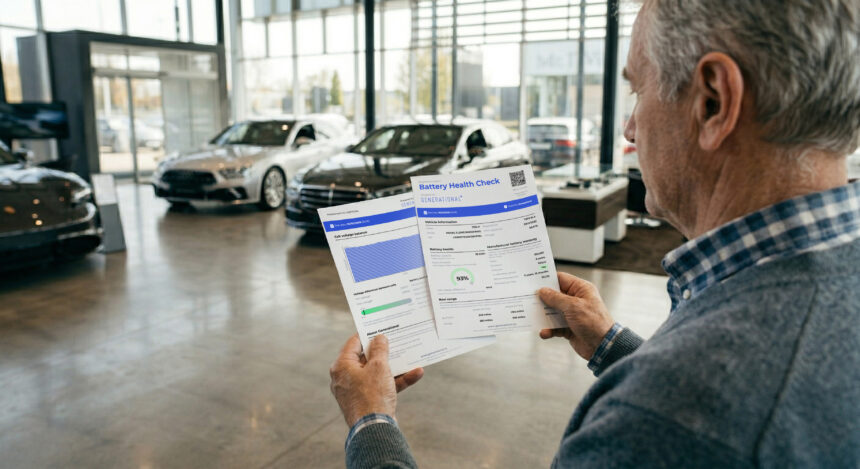
Generational’s battery health checks and State of Health certification are designed to help retailers, leasing companies and remarketers assess used EV batteries quickly and consistently. The company says its tools enable retailers to certify battery health and real-world range, support stronger buyer confidence and reduce risk when acquiring, valuing and selling used plug-in vehicles.