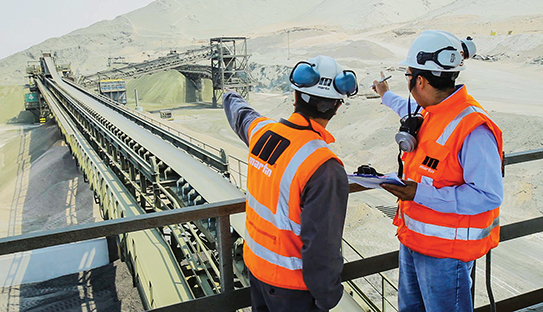
Many unprecedented factors make the future of bulk handling sectors uncertain. Innovative technologies like AI and machine learning software may further automate operations and change the nature of work.
Computer chip production to support these innovations has drastically increased demand for rare earth elements, applying new pressures on mining production and introducing new bulk handling processes. As an aging workforce retires, so too goes decades of knowledge and in-house training opportunities. All of this is happening while safety becomes a greater focus for government regulators.
When uncertainty looms, experience and expertise matter most. That is why we asked R. Todd Swinderman, 2026 recipient of the Conveyor Equipment Manufacturer’s Association (CEMA) Lifetime Achievement Award, for his insights into future trends. CEMA is a business organisation dedicated to setting standards and best practices for conveyor materials handling.
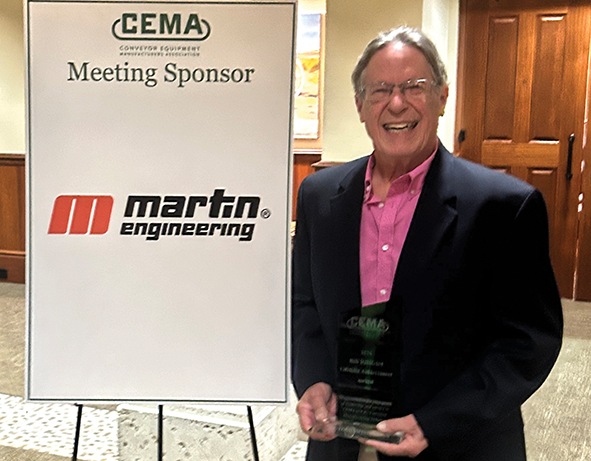
Mr. Swinderman was president of Martin Engineering, one of the largest global manufacturers of conveyor components and bulk flow aids. He was a principal contributor to the Martin Foundations conveyor operations and safety textbooks for the company’s worldwide training programme. He was also President of CEMA, and in that role, edited the organisation’s sixth and seventh editions of Belt Conveyors for Bulk Materials, The Design Guide for Belt Conveyors.
Technology
Q: Throughout your career, you developed dozens of products and hold more than 140 active patents. What are your thoughts on how new monitoring and machine learning technology will change the material handling industry, and what will it look like moving forward?
A: In the future, the conveyor will no longer be considered a dumb machine. Even today, too many consider a functional conveyor to be a tail pulley, a head pulley, a motor and a belt, with maintenance of the other components optional. The number of skilled operators and maintainers is increasing. More owners now understand the cost of running poorly, thanks to information gained from sensing and monitoring. This trend will continue, but there is a tendency to collect too much information, simply because it’s become easy to add every imaginable option to apps and computer programs.
A key to improving performance will be in monitoring the critical information and taking proactive action while not making the system so difficult and complex to maintain that operators simply ignore it, or, as in the “good old days,” jumper the problem out of the circuit.
Innovation in conveying is driven by the need for increased capacity and reduced maintenance. Although fully depreciated for financial accounting purposes over 10 to 15 years, conveyor systems are typically kept in service for decades.
The high capital cost, long life, and the consequences of failure make owners reluctant to try new conveyor designs. Suppliers drive innovation but struggle to secure testing agreements with bulk-handling partners, even though the technological advancement would benefit them over the long run. When conveyor engineers and manufacturers develop an innovation for one industry, it is often quickly adopted by other industries. This has led to the emergence of specialty contractors and consultants to assist with conveyor design and maintenance.
Conveyors are often purchased by the kilogram or on the lowest bid, which isn’t sustainable in today’s 24/7 running environment. The key to investing capital is not reducing capital costs but spending it in the right places. Consider the life-cycle costs of maintenance and cleaning and choose designs that accommodate solutions to future problems. This will pay dividends in safety and productivity.
Safety
Q: You’ve always taken safety into account in CEMA policy and in the products you’ve designed. What are the main conveyor risk exposures you still see in the field? How do they affect safety and production? How do you think they should be addressed?
A: Problem areas are generally known, and you can allow for future upgrades in your design process. High-wear areas can be designed for modular changeouts to reduce the need for costly and dangerous confined-space entry. Areas known to accumulate spillage or carryback can be accessible, paved and designed for easy cleanup. Quite often, simply having adequate access to known problem areas will be all that’s needed to enable safe, cost-effective solutions when future problems arise.
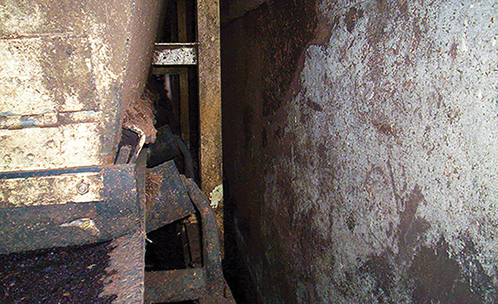
A good example of this is keeping tunnels as small as possible, with one side of the conveyor against the tunnel wall, leaving no access for maintenance or cleaning on the far side. As a result, the conveyor gets neglected and doesn’t operate effectively on the inaccessible side, leading to more safety and environmental incidents and requiring more downtime for safe maintenance.
Not anticipating or addressing known issues up front raises costs. In my experience, if an operator reclassifies part of a capital investment as an operating expense for safety, cleanup, or maintenance to be implemented after startup, the project never gets done, and production suffers.
Rare earth handling
Q: Lanthanide elements in mining and quarrying tailings are now considered valuable commodities. From extraction to the lab, conveyors play a pivotal role, emphasizing the need for efficiency. How do you think this will affect the design of material handling systems in the future?
A: The processing needs of rare earth minerals highlight an issue operators have dealt with for a long time: as high-grade ore deposits are depleted, more raw material must be processed to produce the same mineral concentration. This requires handling more tonnage of lower-quality material, often with a significant percentage of fines. To minimise initial capital costs, the future decline in ore quality and increase in tonnage are ignored. You know it’s going to happen, so why not plan for it?
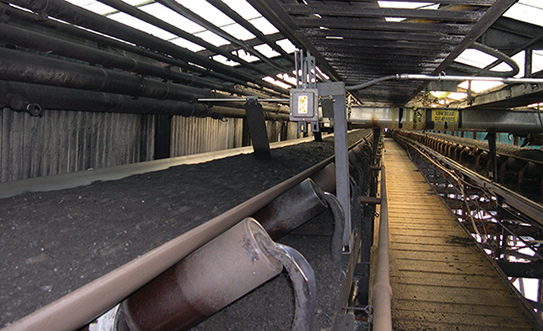
It is difficult to “upgrade” capacity with an existing conveyor simply by increasing its speed. Many times, I have seen this approach reduce throughput and increase plugging and wear. Premature wear issues are proportional to the square or cube of the belt speed. Environmental problems such as noise and dust are also proportional to speed.
Overloading the conveyor is another common practice that usually results in more spillage, wear, and unscheduled downtime.
Engineering can mitigate all these issues upfront. Knowing that the conveyor system’s capacity and speed will progressively shift over time in response to changes in the material. Owners who spend as little as 10% more on upfront engineering to make a conveyor easily upgradable save money later.
Education
Q: Young engineers and tradespeople are entering the bulk handling sector at a time of unprecedented change and technological innovation. You said in your CEMA award acceptance speech, “If you’ve got an engineer who rocks the boat but he’s making you money, give him a bigger boat and see if the naysayers can hang on.” What advice can you offer to help the next generation navigate the industry’s future and thrive in their profession?
A: The retirement of the Baby Boomers after 50 years is nearly complete. They learned from the knowledge and techniques passed from previous generations involved in the design and development of material extraction, transport, and processing technology. In the 21st century, they and subsequent generations expanded on that knowledge and continue to innovate.
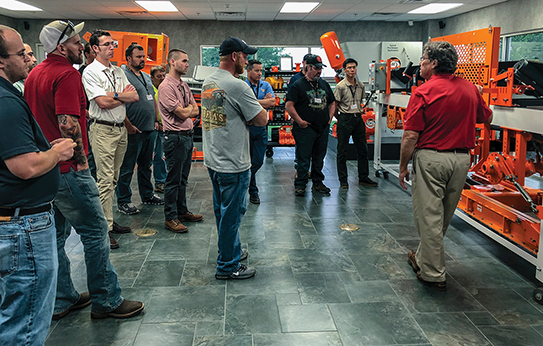
Originally, training was delivered by word of mouth and through trial and error, but now education is streamed on devices. While price-effective, remote learning is not a substitute for hands-on field training and experience. It’ll take some time for operators to realise the limited value of remote training compared to live training.
Even if bulk conveying systems are identical on paper, each has its own personality. An on-site trainer can see conditions live in a way that video doesn’t allow. Unfortunately, many operators still treat symptoms and not root causes. For example, dust is a symptom you can treat, but prevention takes knowledge. Some issues can be monitored and corrected remotely, while others cannot.
It’s difficult to run 24/7 without education, training, and competent, thoughtful design.
For more information visit: www.martin-eng.co.uk