The mining industry is undergoing a surge in the electrification of its machines because of the environmental, operational, and financial benefits they can provide
Electrification in mining differs significantly from automotive or other heavy-duty transport sectors, as mining machines are much larger, run much longer, and must operate in harsh environments in all weather conditions.
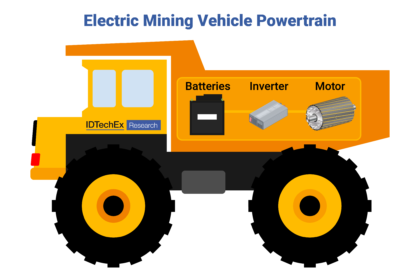
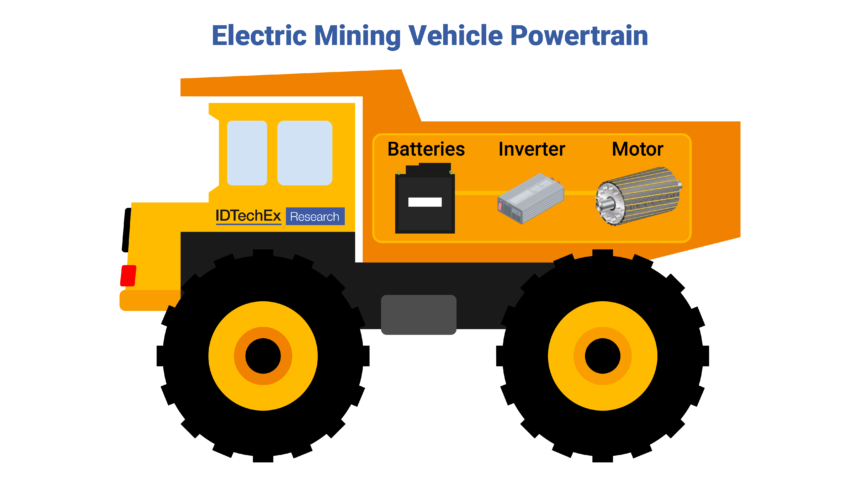
This creates unique demands for key powertrain components, including batteries, motors, and inverters, all of which will need to be specialised for mining applications. IDTechEx’s new report, “Electric Vehicles in Mining 2027-2047: Technologies, Players, Forecasts,” explores the powertrain innovations driving the adoption of electric mining machines and projects the market to grow to over $27 billion in value by 2047.
Bigger battery packs and more diverse battery technologies
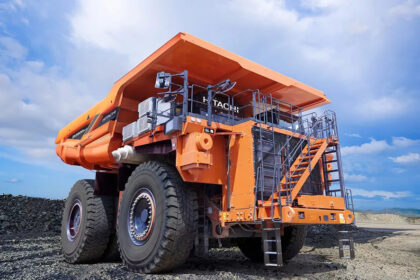
The size of mining machines, along with their intense operational duty cycles, demands large battery packs. Most haul trucks weigh over 150 tonnes, with the largest reaching up to 350 tonnes, and must carry loads heavier than themselves over nearly 24/7 operational cycles, so they require MWh-scale batteries.
Such large battery packs have been commercialised in recent years, as the battery industry has matured and Li-ion cell prices have fallen. However, battery manufacturers and machine OEMs are already investing heavily to meet machines’ needs, and they are continuously increasing the size of battery packs used in new haul truck models. Currently, the largest battery pack used in a mining machine reaches up to 2.4MWh in capacity, up from 1.9MWh as recently as 2024.
Meanwhile, many machines have low downtime requirements, so they need fast charging at high C-rates. Modern mine charging systems can consistently deliver 3MW+ charging, with development moving toward 6MW charging. While this boosts machine productivity, it also accelerates battery degradation and, in turn, limits cycle life. This poses a risk that a machine may require a battery replacement during its lifetime, incurring significant expense that operators would prefer to avoid.
This is where diverse battery technologies such as lithium titanate oxide (LTO) anodes may play a role. An LTO anode, typically paired with an NMC cathode, produces a cell with lower energy density but undergoes very small volume changes during cycling. This leads to excellent cycle life of 20,000 to 60,000 cycles and greater tolerance for fast charging at higher C-rates.
This combination of parameters makes LTO packs a suitable option for the future of electric mining machines, and one which is already beginning to see uptake. Additionally, the lower density and higher cost of these packs are less of a concern for mining machines, since they are already heavy and can recoup high upfront costs through the enhanced productivity LTO can offer.
Efficiency and cost will drive motor & inverter design
IDTechEx’s report discovered that OEMs aim to optimise efficiency and cost when designing motors and inverters for electric mining machines. While these factors are important to an extent for all mobility applications, they are especially critical in the context of large mining machines, where even small enhancements in powertrain efficiency can lead to a significant reduction in battery size, which is often the main cost factor OEMs are concerned with.
Permanent magnet (PM) motors are typically the most efficient commercial motor construction. However, efficiency must also be balanced with cost, and PM motors rely on permanent magnets that contain costly, supply-constrained rare earth minerals. This has led some manufacturers to consider cheaper, more durable but less efficient alternatives such as switched reluctance motors (SRMs).
Similar trade-offs between efficiency and cost are also seen in the inverters used for mining machines. Both Si IGBTs and SiC MOSFETs have entered the mining market, with the former offering lower costs and the latter providing enhanced performance. Ultimately, the choice of motor construction and inverter technology for a given machine depends on its size, operational requirements, and cost considerations, as well as the technologies and supply relationships available to specific OEMs.
Additionally, the mining market is increasingly adopting the powertrain integration trend seen in automotive and on-road sectors, where motors, inverters, axles, and more are integrated into a combined product. This enables OEMs to reduce development costs and produce lower-cost, more efficient drivetrains, accelerating the adoption of electric machines in mines globally.
IDTechEx’s market outlook
IDTechEx’s latest report delves into additional detail on all of the above factors and more, highlighting how the global market for electric mining vehicles is set to grow to over $27 billion by 2047, with the development of batteries, motors, and inverters key to enabling successful implementation.
The report examines key drivers and barriers to adoption, provides benchmarking and case studies of state-of-the-art machine models from key OEMs, financial analysis of machine TCO, and in-depth technology appraisals of batteries, charging systems, motors, and inverters.
Granular 20-year forecasts are provided for global mining EV sales (in 1,000s of units), battery demand (in GHh), and market size (US$ billion), segmented by region and by machine type.