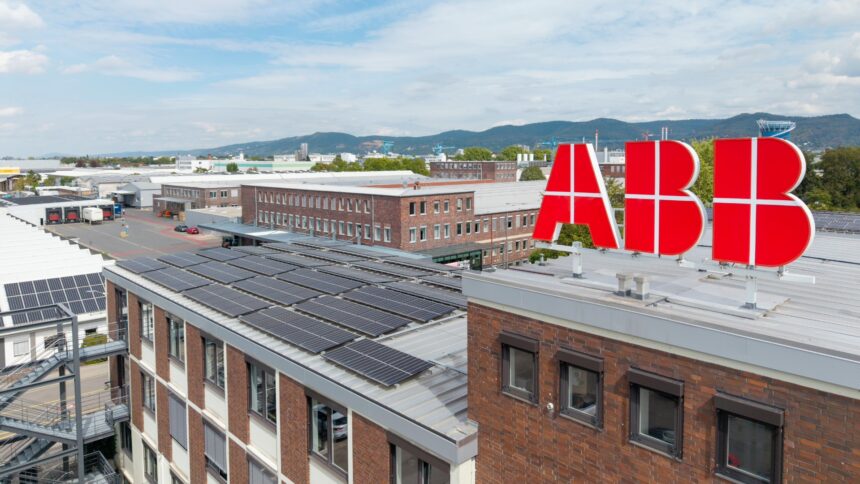
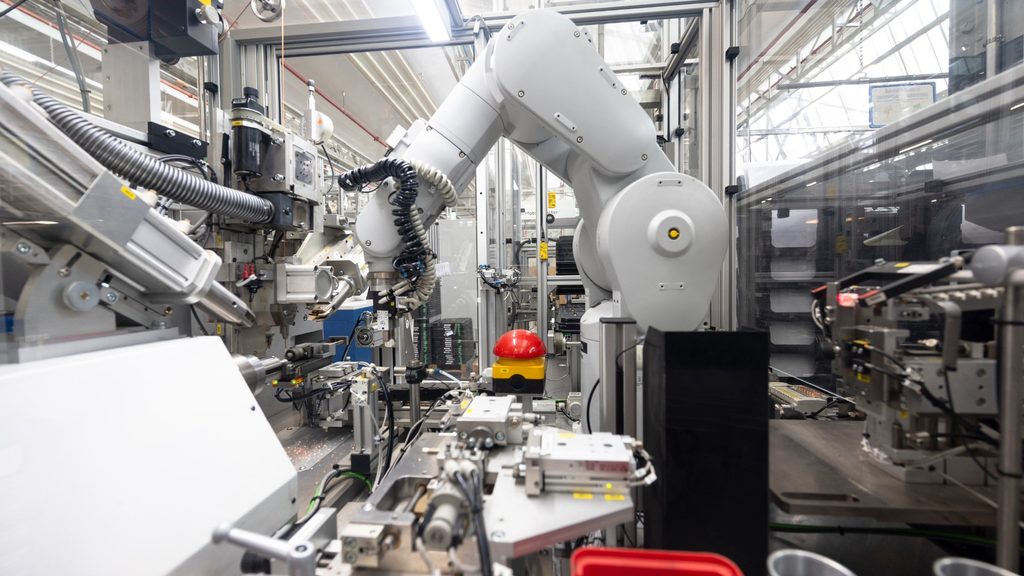
ABB’s site in Heidelberg, Germany, has joined ABB’s Mission to Zero programme, demonstrating how an existing industrial site can be transformed without building from scratch
Through the systematic retrofit of this 1940s site, electricity consumption per unit has dropped by 23.3% since 2019, from 0.41 to 0.31kWh. In absolute terms, annual electricity consumption fell from 19.7GWh in 2019 to 16.5GWh in 2025, a reduction of 3.2GWh, despite output rising by 8% from 48 million to over 52 million products.
For two consecutive years, the site has held the Platinum Zero-Waste-to-Landfill certification, the standard’s highest tier, confirming that 100% of solid waste generated at the site is diverted from landfill.
Heidelberg is one of more than 40 Mission to Zero sites worldwide. For over 80 years, the site has produced components for safe electrical distribution and can trace its history back to the invention of the Miniature Circuit Breaker (MCB), still manufactured there today alongside motor protection solutions.
The site’s transformation built on that continuity: it expanded, modernised, and networked existing structures rather than replacing them. This makes Heidelberg a relevant reference for industrial sites facing the same challenge: how to decarbonise and improve efficiency without the option of starting over.
Heidelberg laid its energy management foundation early, with the site holding an ISO 50001 energy management certification since 2015, predating the Mission to Zero programme and Germany’s Energy Efficiency Act (EnEfG), which has required large enterprises to implement structured energy management since 2023.
Mike Mustapha, division president, ABB Electrification’s Smart Buildings Division, said, “Most of the world’s industrial sites already exist, and they will not be rebuilt from scratch. Heidelberg shows they do not need to be. An 80-year-old site comes with unique conditions, and every one of them pushed us to find a better solution. By using less energy while increasing output, our team has created a blueprint other industrial sites can follow.”
ABB Heidelberg facilities run on 100% renewable electricity, partly generated by on-site solar systems. The transformation began by tracking consumption in real time across more than 100 ABB energy meters; this visibility helped target the largest efficiency opportunities.
A structured shutdown plan for non-operating days saves around 339MHw per year at no additional cost, while LED lighting saves over 1,405MHh annually. A smart system continuously monitors compressed-air leaks, allowing quick repairs. District heating is the site’s largest source of CO₂e emissions. The site has reduced consumption by using air-to-air heat pumps to warm rooms in winter by optimising the system’s operation. Compressor waste heat heats social and washroom spaces, as well as the canteen, with plans to extend the approach to other rooms. Combined, these actions reduce emissions by 234 tonnes of CO₂e annually.
Additionally, Heidelberg serves as a living reference for ABB’s own solutions, deployed across offices and production. ABB protection devices, including Moulded Case Circuit Breakers (MCCBs), Air Circuit Breakers (ACBs), Miniature Circuit Breakers (MCBs) and Residual Current Devices (RCDs) form the backbone of the electrical infrastructure, while ABB i-bus KNX building automation controls lighting, blinds, and temperature.
The InSite energy management system, with its SCU200 control unit, provides granular energy data across the site, while Building Pro Edge connects devices to cloud-based platforms. ABB Ability BuildingPro Suites and ABB Nsight turn this data into actionable insight, and Sensorfact monitors energy use on the production floor. Each one works alongside the systems already in place, meaning the site did not need to be rebuilt to accommodate them.
Currently, the site has an electric truck for internal logistics, and 26 EV charging points with more to come. Next steps are already mapped out, including integrating compressor waste heat into the wider building system.
As part of ABB’s global Mission to Zero programme, Heidelberg follows a data-led decarbonisation roadmap focused on energy efficiency, renewable electricity and smart energy management. The programme aims to reduce operational emissions across ABB’s global footprint, and Heidelberg shows what can be achieved within an existing operating site.