DLS technology allows for greater additive manufacturing in mass production
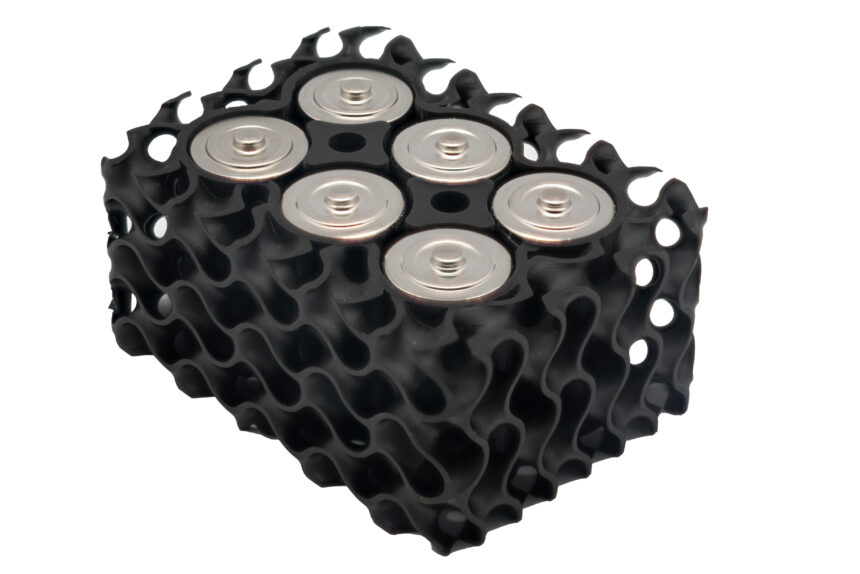
Digital manufacturing service Protolabs digital light synthesis (DLS) technology can aid the advancement of end use plastic components manufacturing in mass production, by using production grade material EPX 82.
A batch of 28 units were produced by Protolabs using Carbon 3D, more than four times faster than stereolithography (SLA) according to Protolabs. Tall parts can see even greater time savings says the company. DLS from Carbon 3D has previously been used for elastomeric materials but now is being applied to rigid parts for production.
Daniel Cohn, managing director of Protolabs Additive Manufacturing, said: “This technology combined with our engineering expertise allows us to provide plastic components for series production using additive manufacturing for the first time. It takes the technology well beyond its traditional application of prototyping, product development and low scale production.”
Cohn added: “It’s well known that additive manufacturing can produce geometries and structures that are simply not possible using other manufacturing technology. In the past speed was a limiting factor for mass production.
Cohn said: “Using DLS from Carbon 3D to manufacture parts from the epoxy resin EPX 82 has changed that narrative. It means that companies can now have finished products in the shortest possible time without having to produce complex injection moulds. The process allows engineers design flexibility to produce components with complex geometries and a high surface quality that are extremely durable.”
Dr Philipp Amend, director of 3DP process and customer projects at Protolabs said: “As this is a new process, we will advise potential customers on whether DLS is suitable for their components.”
Amend added: “In effect we are offering an outsourced research and development department through to production for additive manufacturing. We can work with a potential customer to develop a suitable design that we can validate through test prints, reiterate if necessary and then proceed straight to production of those parts. This process allows the development and refinement of parts through to delivery of final components in a fraction of the time required by other processes.”
High strength long term durability, and functional toughness with mechanical properties comparable to glass filled polymers are the properties of the 3D printed components from the epoxy resin EPX 82. These properties are combined with high chemical and thermal resistance makes EPX 82 a good choice for end user products. EPX 86FR, FPU 50, and RPU rigid polyurethane are also available as materials for DLS .
Joe Batdorf, director for production success from Carbon 3D said: “We are excited to see Protolabs expand their fleet of Carbon printers and add production-focused capacity. Their team of product development specialists, combined with their material expertise, make them a trusted partner in the industrial and automotive sectors.”