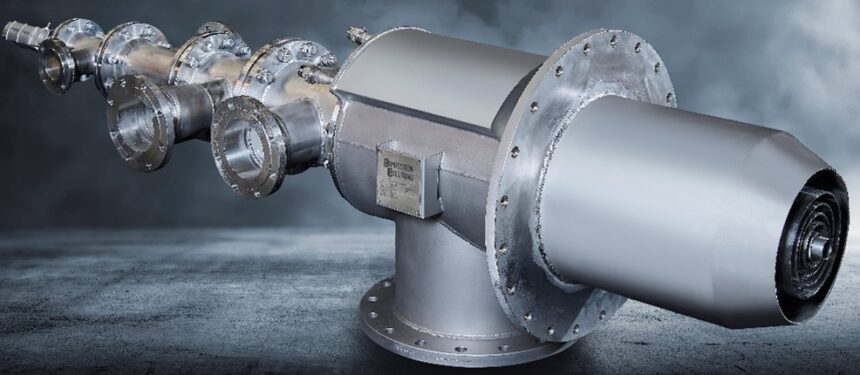
The oxijet from Comb Sol has been designed to work with common air and pure oxygen
Comb Sol's (CS) latest dual-mode burner system for spent acid regeneration (SAR) plants offers flexibility with seamless operation of either pure oxygen or standard combustion air, within one unit
The burner upgrade is being dubbed by CS as a 'shift in SAR plant design philosophy' due to it being designed to simplify start-up, eliminate burner swapping and optimise SO₂ formation.
The creation of the system was inspired by a request from a new greenfield SAR plant whose main operation is designed as a pure oxygen firing case to increase the efficiency of the combustion process.
The plant requested one start-up burner and two main oxygen burners; however, this setup would have led to damage to the burner during the main operation, as the start-up burner would not be in operation in the hot chamber.
Furthermore, cooling the burner with air or removing it after the start-up process would have led to a loss of efficiency in the overall process and posed a potential danger to personnel working near the hot chamber, as well as the sealing of the large opening after burner removal.
After assessing all the potential issues that a dedicated start-up burner would face, CS came up with the goal to design a burner system capable of operating with common combustion air and/or oxygen as oxidiser for the combustion of natural gas.
Designs and conditions
The design of oxygen burners and air burners is significantly different: oxygen burners feature high nozzle velocities to recirculate flue gas, whilst air burners are larger and use lower velocities with swirl bodies to ensure a good mix of fuel and oxidiser.
Using an air burner with oxygen could cause an unstable flame and potential damage, whereas a jet-type burner with combustion air would create flame instability and blowout.
Designing the burner with only one fuel stage for the start-up and the main operation case would cause a poor turn-down ratio in the start-up case, so splitting the load and designing the burner with multiple stages would support a higher turn-down ratio for both scenarios.
Due to the long, slim flames in jet-type burners, the new design features two burners so that the chamber will have proper heat distribution, and the space required for the chamber head was minimised.
The result
The design was verified using computational fluid dynamics, ensuring uniform heat and SO₂ distribution in the furnace.
The burner can be operated with common air during the start-up for proper dry-out of the refractory and pure oxygen during the main operation, minimising nitrogen in the furnace to increase efficiency.
Enriched combustion air can also be used to operate the burner, offering a viable solution for existing plants to reduce operating costs by being able to minimise their fuel consumption, increase acid regeneraton capacity or increase flexibility for the operator.