How an operator’s choice of engine can successfully reduce the cost of production and enhance sustainability
How an operator’s choice of engine can successfully reduce the cost of production and enhance sustainability.
It is clear that priorities in mining are shifting, enabled by new attitudes and sophisticated technologies. Thanks to both, sustainability has now become an integral part of mining operations. Of course, balancing the cost of production with sustainability needs can be complex, but a miner’s choice in engine can be a key part of the equation. And with several viable pathways to carbon neutrality, it is possible for miners to keep making progressive steps forward without impacting the performance and reliability critical to their success. They can do this in the following ways:
Upgrade to Tier 4/Stage V mining engines
By upgrading to Tier 4/Stage V technology when purchasing new equipment or through engine rebuilds, miners can achieve improved fuel economy, lower emissions, extended overhaul timelines and reduced operating noise. The typical Cummins engine today emits 90% fewer greenhouse gases than those produced before 2000.
Consider the opportunity within fuel maps
Less fuel consumption not only saves money but also leads to fewer emissions, and modern technology can bring fuel efficiency that’s calibrated and tailor-made. Cummins is partnering with mining customers to achieve the best fuel efficiency by matching engine technology to the correct horsepower and torque for specific elevations and duty cycles. Through tailored calibration and optimised speed settings, one Cummins mining customer achieved a 7% improvement in fuel economy, saving 17 million litres of fuel annually, cutting costs by US$16 million and leading to a reduction of 45,900 metric tons of carbon dioxide equivalent.
Make the most of cleaner fuels
Enhanced alternative fuel technologies available today can lead to big carbon reductions. Using hydrotreated vegetable oil (HVO) (EN15940) with all industrial high-horsepower Cummins engines today could see net reductions in well-to-wheels greenhouse gas emissions by up to 90% compared with traditional diesel, depending on fuel feedstock and pathway.
With a similar performance to diesel, HVO is considered a ‘drop-in’ fuel. It can be incorporated into current operations and planned maintenance schedules, without any disruptions to existing technologies, processes, or necessary training for engineers. It is important to look closely at fuel suppliers for HVO fuels as not all are created equal, and for standby power generation applications, operators should ensure that the HVO does not include any blend of biodiesel, regardless of EN15950 compliance.
USE MICROGRIDS TO PRODUCE RENEWABLE ENERGY
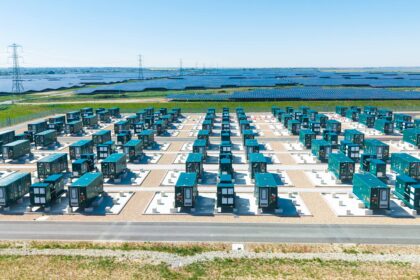
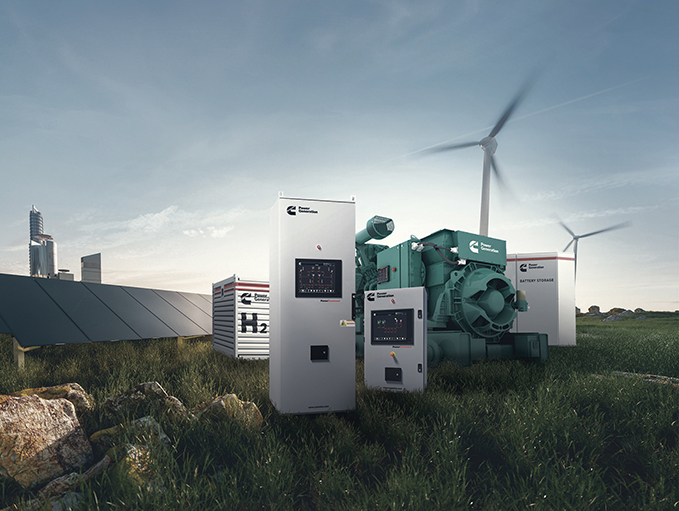
Leveraging a microgrid on mine sites presents an opportunity for operators to meet energy demands, reduce greenhouse gas emissions and ensure resiliency. These grids can operate independently from the traditional grid and play a transformative role in powering various facets of mining operations, including ore processing, powering tethered equipment, general power requirements for lighting, ventilation and heating/cooling, and even charging infrastructure for future EV fleets.
OPTIMISE REPAIR AND MAINTENANCE
Extended service intervals can greatly reduce unnecessary downtime and wasted consumables. Cummins will work with end-users to conduct a TCO analysis for new engine purchases, calculating whole life schedules based on equipment usage and determining recommended service intervals for various components.
Another way that Cummins extends service intervals is through condition-based maintenance, made possible through advanced digital solutions, PrevenTech for Mining and Fleetguard FIT from Atmus. This allows miners to reduce consumables, such as coolant and filters, which not only saves money but also landfill waste.
WATCH THE HYBRIDISATION SPACE
Advanced hybrid mining trucks, using a combination of internal combustion engine and battery, are a legitimate pathway to decarbonisation. Depending on factors such as the mine profile, advanced battery technology and controls integration, they have the potential to improve fuel efficiency by up to 30%. In China, Cummins recently commissioned its diesel-battery hybrid in partnership with leading rigid mining truck manufacturer, North Hauler Joint Stock Co., Ltd. (NHL) Jenny Bush, Cummins Power Systems President, described the hybrid truck as a “significant milestone in our journey to advance bridge technologies and provide our mining customers with innovative, practical decarbonisation solutions.” Cummins will continue to collaborate with various OEMs to serve the market with the right hybrid solutions, including both first-fit and retrofit options.
THE ROUTE TO SUSTAINABILITY JUST GOT EASIER
With these options now a reality, the route to sustainability just got a little easier. “A miner’s choice in power system can impact many factors for both cost of production and sustainability,” says John Essegbey, Cummins Mining Market Sensing and Innovation Manager.
“We’re always here to help miners explore viable options for increased sustainability without impacting the performance and reliability they require for successful operations.”