A new turbocompressor reduces costs and boosts reliability for smaller treatment works
A new turbocompressor reduces costs and boosts reliability for smaller treatment works.
Municipal and industrial wastewater treatment plants require aeration to remove organic contaminants. Traditionally, noisy blowers have been at the heart of this process, as well as the source of significant operational costs. With the launch of Sulzer’s HST 10, smaller sewage plants processing less than 10,000m3/day (40,000 population equivalent) can take advantage of the benefits of a turbocompressor that will both cut running costs for their facility and provide a huge boost in reliability, according to the company.
In industries such as pulp and paper, food and beverage, chemicals, pharmaceuticals and mining, the HST 10 can provide productivity improvements in both core processes and integrated wastewater treatment facilities.
Boosting efficiency and reliability
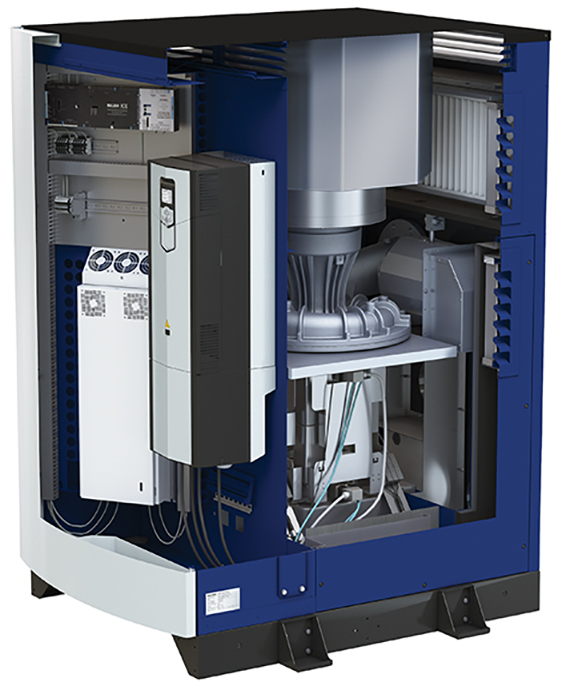
The HST 10 is a single stage turbocompressor and motor directly coupled to the turbo with no
intermediate gears or pulleys. Thepermanent magnet motor is fed by the integrated variable frequency converter. To reach the highrotational speeds needed with minimum losses, active magnetic bearings are used and the motor and the whole unit are fully air cooled.
There are no gears, mechanical bearings, pumps or separate cabinet cooling fans and the absence of these often failure-prone components makes the system more reliable than traditional blowers, according to the company. Combined, the lower energy costs and running expenses offered by the machine are likely to lead to a reduction in operational expenditure (OPEX).
Reducing costs
In the municipal wastewater treatment environment, traditional blowers are the single largest consumer of energy on the site. Their reliability, or lack of it, can lead to considerable downtime for the aeration process, posing a risk to treatment outflow and the environment. Even with spare assets on standby, the blower house is often a cause for costly and extensive maintenance work.
However, tradition has given way to innovation, and the HST turbocompressor has made it possible to have a reliable compressor that doesn’t need constant attention or high energy requirements. Essentially vibration-free and with low noise options available, the HST 10 can be installed in simple structures such as converted freight containers. In addition, the product is compact and easy to install according to the company.
Sustainability
The reduced energy consumption is the major driver for the reduced CO2 footprint. However, the lightweight design and the minimal need for consumables and spares also helps lower the footprint.
A huge contribution to the reduced environmental footprint comes from the long service life, as proven by the installed base of HST machines. With this technology, where no two rotating components are in contact with each other, the machine efficiency is maintained at a high level. At the end of service, all mechanical parts are intact and can be re-used or recycled with no worn-off material dispersed in used lubricants or the surroundings.
Making the transition
Making the transition to Sulzer’s turbocompressor is a simple process, for which assistance will be provided by Sulzer application specialists and the worldwide field service teams. Having determined the most effective model and number of compressors for an application, the installation is carefully planned to ensure an absolute minimum of disturbance.
Replacing redundant or out of service equipment first, the initial HST unit can be easily integrated with the existing control infrastructure and brought online. The compact footprint of the HST 10 also ensures additional space is available once the first legacy compressor is removed.