Europe may account for a relatively small proportion of global mineral production, but its mining industry could have an outsized influence on how mines are designed and operated globally in the future.
This is because the European Union’s Critical Raw Materials Act (CRMA) is reinforcing the mining sector’s shift toward sustainability, particularly through its Strategic Project framework, according to Tas Mohamed, CEO of Railveyor. The strategic importance of critical minerals is being supported by the EU, but within the context of increasingly stringent environmental requirements.
“The CRMA’s Strategic Projects framework places an emphasis on environmentally sustainable development, including the monitoring, prevention and minimisation of environmental impacts,” said Mohamed. “This is encouraging operators in the EU – and beyond – to reconsider conventional approaches to mine development.”
To be classified as a ‘strategic project’ under the CRMA, mineral projects in the EU will need to align to CRMA requirements. Significantly, these expectations also extend to qualifying strategic projects outside the EU.
Fundamental decisions
“The implication is that sustainability cannot be treated as an additional layer of compliance,” she said. “It has to influence the fundamental engineering decisions that determine how a mine will operate throughout its life.”
For Mohamed, the shift required is not simply the adoption of new equipment or technologies. It is a change of mindset: moving away from designing mines around individual equipment choices, and towards designing the mine as an integrated operating system.
“We need to take a more integrated approach to mine design,” explained Mohamed. “This means looking at how the choices we make in haulage, mine layout, energy, ventilation and automation affect the overall operation.”
She argued that technology choices in all of these critical areas are deeply interconnected, each influencing the performance, economics and environmental footprint of the entire operation. Their implications need to be understood together, from the earliest stages of mine planning.
Glimpse of mining’s future
Europe offers a particularly relevant proving ground for this approach, she noted. Its mines frequently operate in constrained environments – with limited space close to communities – and under stringent environmental obligations. Many are also mature underground operations where existing infrastructure and deep workings complicate their efforts to modernise.
“The result is that existing underground operations which are pursuing higher efficiencies are being forced to rethink traditional mine design,” she said.
She highlighted how engineering decisions must account for how material is transported and how noise and traffic are reduced.
“At the same time, those decisions must support the best ways of managing the surface footprint, and also how biodiversity and water resources are protected,” she said. “For a mine that is expected to operate for decades, the impact on the surrounding community is a long-term consideration – and so the design needs to reflect that too.”
Prioritise the system, not the equipment
Material movement shows why this matters, emphasised Mohamed. How ore travels from the working face to the processing plant is one of the most consequential decisions in underground mine development. Yet, traditionally, haulage systems have often been selected from familiar equipment options, with the rest of the mine designed around them.
“This sequence now needs to be reversed,” she said. “We need to challenge the traditional approach and start with what the mine needs to achieve, then design the operating system around those objectives.”
Haulage is an important example because its influence extends well beyond the transportation of ore, she pointed out. The choice between trucks, conveyors, hoisting, trolley assist, battery-electric vehicles and continuous haulage affects mine layout, ventilation requirements, power infrastructure, energy consumption, safety and the ability to adapt as the operation develops. Each of these, in turn, shapes the haulage choice.
“Haulage choices have important implications for mine infrastructure and operating costs,” she explained. “Diesel truck haulage brings ventilation and emissions considerations that need to be incorporated into the mine’s infrastructure and operating costs. While electrified alternatives can reduce diesel consumption and associated ventilation requirements, they also demand appropriate electrical infrastructure and careful integration with the mine’s production systems.”
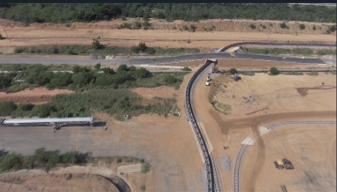
A more integrated approach considers haulage as part of the wider mine system, ensuring that material flow, infrastructure and operational requirements work together efficiently.
Geology and geometry
She highlighted that there was no single haulage technology that was universally preferable. Rather, developers need to assess the alternatives against the specific geology, production profile, mine geometry and expected operating life – and against how each option will interact with the rest of the mine.
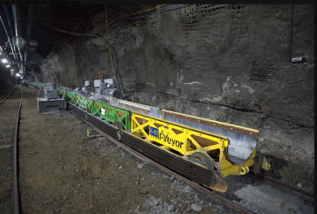
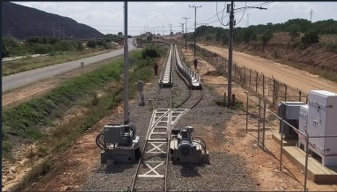
“Flexible continuous haulage systems illustrate how this thinking can broaden the available options,” she said. “Positioned between conventional truck haulage and fixed conveyor systems, they can offer continuous material movement while retaining the flexibility to accommodate changes in underground mine layouts.”
They can be particularly relevant where substantial volumes need to be transported over longer distances, on steep gradients or through constrained underground environments.
“Geometry, production volumes and material flow requirements must determine the selection,” she said. “Importantly, haulage should be evaluated alongside ventilation, power and layout, early enough to influence the mine’s overall architecture.”
Connecting productivity, energy and sustainability
An integrated approach also changes how developers consider electrification, automation and digitalisation. Battery-electric equipment and electric haulage systems can leverage remote monitoring and energy-efficient drives to improve mine performance. However, their benefits are greatest when they are planned as complementary elements of the same operating system, supported by the right electrical infrastructure.
“Electrification can reduce diesel consumption and ventilation underground, while automation can improve operational consistency, safety and productivity,” she said. “For its part, digital monitoring can support maintenance planning and equipment reliability, helping to avoid interruptions to material flow.”
This is especially relevant to brownfield developments and mine expansions, where higher production targets must be achieved without introducing bottlenecks or unnecessary operating costs. The mine’s internal material flow is effectively the first link in converting mineral resources into a dependable supply of critical raw materials.
Designing for full life of mine
The economic case for integrated mine design must, however, be assessed over the full operating life rather than through the initial capital investment alone, according to Charles Gillies, Managing Director and Chair of Innovation Investment Committees at Resource Capital Funds Innovation (RCF Innovation) – the mining-focused private equity firm that is Railveyor’s majority investor. Gillies emphasised the importance of balancing upfront expenditure against the savings and operational benefits that may accumulate over several decades.
“Electric, automated or continuous haulage systems may require changes to mine layouts – as well as to power infrastructure and material handling arrangements,” he said. “But they can potentially reduce diesel consumption and ventilation requirements significantly over time, as well as labour exposure and ongoing haulage costs.”
He also pointed to the trade-off between designing a fixed system for today’s production requirements, on the one hand, and investing in a solution that can adapt as the mine develops, on the other.
“The ability to accommodate changing production requirements is a critical part of future-proofing a mining operation,” he said. “Mine designs must recognise that geology, production schedules, maintenance requirements and processing capacity will evolve over time.”
Total cost of ownership
Nevertheless, the lifecycle approach must remain commercially grounded, said Gillies, as technology cannot make an uneconomic deposit viable.
“Developers need to compare total cost of ownership and the impact of investment decisions on the performance of the entire operation, rather than focusing exclusively on the purchase price of individual items of equipment,” he said.
In conclusion, Mohamed predicted that the mines of the future will not only be more automated or electrified – they will be designed differently.
“Material flow, energy and infrastructure will be considered alongside safety, environmental performance and adaptability as parts of one interconnected system,” she said. “Every engineering and investment decision will need to support the performance of the whole operation.”
That is the real opportunity, she said – creating mines that are safer and more efficient, while being more commercially sustainable and operationally flexible.
About the authors
Tas Mohamed is CEO of Railveyor and has more than 35 years of finance and accounting experience. Her previous executive positions include CFO of a global architecture firm and Vice President of Finance at Votorantim Cimentos & Aggregates and Aecon Group. She holds an MBA in Finance and Accounting and postgraduate qualifications in Business Management.

Charles Gillies is Managing Director of Resource Capital Funds (RCF) and Chair of Innovation Investment Committees, RCF Innovation. He has 21 years of private equity experience, and was co-founder of Jolimont Capital, completing 30 technology investments between 2003 and 2012. RCF is the majority investor and strategic driving force behind Railveyor.