Randall Williams from Draeger UK looks at the benefits of the practice
In a high-risk environment, a fire and gas detection system provides a crucial layer of protection for the key areas of health and safety for any operator in the power generation industry. Although detection and control systems have advanced significantly in recent years, even the best fire and gas detection system is ineffective if the field sensors are not positioned correctly. A methodical approach (fire and gas mapping) to designing the sensor locations can provide the confidence that the highest standards of safety have been adhered to in order to protect both colleagues and facilities from toxic and flammable gas hazards, as well as fire risks.
Fire and gas mapping can be an effective way of providing added reassurance for operators in the industry. It can determine whether detection devices are positioned accurately and effectively, and whether coverage is sufficient to protect the occupants and process. Documentation of the location design aligns with UK regulations, including the Management of Health & Safety at Work Regulations 1999 and the Fire Safety Order 2005.
Beyond regulatory compliance, a robust fire and gas mapping approach also demonstrates an organisation’s commitment to safety and reputation, fostering trust and upholding ethical responsibilities.
The fire and gas mapping process employs a consultative approach to conduct a site specific analysis of each setting’s unique challenges and conditions. Hazard mapping software is then employed to model existing and potential flame and gas detection at the site to identify aspects such as any blind spots and also ensure the field device locations are suitable and sufficient to meet the required coverage. The software can verify certain areas are covered by more than one device (also known as a ‘voting detector’), which is useful to rule out false alarms or provide additional confirmation should the actions to be taken in the event of an incident be significant, such as a plant shutdown.
Case study: biowaste production facility
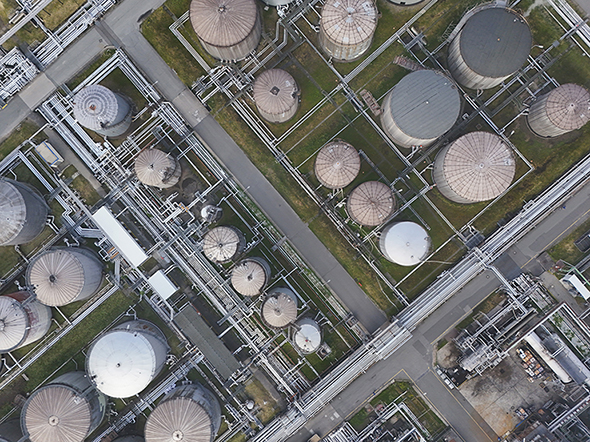
A hydrogen-from-biowaste production facility based in the Midlands was designing its flame and gas detection. In particular, the company was keen to ascertain if the planned gas and flame monitoring system which covered the storage tank and compressor area of the site was both fit for purpose and in line with the appropriate standards and regulations.
A total of four storage tanks and eight compressors at the site process the hydrogen at 300 times standard atmospheric pressure until it is piped onto lorries in the nearby loading bays for onward transportation.
Financial margins at the production facility were extremely tight, creating significant pressure on costs, but the Project Engineer wanted peace of mind that the planned fire and gas monitoring and detection provision was adequate and suitable.
Dräger was asked to conduct a fire and gas mapping audit to consider the planned monitoring and detection coverage across the site, identify any ‘blind spots’, and advise on both the appropriateness of the current siting of the system’s devices and whether any further coverage was needed in order to meet coverage requirements. For further details of this case study see page 12.
Case study: Power generation operator
A large operator in the power generation industry wanted to conduct a flame and gas mapping exercise focused on a 50 metre high tower where there were concerns that risks from Hydrogen Sulphide (H2S) could endanger personnel.
Although the operator was confident that the gas detection system was effective in its coverage of the site, concerns had arisen that, in the event of a gas escape, there could be potential for a toxic gas cloud to block the main safe exit for workers, resulting in a less-than-ideal 50 metre climb down an emergency exit ladder.
The flame and gas mapping consultation confirmed that this was indeed a risk that the current detection system did not address adequately, and as a result the consultation advised that extra detection on the stairwell (the main escape route) would be set to provide an early alert for personnel if, in the event of an incident, their escape route could be blocked.
As these examples show, fire and gas mapping is an important ‘best in class’ consideration for fire and gas safety, both at the start of a project, and at subsequent stages as factors or concerns at a site change. It can not only provide peace of mind but also give reassurance in relation to detector siting and coverage, therefore reducing unnecessary detection devices and lowering overall costs.
For more information visit: www.draeger.com