
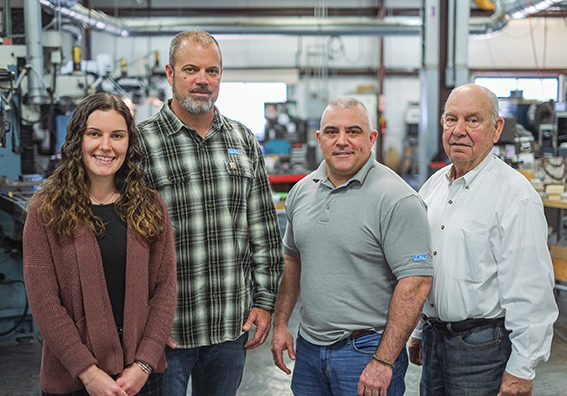
SealRyt CEO Mark Wilkinson shares valuable insights from his career in mechanical packing and sealing solutions
Q: What technologies is SealRyt best known for, and what advantages do they provide?
I believe SealRyt is best known internationally for two things.
The first is the development of shaft stabilisation methods within limited-space sealing cavities. That work came from identifying shaft movement as a significant cause of premature sealing failure. Rather than simply focusing on the sealing material itself, we began looking more closely at what was happening mechanically inside the equipment – and what could be done to control it.
The second is the highly focused environment our people create to help users fully understand and properly apply these approaches to sealing. When implemented correctly, these technologies can provide substantial financial gains through increased reliability, reduced maintenance, lower water consumption, and longer equipment life.
But ultimately, it’s about more than selling a product. It’s about the process of teaching and learning.
Q: What first drew you to industrial engineering?
I was never really “drawn” to engineering – especially industrial engineering. I was a reluctant college student at best in the 1960s, and the engineering courses I took mostly taught me that memorising formulas allowed me to pass courses, but didn’t necessarily teach me how to think.
As a child, though, I had an intense desire to build things, create things, and dream beyond my ability to actually make those things happen. Then physics came along, and I began to realise that most everything I was looking for was contained in the application of physics.
Learning how to apply those concepts and tools required me to dive more deeply into engineering so I could connect ideas to physical reality. I began to research. I began to think. And the rest, as they say, is history.
Q: What changes have you seen in industrial rotating shaft sealing technology and shaft stabilisation systems over the years?
My direct involvement in rotating shaft sealing began in 1974 with mechanical seals, braided packing, and bearing isolators. In all that time, with a few notable exceptions, most of the changes I’ve seen have involved materials and material design rather than the quantum leaps experienced in some other technical disciplines.
The industry appeared poised for dramatic change during the 1980s. Asbestos litigation forced an evolution in textile materials. Mechanical seals moved toward cartridge designs. Sealless magnetic-drive pumps evolved. There was even a widespread belief that whoever developed the first truly successful split mechanical seal would dominate the industry and perhaps eliminate braided packing as a practical sealing choice.
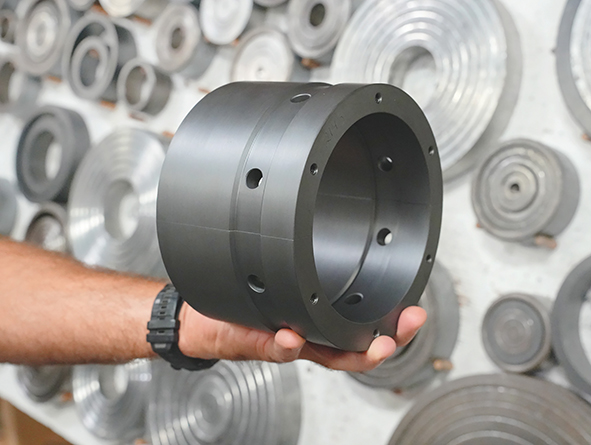
And yet, here we are decades later, and most of those approaches are still with us. The materials have improved and the designs have evolved, but many of the fundamental challenges remain. The small, often poorly designed stuffing boxes of decades past still plague us. Within those confined spaces, we’re still dealing with friction, hydraulic forces, mechanical forces, and shaft movement.
And I still hear the quintessential argument at mill sites: Operations tells Maintenance, “If you’d fix it right, we could run it.” Maintenance responds, “If you’d run it right, we wouldn’t have to fix it.”
Some things in this industry change more slowly than others.
Q: What project have you been most proud of working on?
Every one of them.
But I’m probably even more proud of our engineering staff and what they’ve been able to accomplish. They take concepts developed by others and flesh them out into workable solutions, while also developing entirely new approaches of their own.
It’s classic applied physics on steroids.
That process – taking an idea, understanding the physical forces at work, and turning it into something that solves an actual problem in the field – is what makes this work interesting.
Q: What lessons have you learned during your time in the industry?
Patience.
I have something of a personality flaw: I tend to believe that if something is good enough to do, it’s good enough to do now.
On a technical basis, there often isn’t much benefit in waiting. The laws of physics aren’t going to change, so what are you waiting for?
We work with thousands of plant mechanical people. When there are clear, measurable gains available today – better reliability, less maintenance, reduced water use, longer equipment life – why not take advantage of them today?
I’ve come to the conclusion that eliminating the lack of urgency in what is traditionally a low-and-slow industry may take me another lifetime.
But I’m working on it.
Q: What changes do you predict for industrial rotating shaft sealing technology and shaft stabilisation systems over the next decade?
To understand where this industry is going, you first have to look at the industries that require rotary sealing.
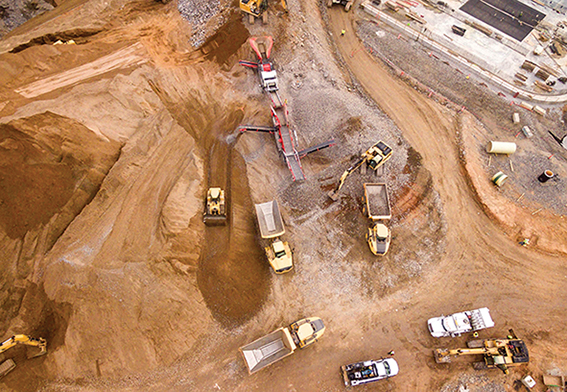
Many of the most demanding applications involve large equipment handling heavy solids suspended in water – mining, pulp and paper, hydropower, and similar industries. As the fortunes of those industries ebb and flow, the sealing industry tends to follow them.
In the United States, I would characterise many of those heavy industries as either relatively static or experiencing modest decline, so domestic sealing opportunities will naturally reflect that. At the same time, heavy industries continue to develop in other parts of the world where the necessary natural resources exist alongside lower labour costs and different taxation structures. That makes the future of sealing increasingly international.
There is another challenge as well: relatively few entirely new rotary sealing applications are being created. Much of our industry is working with equipment and fundamental designs that have existed for decades.
That leaves sealing companies with a choice. They can compete generically for volume, or they can develop design improvements that make sealing systems significantly more reliable.
Ironically, making a sealing system more reliable can mean selling fewer replacement parts. But I believe that is where meaningful innovation has to go.
It may paint a somewhat bleak picture of the traditional replacement market, but the need for effective sealing isn’t going away. This industry will remain absolutely necessary as long as stuffing boxes exist.
The real opportunity is helping more people understand why sealing systems fail – and giving them the tools to prevent those failures in the first place.
For more information visit: www.sealryt.com