Discussed by Igus’ Alan Hicks
Advanced polymeric coatings are increasingly being adopted across industrial manufacturing environments to address persistent challenges such as friction, wear, contamination and product flow reliability
Modern tribological coatings based on engineered polymers are providing alternatives to traditional metallic surfaces in applications ranging from food production equipment to packaging lines and conveyor systems.
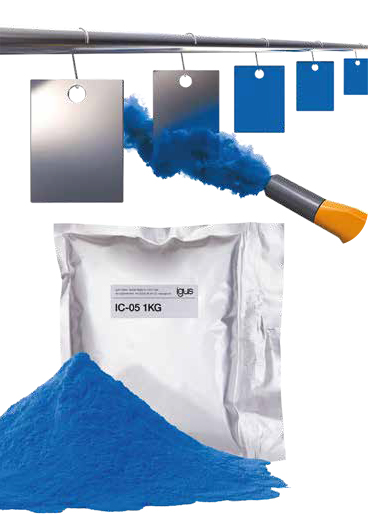
One company developing such technologies is Igus, whose powder-based coating systems are designed to apply low-friction polymer layers to conventional metallic components. According to product manager Alan Hicks, these coatings represent an extension of the company’s broader expertise in tribologically optimised polymers.
“You may know Igus from our polymer bearing technologies and products, and what we have now is a great powder coating material that can be applied to any conductive surface,” he explains.
The technology is designed to allow conventional steel or stainless-steel machine components to be retrofitted with advanced polymer surfaces that reduce friction, improve wear resistance and limit product adhesion.
THE COATING PROCESS
Igus offers several polymer powder coatings designed for different operating conditions and regulatory environments. These coatings are applied using a powder coating process similar to conventional industrial coating techniques. Igus also offers a full-service approach for customers that require component machining and coating in a single process.
“We take part of an existing machine that has already been coated or has had some sort of treatment work done to it, and we will sandblast it in order to edge the surface for the powder coating to adhere to,” Hicks says. “We’ll also clean and degrease it, then once it’s coated the part will be cured for around twenty to thirty minutes.”
Typical coating thickness ranges between 80µm and 120µm depending on the application.
PREVENTING PRODUCT CONTAMINATION
One of the major benefits of polymeric coatings is the reduction of product adhesion in food production equipment. Hicks describes an application involving a bowl feeder used to distribute condiment sachets into ready-made salad containers.
“The stainless-steel surface created friction and adhesion issues during operation,” Hicks explains. “We coated one bowl feeder as a sample for this particular customer. They tested it and the rate of flow of the sachets into the pots was extremely successful. We then coated the whole line, six lines in a row, and production was up with no stoppages.”
EXTENDING CONVEYOR LIFE
Another key industrial use case is wear protection in high-throughput conveyor systems. Hicks describes a project involving a major global brewery where bottle and can lines were experiencing severe wear at conveyor transition points. Previously the transition plate was made from stainless steel, which experienced rapid wear due to constant friction from the containers, leading to it needing to be replaced every few months.“We coated it in our Iglidur IC-05 food-approved material and it has been operating for 20 months before it started to show signs of wear,” Hicks says. “The company purchased two plates from us. When one becomes worn, they take it off, put the next plate on and send the worn one back to us. We then sandblast it, recoat it send it back, so they don’t experience any downtime.”
DIGITAL DESIGN TOOLS
To support engineers evaluating coating options, Igus also provides a digital platform that calculates coating requirements and performance characteristics. The tool calculates the required coating quantity and material selection, while material data sheets and performance parameters are integrated into the system.
By combining low-friction performance, regulatory compliance and long wear life, these materials are enabling engineers to retrofit existing machinery with improved functional surfaces while avoiding the cost of redesigning entire mechanical systems.