The transformation of energy companies into agile, decentralised providers will benefit consumers and the climate.
Utilities are currently in flux, transitioning from top-down companies with a clear demarcation between supplier and recipient, to companies that rely on software and AI to allocate resources between and among customers in a flexible ecosystem where all parties play an active role. A recent webinar titled ‘Digital transformation in energy – a blueprint for success’ explored the ways in which energy companies are changing, the similarities between companies across the world, and how they might make the transition work best for the benefit of customers, clients and the climate.
The host Juliette Foster, owner of digital agency Magnus Communications outlined the challenge: “Implementing new systems will involve solving complex data migrations, managing operational shifts and enabling cultural change.”
How energy companies are transforming
Panelist Santiago Banales managing director of energy company Iberdrola, a company operating in Brazil, Australia, the UK and Spain among other countries, explained that energy companies have historically been run by electro-mechanical engineers in a very traditional way. “These managers were operating a critical service and faced heavy regulation. This led to a very risk averse culture. There has been change over the last 20 years and this has accelerated recently, to an agile, decentralised structure.”
Banales argued that energy companies should adopt four key approaches to achieve a successful transformation:
1) An overhaul of their IT system, enabling a decentralised model with more freedom and capacity.
2) An HR transformation with employment of software specialists like those working at Microsoft or Google, rather than the traditional mechanical engineers.
3) Transition to an agile model. Energy companies will need to make ongoing iterative changes as the landscape shifts.
4) Focus on engaging all the stakeholders of the system including customers.
Managing customer-centric systems
Banales’ focus on engaging all the system stakeholders, including customers, was a theme for the other webinar attendees too. Glenn Waterson general manager of retail transformation for AGL Energy, an Australia-based energy company, explained that this was a central focus of his organisation. He explained that the company operates 40,000 km of transmission lines for 9 million consumers in the eastern seaboard of Australia and that this presents great opportunities. “We expect more than 50% of this population will want to be prosumers, meaning they’ll want to be involved in the electrification transition and decarbonisation.” He continued: “Similarly, one in three households currently has solar power, we are currently looking at how best to use and store this energy.” He went on to explain how customer are playing a more active role in their energy consumption. “Consumers want access to data and information on how much energy they are using. This helps them make better choices. People want to be able to use that data to ensure affordability and cost of living.”
More about Vattenfall
Annemarie de Jong head of delivery for European energy company Vattenfall currently works in Germany and explained that the market shows many similarities to the Australian market described by Waterson. “We are seeing an acceleration of the green energy transition alongside the German government’s commitment to meeting net zero by 2045, it has just allocated €800m for this process.” However, she warned that operators need to balance ambition with reality because there were legacy systems and even societal issues that might temper the progress. Like Waterson, de Jong argued that the digital customer experience has become a game changer. “Customers want transparency, control, good experience and personalisation. As such the need and demand for a green digital bundled offering is rising. Digital companies like Octopus are reshaping the landscape with their technology models.”
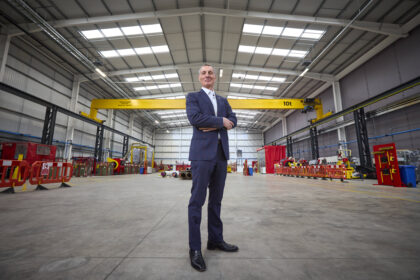
Vattenfall IDNO has provided grid connection for Helios Power Ai Solutions project at a solar installation site in Huddersfield, Yorkshire in the UK. The company is partnering with sustainable infrastructure specialists Serconnect Ltd and the project will deliver a new 11 kV point of connection to allow Ai to scale without putting strain on the grid.
The project aims to promote the use of renewable energy by combining Ai and blockchain, which help manage and secure data, to create a system where people are rewarded for using or supporting sustainable energy from windfarms, solar, Battery Energy Storage Systems (BESS) or other sources, also known as token- based ecosystems.
Helios Power Ai Solutions are working to make Ai more sustainable by providing access to distributed data centres which are fed power from these renewable assets. By doing so they aim to enable Ai to scale up and grow in usage without putting strain on the grid. Stewart Dawson, managing director at Vattenfall IDNO said “This is our first project with Serconnect, and we look forward to building a strong partnership and delivering many more together.”
The role of technology
Neel Gulhar chief product officer for software company Kaluza also spoke at the event. Kaluza develops AI driven software that enables allocation of and redistribution of energy on a grid using data. Gulhar explained that a big issue for the industry faces is that although a whopping $210bn is being spent on software globally, it’s likely that this money isn’t going to be used effectively. “A lot of companies are still using software created for a different age with a different set of problems. For example, the automated back office was set up in the 80s to digitalise paper processes. Similarly, when smart meters were first brought into the market, data storage was expensive but this isn’t the case any more since cloud storage is so cheap. We need to find a better way to spend this money,” he said.
The future of the grid
The future of the grid, according to Neel, will be the management of data. He gives the recent shut down of Heathrow airport as an example of an issue that might be resolved by a data-managed grid. “Despite being one of the busiest airports in the world, the substation was closed for almost a day recently because of a power outage.” As he explained, data and AI could solve the issue. “In the near future instead of having to shut down, airports will be linked to all players in an energy system, including customers with electric vehicles or excess energy from solar panels. All parties will be invited to share their power which might be redirected to an airport. There would be a data strategy managing and consolidating all these elements. “Knowing what’s going on with the grid will mean they consumers can earn a few extra bucks,” he said.
For more information visit: www.kaluza.com and group.vattenfall.com