Exploring training in fire and gas detection
Effective fire and gas detection systems are crucial for ensuring safety within process industries. Historically, the competence required to design and implement these high-integrity systems has often been acquired through informal, on-the-job experience. Recognising the critical need for structured training, recent developments have provided engineers with an opportunity to significantly enhance their understanding and skills through formalised programmes.
FGP training programme
One prominent advancement is the certified Fire and Gas Practitioner (FGP) training programme. Developed through collaboration between specialist safety training providers and safety certification experts, the programme equips instrument and process engineers with a comprehensive understanding of fire and gas detection system principles and practices.
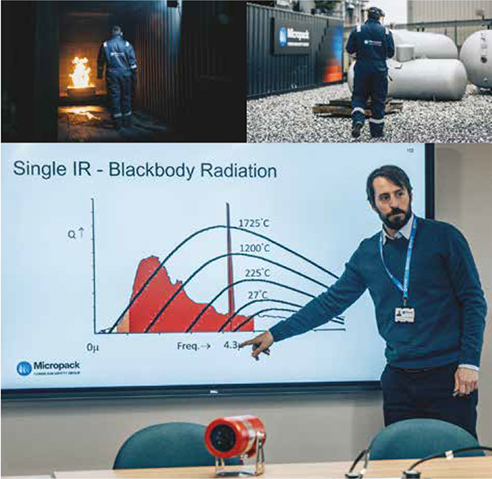
The FGP training programme addresses critical industry knowledge gaps by providing a structured curriculum over a three-day intensive course. The course covers essential topics, including the fundamental role of fire and gas detection systems, performance requirements, detector technology limitations, and strategic considerations for hazard analysis and detector placement. By thoroughly exploring legislative requirements and industry codes, the programme ensures that engineers develop systems compliant with current standards and best practices.
A distinctive component of the training is its emphasis on practical application through advanced three-dimensional fire and gas mapping software. This software facilitates precise evaluation and optimisation of detector placement, enabling engineers to model real-world scenarios and enhance system effectiveness. Participants gain hands-on experience, significantly enhancing their practical competence in hazard analysis and detector layout planning.
An essential feature of the programme is its independent certification, awarded upon successful completion of the course and examination. This certification recognises an engineer’s competency formally, offering professional credibility and ensuring adherence to international safety standards. For both engineers and organisations, such certification serves as evidence of expertise and commitment to safety excellence.
Instrument and process engineers who undertake this training gain essential theoretical knowledge combined with practical experience, enabling them to design robust fire and gas detection systems confidently. Organisations benefit by raising safety standards, reducing risks, and ensuring regulatory compliance, which are critical factors in maintaining operational integrity and protecting personnel and assets.
In summary, structured fire and gas detection training programmes, supported by independent certification, provide substantial benefits to engineers and their organisations. These programmes help address industry-wide competency gaps, significantly contributing to safer, more reliable process operations.
For more information click here.