


Hydrocarbon dewpoint: the gap between theory and reality
Hydrocarbon dewpoint: the gap between theory and reality. By Paul Stockwell.
For decades, hydrocarbon dewpoint has served as the industry’s standard for determining gas “dryness” in natural gas transmission and distribution. However, recent findings are suggesting that relying solely on hydrocarbon dewpoint is not enough to ensure dry gas. Widely variable results across dewpoint measurement methods highlight a significant accuracy gap that leads to undetected liquids in pipelines. This variability introduces risks to operations, making a case for advanced tools to provide a more comprehensive approach to gas quality.
Traditional hydrocarbon dewpoint is a key factor in gas sales contracts, determining if natural gas supplies meet the “dry gas” criteria essential for safe transmission. Even small volumes of liquids – mist or stratified flows of hydrocarbons – can cause operational challenges downstream. When these go undetected, they can lead to equipment damage, costly disruptions and inefficient operations. Unfortunately, variations in dewpoint calculation methods can create uncertainty about the true condition of gas in the pipeline, with temperature results for a single gas mixture sometimes spanning up to 186°F (103.6°C)[1]. This inconsistency is a growing concern for gas suppliers and end-users alike.
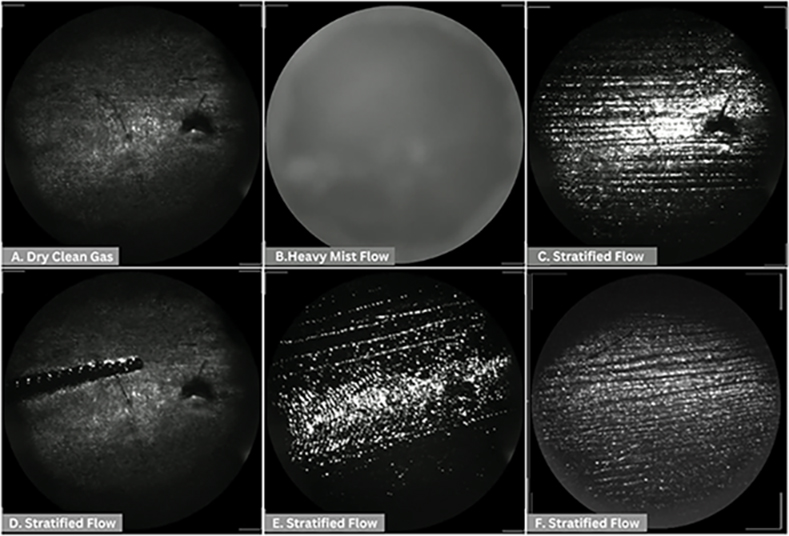
To bridge this reliability gap, the industry must now look at advanced visual monitoring technologies. LineVu, a pioneering pipeline camera system, offers real-time visualisation of gas flows inside high-pressure pipelines, allowing operators to detect actual liquid presence directly. Unlike hydrocarbon dewpoint measurements, which provides only inferred data about liquid formation based on pressure and temperature calculations, LineVu delivers a live view inside the pipeline. This live video feed enables operators to spot liquid mist, stratified flows, and small volumes of natural gas liquids (NGLs) that traditional measurements fail to report.
The financial implications of undetected liquids are significant. Operators may unknowingly pass substantial liquid volumes through custody transfer points, resulting in high maintenance costs and reduced equipment lifespan. For example, an unobserved liquid presence at just 0.1% of the gas volume in a 100MMSCF/D pipeline could result in over 10,000 gallons of lost NGLs daily, translating into millions in annual revenue losses.
Liquid carryover in “dry” gas pipelines can lead to severe operational impacts in gas turbine power stations. The presence of compressor oils, or glycol can block fuel nozzles, causing imbalances and downtime.
IDEAL COMBINATION
In many cases, combining hydrocarbon dewpoint with LineVu’s real-time video data is proving invaluable. LineVu cameras, installed at standard tapping points along pipelines, enable operators to gain precise insights into the actual gas conditions. This level of transparency supports operational decisions, ensuring that pipelines truly meet quality standards and reducing risks of liquid-related failures. Additionally, with real-time monitoring, any deviations in expected gas quality can be addressed immediately, protecting downstream applications from contamination and unplanned downtime.
As the gas industry faces increasing demands for accuracy and operational reliability, visual monitoring is becoming a critical tool for modern gas quality management. Technologies like LineVu are validating other gas analysis and flow measurements, providing a comprehensive view that safeguards both operators and end-users from the higher costs and risks of unobserved liquid carryover.
Paul Stockwell is Managing Director of Process Vision.




