
A look at safety risks and solutions around hydrogen manufacturing
Capitalising on the immense benefits of hydrogen as a green energy source requires several processes including its production, storage, transportation and usage. Each of these stages required to realise the advantages of hydrogen energy also pose safety challenges that must be addressed in accordance with the unique properties of hydrogen and hydrogen production.
Process hazard analysis
For any new or existing hydrogen production applications, a Process Hazard Analysis (PHA) can help assess any potential risks associated with the various stages of hydrogen manufacturing and usage. At the conclusion of the PHA, a risk assessment report will be created and may identify the following at-risk areas and their potential solutions:
Overpressure hazards
Pressurised hydrogen exists throughout the creation, storage, transport and usage of hydrogen. Without a reliable means of pressure relief, a vessel can fracture and even result in a pressure-related explosion.
To relieve excess pressure and prevent catastrophic failure of the containment system, two methods of pressure relief are used: pressure relief valves (PRVs) and rupture discs. PRVs gently open and close as pressure fluctuates, while rupture discs ‘burst’ when pressure reaches a certain undesirable level.
While both devices provide reliable pressure relief, it’s a common practice to use both PRVs and rupture discs in tandem with one another. For example, by installing a rupture disc upstream of a PRV, unwanted leakage of valuable product is avoided, as the hydrogen will only reach the PRV if the rupture disc opens.
Fire hazards
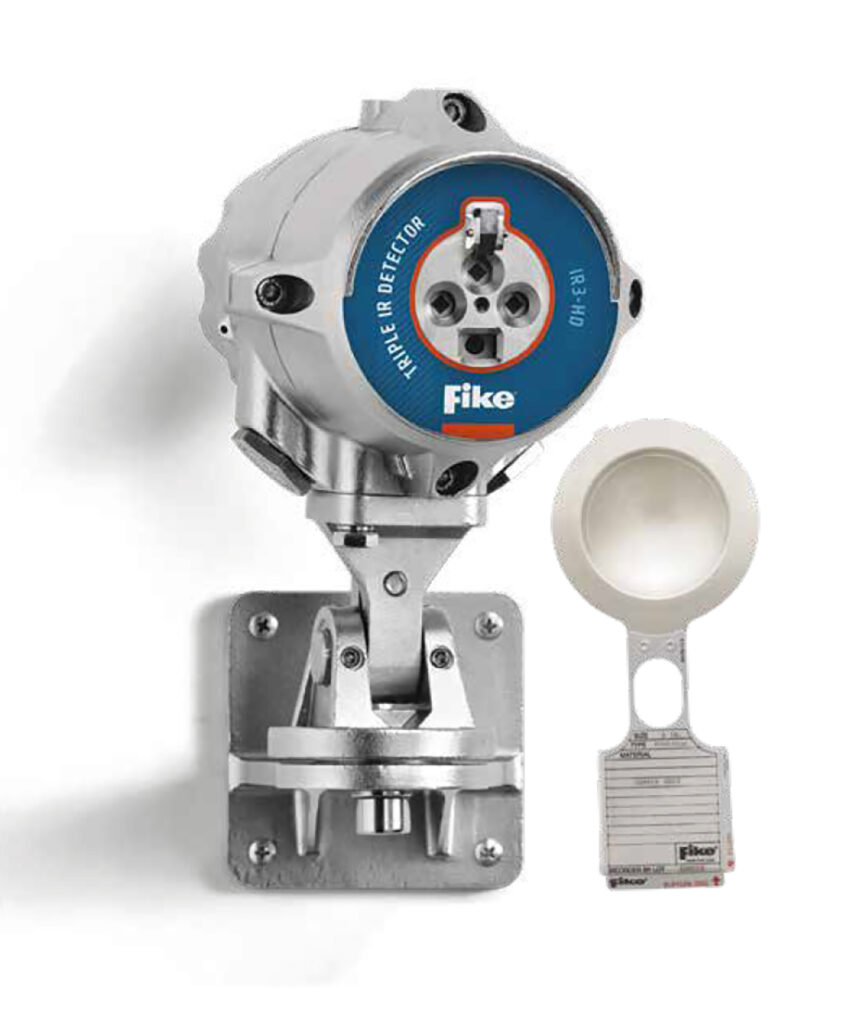
Because hydrogen fires are invisible, traditional fire detection methods that rely on visible flames or smoke are ineffective and unreliable. That’s why flame detectors with infrared technology are recommended to identify the thermal energy produced by hydrogen fires allowing for quick emergency response, mitigation measures and system shutdown.
Some flame detectors also include an on-board camera that visualises the exact location of the hydrogen flame on a connected monitor to protect nearby workers and direct safety personnel.
Explosion hazards
Owing to the wide flammability range and low ignition energy of hydrogen gas, explosive atmospheres are common in these applications. Explosion vents are a commonly used protection strategy that, like rupture discs, open when a specific pressure is reached to safely relieve the pressure and redirect flames away from people and other critical areas.
‘Flameless’ devices may also be used to make explosion venting of indoor applications possible as they suppress the flames while allowing pressure to pass through.
Conclusion
The various stages of hydrogen production each involve their own unique equipment and processes, and it is therefore essential for managers to partner with an expert in hydrogen safety who understands all the potential hazards and solutions.
Conducting a PHA is almost always a necessary first step, it will help document any possible risks and provide a better understanding of areas that should be further investigated as well as those that are safe from the aforementioned hazards. The safety solutions provider should then work with the client to methodically reduce the risk of each of those hazard areas with recommended process improvements or required safety systems.
For more information visit: www.fike.com