What’s shaping the future of underwater oil & gas operations?
Louise Davis reports on the subsea engineering trends that are shaping the future of underwater oil & gas operations.
As oil & gas companies explore deeper waters and harsher environments, the demand for advanced subsea engineering solutions has never been higher. From deepwater drilling rigs to underwater robotics, the subsea industry is evolving rapidly to meet the complex challenges of modern-day oil & gas exploration and production.
One key trend here is advances in automation and robotics. Automation has become a cornerstone of subsea engineering, particularly as offshore operations are pushed into deeper and more remote regions. The need to reduce human intervention and enhance the efficiency and safety of operations has made robotics and autonomous systems indispensable in subsea projects.
A notable advance is the rise of autonomous underwater vehicles (AUVs) and remotely operated vehicles (ROVs). These robotic systems are crucial for inspecting, maintaining, and repairing subsea infrastructure, such as pipelines, wellheads, and blowout preventers. AUVs can collect data and perform routine tasks without human intervention, while ROVs are used for more intricate operations, such as underwater welding and valve manipulation.
These technologies have reduced the need for surface vessels and personnel in potentially hazardous deep-sea environments, resulting in safer operations, cost savings, and lower risks to human life. Furthermore, as robotics technology improves, these systems are becoming more autonomous, capable of completing tasks with minimal human oversight.
DATA DIGITALISATION
The integration of digital technologies into subsea oil & gas operations is transforming how companies collect, analyse and act on data. Digitalisation is helping operators make more informed decisions, increase operational efficiency and minimise downtime. The use of sensors, real-time monitoring, and machine learning algorithms has revolutionised subsea operations by providing insights into everything from equipment health to reservoir performance.
One of the key innovations in this area is the development of digital twins – virtual models of subsea assets. These digital replicas allow engineers to simulate real-world conditions and predict potential failures before they occur. By leveraging predictive analytics, operators can perform preventive maintenance and avoid costly shutdowns. Additionally, digital twins can assist in optimising production by providing insights into reservoir behaviour and guiding drilling strategies.
The ongoing development of Internet of Things (IoT) sensors and cloud computing has made it possible for subsea systems to transmit large volumes of real-time data. This data, combined with advanced analytics, can be used to monitor everything from pressure and temperature to corrosion levels, allowing for more accurate decision-making in subsea engineering projects.
SUSTAINABLE SHIFT
As global energy consumption shifts toward renewable sources, the oil & gas industry is under increasing pressure to reduce its carbon footprint and adopt more sustainable practices. Subsea engineering plays a critical role in this transition by providing solutions that minimise environmental impact and improve energy efficiency.
GREENER POWER SOLUTIONS
One of the key trends in subsea oil & gas is the push toward subsea power generation and carbon capture. Subsea facilities are increasingly being designed to operate on electricity generated by renewable sources such as wind and solar power, reducing the reliance on gas turbines and diesel generators. Furthermore, subsea systems are being equipped with advanced technologies for carbon capture and storage (CCS). CCS involves capturing CO2 from oil and gas facilities and storing it deep underground or in subsea reservoirs, preventing it from being released into the atmosphere.
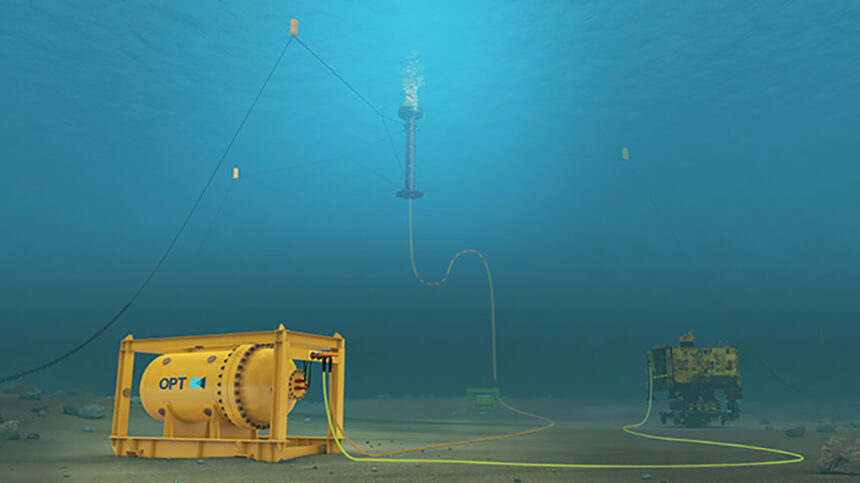
Subsea production systems are also evolving to become more energy efficient. For example, subsea boosting systems, such as pumps and compressors, are being integrated into subsea wells to increase production rates without the need for expensive surface facilities. These systems are powered by electricity, which can be sourced from renewable energy, reducing the carbon emissions associated with offshore oil and gas production.
The focus on sustainability has also led to the development of ‘green’ technologies, such as biodegradable lubricants and more efficient, lower-emission subsea equipment. As the industry adapts to the changing energy landscape, innovation in subsea technology will be crucial in meeting stricter environmental regulations and ensuring the industry’s long-term viability.
INTO THE DEEP
With many of the world’s easily accessible oil reserves already exploited, operators are increasingly looking to deepwater and ultra-deepwater fields for future exploration and production. These reserves lie in challenging environments, where extreme depths, high pressures, and cold temperatures make operations difficult and costly.
The need for more advanced subsea engineering solutions has led to significant advancements in drilling technologies. One notable trend is the development of more robust and efficient blowout preventers (BOPs), which are essential for managing high-pressure wells in deepwater fields. The latest BOPs are designed to operate under more extreme conditions and are equipped with backup systems to ensure safety in the event of a malfunction.
Furthermore, advancees in subsea well intervention technologies are enabling operators to maintain and repair deepwater wells more efficiently. Innovations such as coiled tubing and subsea completion technologies are helping extend the life of offshore reservoirs while reducing the cost and time required for well interventions.
Subsea tiebacks, which connect subsea wells to existing infrastructure, are also becoming more common in deepwater exploration. These tiebacks allow operators to exploit new reserves without the need for large, expensive platforms, making deepwater projects more economically viable.
As the subsea industry evolves, there is a growing trend towards modularity and flexibility in subsea infrastructure. Traditional subsea systems were often designed for specific fields and required significant modifications for use in new developments. Today, operators are moving towards modular subsea solutions that can be adapted and reconfigured to meet the needs of multiple projects.
Modular subsea systems are not only more cost-effective but also offer greater flexibility in response to changing market conditions. By using standardised, interchangeable components, operators can more easily scale their operations and quickly deploy new systems without the need for bespoke engineering solutions. This approach also reduces the time required to bring new fields online, which is crucial in today’s competitive oil & gas market.
WHAT’S NEXT?
The subsea oil & gas industry is on the cusp of a major transformation, driven by advancements in technology, digitalisation and sustainability. From autonomous underwater vehicles to carbon capture and subsea power generation, the future of subsea engineering is exciting and full of potential. As the industry faces increasing environmental pressures and the challenge of accessing deeper reserves, innovation in subsea technologies will be essential in shaping the future of offshore exploration and production.
CLEVER COLLABORATION
Many players in subsea technology have observed that collaboration between stakeholders with the same interests can play enormous commercial dividends. Recent news on this front saw OneSubsea sign a long-term strategic collaboration agreement with Equinor, and will commence early engineering work on Wisting and Bay Du Nord projects.
The agreement between the Subsea Integration Alliance (OneSubsea and Subsea7) and Equinor provides a contractual framework for earlier and closer engagement throughout the project cycle to unlock more value from complex projects.
The agreement paves the way for exploratory work to begin on two projects: the Wisting field offshore Norway and Bay Du Nord, off Newfoundland and Labrador, Canada. The agreement will be a foundation for potential FEED and EPCI contracts to be awarded in case of final investment decision.
The agreement represents an innovative, integrated way of working. It enables early information sharing, technology innovation and other collaborative benefits critical to unlocking more subsea projects by making them economically viable. Building on their experience as members of the Subsea Integration Alliance, this agreement also further cements OneSubsea and Subsea7’s positions as trusted contractors to Equinor.