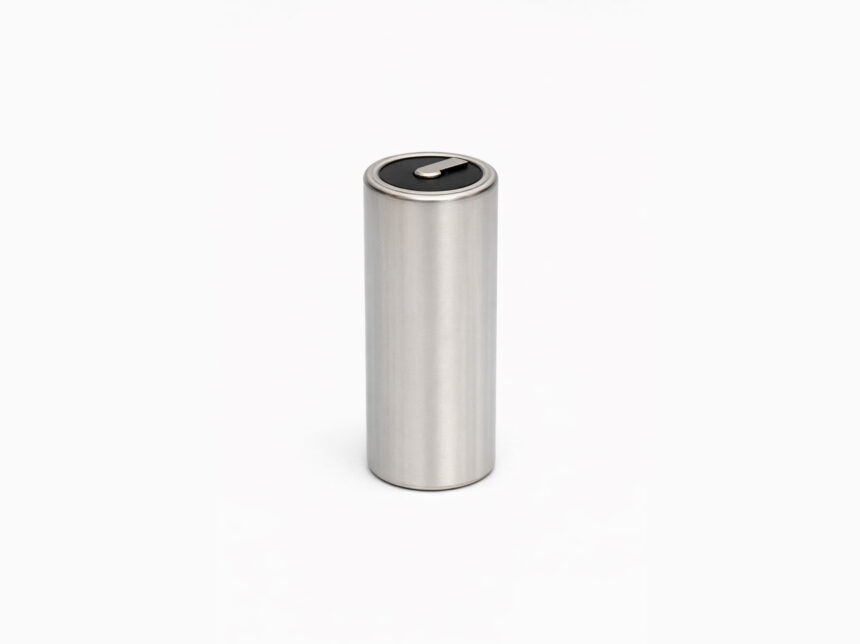
Ultralife Corporation, a global battery manufacturer, has announced the availability of its new Electrochem HR Series hybrid cells, developed to help device manufacturers overcome the traditional trade-offs between standard moderate-rate and high-rate primary lithium battery technologies
Designed to deliver enhanced power performance and environmental durability, the HR Series introduces a new battery category for engineers designing equipment that must operate reliably in demanding conditions.
The HR Series was designed in response to a customer request for a battery that could support their new tool design, providing higher power capability while maintaining the durability required for demanding operating environments. Existing cell designs could not fully meet these needs, prompting the development of a new hybrid construction that combines the benefits of these two battery technologies.
Engineers have traditionally needed to choose between the ruggedness of moderate-rate cells and the power and pulse capability of high-rate cells, making battery selection difficult in applications where advanced performance and extreme durability are essential.
The HR Series addresses this by combining the ruggedness of moderate-rate cell construction and the enhanced performance of a high-rate cell design. The cells deliver high power and pulsing performance while resisting shock, vibration, and other demanding environmental conditions.
Keith Anderson, senior manager, Marketing & Customer Operations at Ultralife Corporation, said, “The challenge for engineers has often been balancing power requirements with environmental durability. We developed the HR series to reduce the compromises by combining the strengths of our moderate-rate and high-rate cell designs. Now, we have a hybrid solution that can meet demanding power requirements while offering exceptional ruggedness and reliability.”
The HR Series is suitable for applications such as measurement-while-drilling (MWD) tools, pipeline inspection systems, and other sensor-intensive devices operating in harsh environments. By expanding engineers’ options, the technology provides greater flexibility when designing systems that require high performance and long-term reliability.
Additional benefits include optimised capacity, a low magnetic signature and the potential to reduce the number of cells required in a battery pack, enabling more compact battery designs and creating space for more sensors and electronics to improve system efficiency.