Operators face pressure to deploy barrier technologies that ensure reliability, reduce risk, and minimise costly interventions
In today’s increasingly complex plug and abandonment (P&A) landscape, operators face mounting pressure to deploy barrier technologies that ensure reliability, reduce risk, and minimise costly interventions
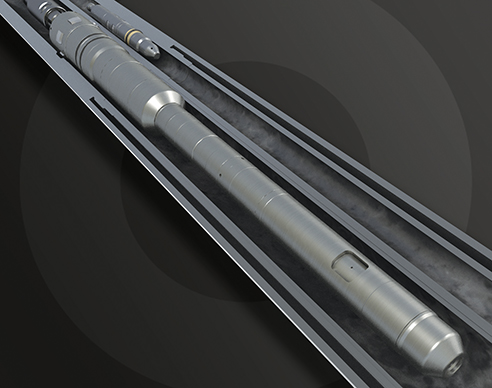
The Oilenco Pressure Wave Valve (PWV) addresses these challenges with a fully mechanical, intervention-free solution for remotely equalising across installed well barriers.
KEY ADVANTAGES
Designed to be run below standard barriers such as lock mandrels, bridge plugs, hybrid plugs and packers, the PWV avoids the risks associated with conventional pump-open valves, which are often opened by applying pressures above the tested pressure of surface equipment. Instead, it activates via a pre-determined sequence of pressure cycles, configured to remain well below the test ratings of equipment like BOPs.
A key advantage of the PWV is its long-term reliability. With no electronics or batteries, it can remain installed for several years. Once activated, it provides large through-bore communication, enabling fluid flow and barrier equalisation without slickline recovery. This makes it particularly valuable in pre-P&A scenarios where barriers are installed years before the full abandonment is completed.
TRACK RECORD
With nearly 100 installations across the sector, the PWV has built a strong track record. One of its most notable operations came during a North Sea abandonment campaign, where the valve successfully opened after 5 years and 9 months downhole – the longest duration recorded for the technology.
Installed as a shallow annulus barrier below a lock mandrel, the PWV was configured with six pressure cycles and a 1,000–3,000 psi opening window. It was deployed during the pre-phase plug and lubricate stage of a subsea abandonment from a Light Well Intervention Vessel (LWIV) and would act as a primary barrier until a rig could return for the final abandonment.
During initial operations, an unexpected integrity issue caused pressure to build below the valve. As a non-balanced system was selected for the operation, this pressure change could be safely disregarded, giving the operator confidence that only applied pressure cycles would be required to trigger activation.
When the rig returned, the pressure cycles were applied, and the PWV opened as designed – establishing communication and enabling completion string recovery. This eliminated the need for wireline intervention to recover the installed annulus barrier, delivering significant time and cost savings.
RELIABLE PERFORMANCE
This case highlights the value of robust, mechanical barrier technology in long-term P&A strategies. By combining simple operation with proven reliability, the Oilenco PWV offers operators a dependable solution for reducing intervention requirements and managing well barriers safely –even after nearly six years downhole.
For more information visit: www.oilenco.com