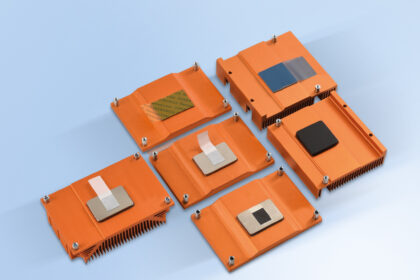

Precious metals can be up to 50x more abundant in e-waste than in mined ore
AI is all the rage, but one thing that’s not being discussed much is what happens to data center components when they reach end of life
In GPU-dense operations, components are being replaced in ever-accelerating hardware refresh cycles, not because they have failed, but because something better/faster/more efficient has come to market. These “end of life” components have several pathways forward, including repurposing them within the company, sanitizing and selling them to a secondary market, recycling them, or sending them to scrap.
Scrapping components should be the last resort, because several high-value, extractable materials are hidden within PCBs and other devices, which can be extracted and reused in future GPU-related manufacturing operations.
What’s in the “Gold Mine”
There’s gold, of course, but also several other precious metals, base metals, and rare-earth elements used in AI component manufacturing. Gold, silver, and palladium are used because some of their electrical, thermal, and chemical properties are unmatched. For example, gold doesn’t corrode and maintains excellent conductivity over time, making it well-suited for connector pins, edge contacts, and wire bonding inside chips. Silver is the most electrically and thermally conductive metal, making it ideal for conductive pastes, solders, and PCB runs. Its thermal conductivity also improves heat dissipation, a major problem in dense AI racks. Palladium is often used in combination with other metals to enhance durability and performance in miniaturized electronics, enhancing the long-term reliability of chips under constant load.
Copper and aluminum make up the backbone of GPU-dense systems. While precious metals offer key performance gains at the micro level, copper and aluminum are more cost-effective for power delivery (e.g., transformers), heat dissipation (heat sinks), and the physical infrastructure that makes AI workloads possible.
Rare-earth materials like neodymium and dysprosium are essential to the mechanical and thermal systems that keep GPU-dense infrastructure running. Neodymium is the key ingredient in NdFeB (neodymium-iron-boron) magnets, the strongest commercially available magnets, which are often used in cooling fans, blowers, and other air-circulating systems. Dysprosium gets added to neodymium magnets to improve heat resistance and magnetic stability.
A variety of sources(1) indicate that precious metals can be up to 50× more abundant in e-waste than in mined ore, and that the materials are already refined, alloyed, and located in accessible components. Estimates vary, but a single ton of e-waste typically contains at least 90g of gold, 400g of silver, and 200,000g of copper.
Is Resource Recovery Financially Worth It?
In a word, yes, but with caveats.
Until recently, IT asset disposition (ITAD) was purely a cost center, focusing on logistics, secure data sanitization and destruction, and regulatory compliance. Third-party ITAD vendors weren’t properly equipped to recover resources profitably and in an environmentally sound manner.
However, several market forces have coalesced to change business perspectives. The reduced lifecycle of GPU-dense hardware is putting strain on natural resources, prompting a search for alternatives to maintain the manufacturing pace for next-gen hardware. In parallel, ITAD vendors have developed new sorting techniques and technologies, making resource recovery more financially viable.
Commodity price fluctuations also significantly influence changing behaviors regarding ITAD. There are limited supplies of precious metals, and even more so, rare-earth materials (hence the name). Coupled with AI-fueled demand for these materials, prices have risen dramatically. For data center operators managing thousands of servers, even trace amounts of these elements can add up to meaningful financial returns when recovered at scale.
However, one size does not fit all when it comes to ITAD. Not all equipment should be treated equally, as this directly affects the decision between refurbishment and material recovery. In many cases, recently EOL’ed GPU-dense hardware may retain significant resale value in secondary markets, particularly for applications that don’t require cutting-edge performance. In these scenarios, refurbishment can yield higher financial returns. However, these components are subject to restrictions imposed by original manufacturers and government authorities, so remarketing must be carefully assessed and audited, and all service partners must comply with strict rules. Conversely, older or highly specialized AI systems with little to no reuse potential may be better suited for resource recovery.
ITAD decisions must also consider operational risk. Data security remains paramount, particularly for AI data centers handling sensitive or proprietary workloads. ITAD vendors should hold NAID AAA, R2v3, or e-Stewards certification to ensure their data destruction protocols are adequate and supported by verifiable chain-of-custody procedures. Compliance requirements, ranging from environmental regulations to data protection standards, also play a role in determining whether to refurbish or recover.
Building a Circular Economy
The shift toward material recovery is part of a broader evolution from the traditional "take-make-waste" linear model to a circular economy that, in part, recaptures “waste” as a manufacturing resource. A circular economy is good for the environment and potentially a business’s bottom line.
To add perspective, the Global E-Waste Monitor 2024 reported that the world generated 62 million metric tons of e-waste in 2022, of which only 22% was properly collected and recycled. The potential for metal recovery from e-waste is currently valued at around $37 billion USD. Certainly not all of that e-waste came from data centers, but they are a significant contributor.
For data centers, this means closer collaboration among operators, OEMs, and ITAD partners to ensure materials are recovered efficiently and reintroduced into manufacturing processes.
Design also plays a role. Hardware that is easier to disassemble and separate into material streams can significantly improve recovery rates. Over time, this could lead to a new generation of “circular-ready” data center equipment.
The environmental benefits are clear — reduced waste and less reliance on virgin resource extraction. But the strategic and financial benefits may be even more compelling.
Rethinking What We Throw Away
“One person’s trash is another person’s treasure” is an apt analogy for e-waste, particularly within the confines of end-of-life GPU-dense components. Modern extraction techniques have proven that material reclamation of metals and rare-earth materials is now financially viable, giving data center operators another option to consider at the point of obsolescence.
Equally compelling is that material reclamation effectively creates a domestic, renewable supply of critical materials. Unlike mining, which is environmentally challenging and geopolitically constrained, recovering materials from existing products can be scaled more quickly and sustainably. It also mitigates risk associated with trade disruptions, export controls, and price volatility.
The bottom line is that the next gold rush isn't underground, but already sitting in your racks.