Driving reliability and responsibility
As the offshore landscape evolves, operators are feeling mounting pressure to demonstrate both technical excellence and environmental responsibility. In the marine and subsea sectors, where equipment runs under punishing loads and in highly sensitive ecosystems, the demand for lubricants that deliver uncompromising reliability while minimising environmental impact has never been greater
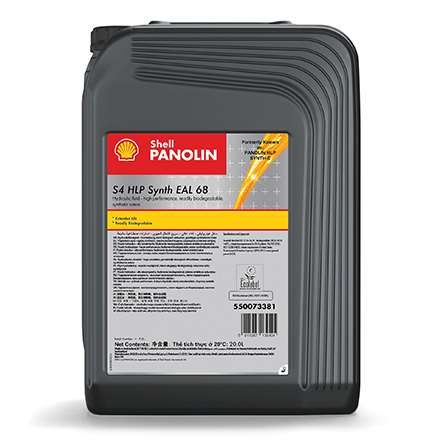
Among the solutions gaining strong momentum is the Shell Panolin range of environmentally acceptable lubricants (EALs). Developed with four decades of expertise in synthetic biodegradable fluids, these lubricants lower environmental impact, meet tightening regulatory expectations, and extend equipment life in some of the world’s harshest working environments.
The Shell Panolin range is a compelling example of how high-performance lubricants can meet the demands of modern marine and subsea applications without compromising environmental integrity. As more organisations integrate sustainability into their operational frameworks, the move toward advanced EALs is poised to accelerate.
BUILDING RELIABILITY INTO EVERY COMPONENT
Marine and subsea operators are accustomed to balancing operational efficiency with risk mitigation. The consequences of lubricant leakage, whether from thrusters, hydraulics or deck machinery, can be extremely costly. Even small leaks lead to unplanned maintenance, reputational damage and potential regulatory scrutiny.
Shell Panolin EALs address these challenges head-on, through synthetic ester technology engineered for long-term stability. One of the most significant benefits reported by operators is extended product life compared to conventional mineral-oil-based lubricants and even many competing EAL formulations. In real terms, this means fewer change-outs, reduced exposure to equipment downtime and better long-term component protection. For subsea systems where access is inherently complex and costly, that reliability delivers a clear operational and economic advantage.
A SUSTAINABLE EDGE
While the oil and gas sector continues its essential role in global energy security, its licence to operate increasingly depends on improved environmental performance. Nowhere is this more pronounced than offshore, where unintentional discharges, even of small volumes, can have visible and immediate consequences.
Shell Panolin EALs are formulated to be readily biodegradable, non-bioaccumulative and low-ecotoxicity, meeting demanding global standards such as OSPAR compliance, US EPA’s Vessel General Permit (VGP) and the Vessel Incidental Discharge Act (VIDA). These properties significantly reduce the ecological impact of any accidental release.
Yet sustainability is not achieved through biodegradability alone. The extended service life of Shell Panolin products plays an equally important environmental role. Longer intervals between lubricant changes reduce waste oil generation, minimise transport-related emissions, and lowers the overall carbon footprint of maintenance operations. In this way, the range supports both environmental protection and the industry’s wider decarbonisation efforts.
STAYING AHEAD OF THE REGULATORY CURVE
Across Europe and globally, environmental regulations for marine and offshore operations are steadily tightening. Operators face increasing scrutiny around lubricant selection, discharge management, and environmental risk assessments.
As stricter standards are enforced, many organisations are choosing to transition to EALs not merely for compliance, but as part of a broader sustainability and ESG strategy. The Shell Panolin range is well positioned to support this shift, offering proven performance aligned with international environmental benchmarks. For operators seeking to future-proof their lubricant strategy and avoid the disruption of last-minute regulatory adjustments, adopting high-quality EALs early is becoming a best-practice approach.
EXPERT GUIDANCE
A successful transition to EALs requires more than simply choosing a compliant fluid. It demands correct specification, compatibility, and a clear understanding of application demands. This is where knowledgeable supply partners play a critical role.
In the UK, Certas Lubricant Solutions serves as the distributor for the Shell Panolin range. Working closely with Shell Panolin’s technical specialists, Certas provides operators with expert guidance throughout product selection and conversion. Whether supporting marine engineers, asset managers or OEMs, its team helps ensure each application is matched with the most effective lubricant solution to balance performance, sustainability and cost-efficiency.
This collaboration is particularly valuable in the subsea sector, where equipment design, material compatibility and maintenance constraints make lubrication decisions technically complex. By combining application knowledge with industry-leading fluid technology, Certas and Shell Panolin help customers optimise reliability while advancing environmental stewardship.
A PROACTIVE STEP FOR OFFSHORE OPERATIONS
The offshore industry is undergoing a quiet but decisive shift. Operators are no longer viewing environmentally acceptable lubricants as a regulatory checkbox but as a strategic asset, one that strengthens reliability, reduces risk and supports operational excellence in an increasingly scrutinised environment.
If you’re visiting Subsea Expo in Aberdeen on 4-5 February 2026, the Certas and Shell Panolin teams will be on stand to discuss any lubricant requirements and provide guidance on selecting the right solutions for your operations.
For more information visit: www.certaslubricantsolutions.com