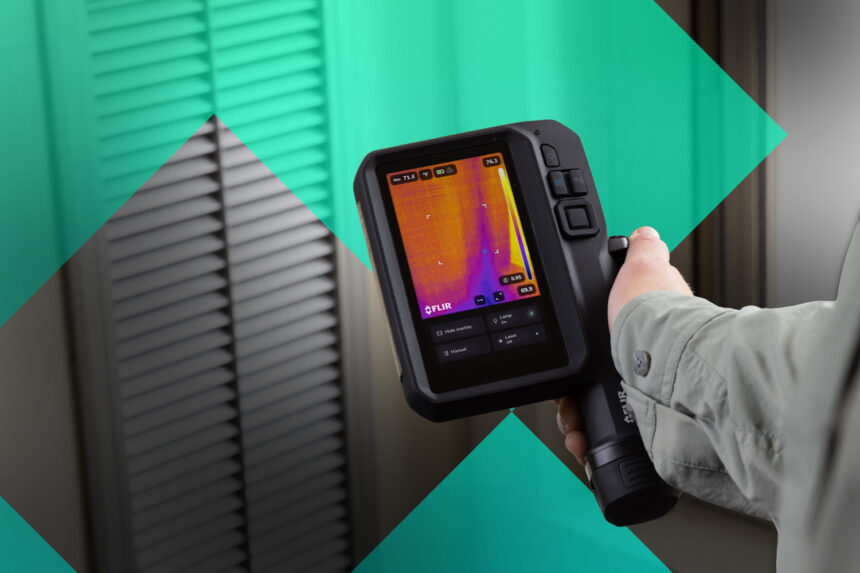
Onterris, formerly CTEH, has reduced moisture mapping costs by upwards of 40% while improving accuracy and speed by combining advanced thermal imaging with workflows connected to the company’s moisture assessment platform
The Flir iXX Series can enable faster inspections, real-time collaboration, and more efficient data integration, enhancing field performance and client delivery.
The Onterris Resilience and Recovery Team helps to return buildings to safe, functional conditions after issues such as contamination, environmental hazards, and water damage across the United States, Canada, and Australia.
The teams can handle a variety of building science challenges, including indoor air quality and ventilation assessments, disaster response, chemical impacts, and post-remediation verification. A key aspect of this work is the ability to quickly understand what is happening inside structures, often under time pressure and in complex environments. Moisture migration, hidden damage, and contamination risks must be identified early to help ensure effective remediation and reduce long-term costs.
Thermal Imaging and Structured Workflows in Practice
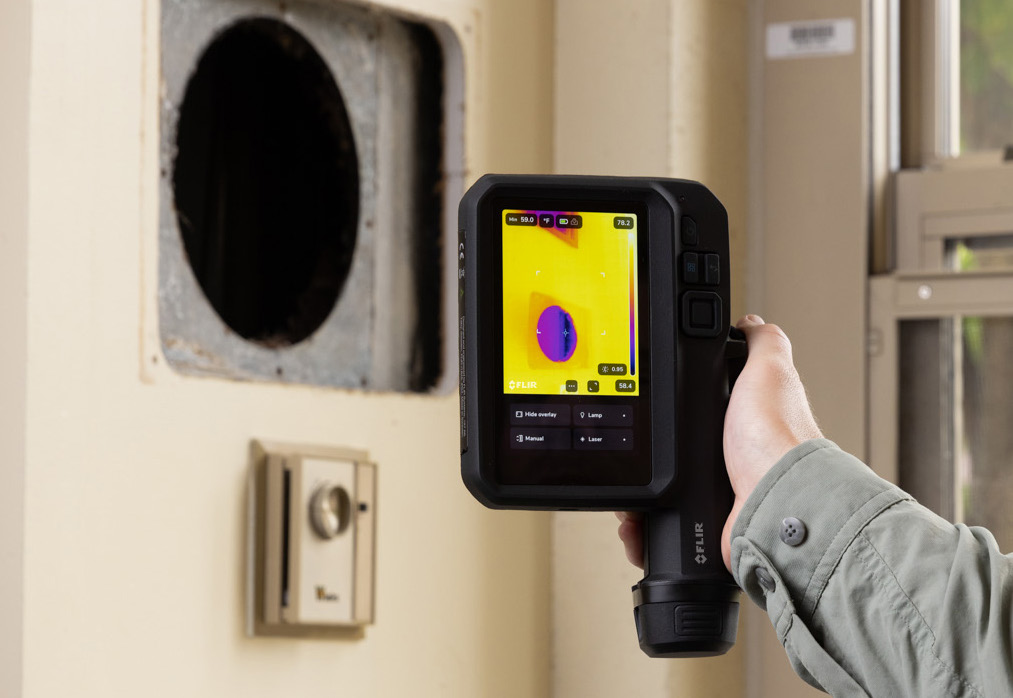
Thermal imaging is essential to Onterris’ inspections, helping teams to quickly spot temperature differences that reveal moisture paths, hidden leaks, and other issues not visible to the eye. It can also support airflow checks, identify potential biological growth, and detect chemical leaks.
Combined with moisture meters, hygrometers, iPads running Osterris’ Moisture Assessment Survey Tool (MAST), LiDAR scanning, and integrated data capture, this setup enables teams to efficiently map conditions, document findings, and provide clear, client-ready reports supporting remediation decisions.
Choosing the iXX-Series
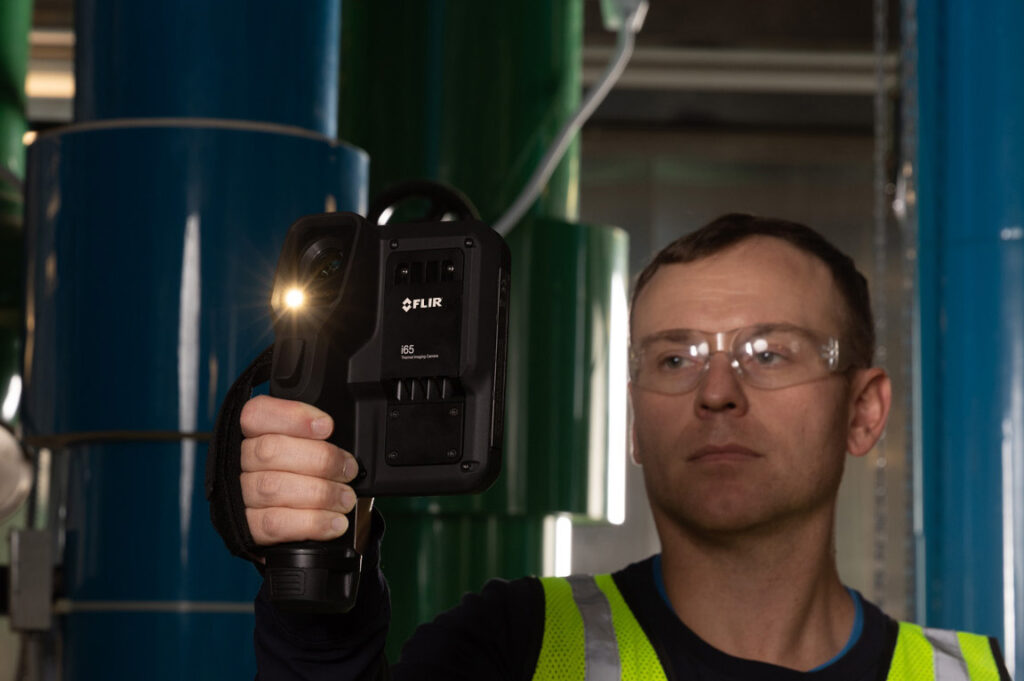
Before adopting the Flir iXX Series, the company utilised a mix of Flir Ex and Cx-Series cameras. The switch to iXX was driven by the need for higher accuracy and field efficiency, helping teams to reliably detect subtle issues, work comfortably through long inspections, and efficiently cover larger or elevated areas.
Key selection criteria included:
- High-resolution imaging for better anomaly detection
- Ease of use and ergonomics for long days in the field
- Open API compatibility to integrate directly with internal software
- Built-in teleconferencing capabilities for real-time expert support
A valuable advantage is the ability to connect thermal images with the company’s MAST platform, eliminating manual steps and reducing the risk of errors.
Immediate Impact
The transition to the iXX Series has delivered measurable improvements across operations:
- Average cost per square foot reduced by upwards of 40%
- Improved detection accuracy, with fewer overlooked areas
- Reduced downtime thanks to longer battery life
This leads to more efficient inspections and better outcomes for clients, without increasing operational complexity. The iXX cameras have enabled Onterris to identify problem areas earlier and with greater confidence, increase responder productivity in the field, simplify training and deployment, and provide more consistent and reliable inspection results. The cost reduction represents how improved imaging and data integration can impact profitability and scalability.
Tangible Benefits and Future Direction
The expansion of the iXX across Onterris has been driven by practical advantages that strengthen operational efficiency and brand reputation, positioning the business for continued growth.
These include:
- Immediate access to expert input via live communication
- Higher-quality deliverables for clients
- Reduced need for follow-up analysis after site visits
This enables teams to resolve issues sooner and with greater confidence, while improving overall client satisfaction. The adoption of the iXX-Series also improved team morale and confidence in equipment, enabled faster turnaround time for clients, and provided stronger data quality and reporting.
Looking ahead, the biggest opportunity is deeper digital integration with the ability to automatically link thermal images to inspection data, reducing manual work and errors, and speeding up reporting.
The iXX can already support this through built-in connectivity, enabling real-time collaboration and faster on-site decisions. Future enhancements, such as automatic logging of environmental and psychrometric data with each thermal image and consolidation of tools into a more integrated inspection ecosystem, could further streamline workflows and reduce equipment load while increasing data quality and usability.