ResilientFlex targeted for complex, small and lightweight applications
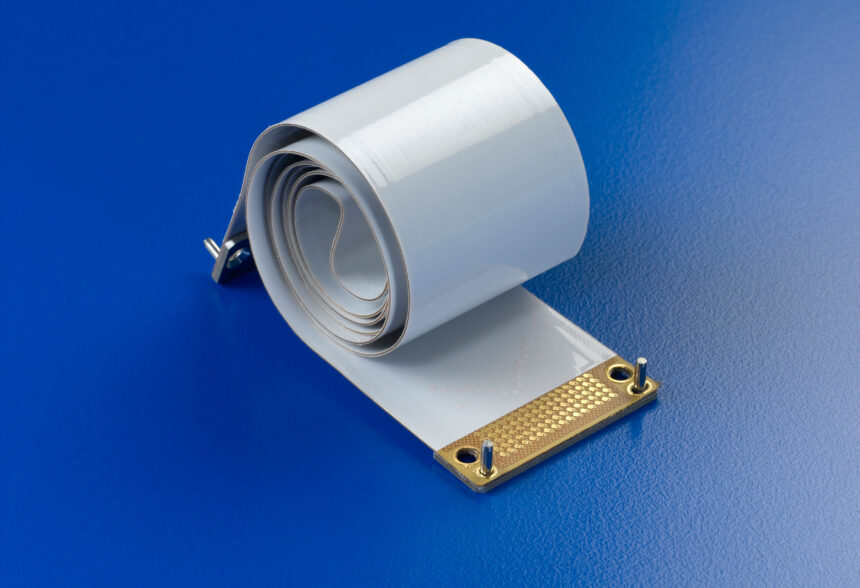
The ResilientFlex coiled assembly supports high speed signal transmission applications (such as SATA, SAS, etc) which require flexible, expandable packaging for high-signal frequencies demanding tight impedance control and 12.0 Gbps data rates and beyond.
The ResilientFlex coiled assembly, from Molex Incorporated, is based on technology that enables hot-swapping connections in removable-media applications, such as hot-swapping within storage drawers.
The Molex ResilientFlex coiled assembly can be implemented in both self-coiling flex circuit assembly or mechanically assisted coiling features that can extend electrical-connection lengths up to 558.80mm (22.00-in) beyond the installed length.
The ResilientFlex coiled assembly can be terminated with either Molex connectors, such as backplane and board-to-board connectors, or interposers— any Z-axis compression connection that has a separable interface to the flex and PCB.
The Molex ResilientFlex coiled assembly has several key features and benefits, including:
* A self-coiling technology design that eliminates the need for additional coiling hardware, or additional options for mechanically assisted coiling hardware customized to meet application requirements:
* Ability to connect to high-speed connectors, such as backplane and board-to-board connectors, so it supports tight impedance control and data rates of 6.0 Gbps, 12.0 Gbps, and beyond;
* A 28-in overall flat, flex length that provides up to 22-in (558.80mm) connection-extension lengths;
* Termination with any Molex high-speed connector, meaning it can be used in multiple removable-media applications, hot-swapping within storage drawers;
* Termination with any interposer, regardless of the number of positions or pitch, so it provides a low-profile, 0.80mm (0.031-in) pitch, low-loss connection.
The Molex ResilientFlex coiled assembly is part of the line of copper flex products—also known as flexible printed circuits—which are designed to be ultra-reliable packaging technology. They are targeted for complex, small and lightweight applications, as well as harsh environments.