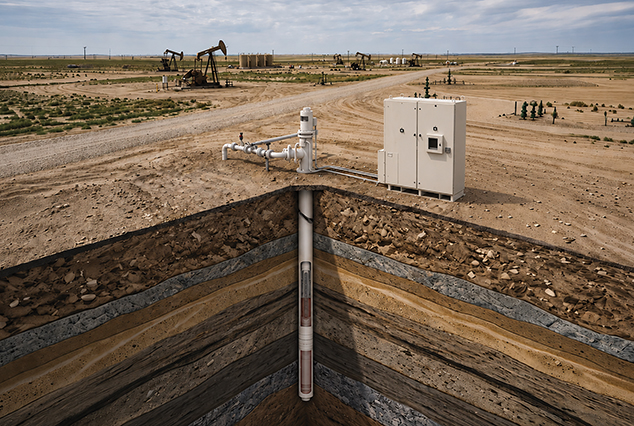
Motaz Hassan, global application manager – artificial lift solutions at ABB, explains why motor control is the key starting point for optimising ESP installations
When natural reservoir pressure is insufficient, artificial lift systems incorporating Electrical Submersible Pumps (ESPs) play a vital role in maintaining the flow of fluids from oil wells. ESP systems must operate under continuously changing conditions including declining reservoir pressure, variable gas content, producing solids, changing fluid properties, and eventually fluctuating load demand. Applications must respond to dynamic loads, rather than the steady-state conditions found in most industrial processes.
The pump motor is required to operate across a wide range of speeds and loads, often under unstable conditions. The variable speed drive (VSD) that controls the motor must deliver consistent performance in inconsistent environments. This calls for the VSD to function as more than a speed control device; its embedded control logic must provide smooth start and acceleration behaviour, stable operation during load variations, response to supply and load disturbances, process changes and balance between protection and production continuity.
In addition, accumulated field experience enables the development of application-specific control programmes that can improve usability, enhance safe operation, protect equipment, and support production optimisation. ESP installations are increasingly adopting permanent magnet (PM) motors to improve efficiency and performance. This requires advanced drive control to ensure precise and robust startup, synchronisation, efficiency, management of regenerative behaviour during backspin conditions and stable control across varying operating conditions.
TACKLING BACKSPIN
Backspin occurs should the pump stop and the fluid column drives the system into reverse rotation. The magnitude of ESP backspin torque and the resulting speed is determined by reservoir and well conditions, the fluid properties, the height and load of the fluid column, as well as the design and construction of the pump itself. All these variables dictate the behaviour of the ESP system during shutdown and how aggressively it may rotate in reverse. This, in turn, directly impacts the complexity and risk associated with restarting the ESP safely.
To avoid backspin, the VSD has to detect the rotational status of the motor, prevent unsafe restart attempts, and manage controlled synchronisation before torque is applied. A stable and controlled restart is essential both to protect the equipment and maintain production continuity.
SUCCESSFUL RESTARTS
Downhole mechanical issues can cause difficulties for ESP systems in ensuring continuous operations or achieving a successful restart. A common cause is solids present in the fluid, or harsh operating conditions. These factors can increase torque demand, eventually leading to a full stalled condition if the pump becomes stuck or triggers an overload trip.
Preparing for a successful restart requires dedicated motor control capabilities within the drive so that the pump is released in a controlled manner. Effective management of this recovery phase effectively is vital to minimise additional mechanical stress and avoid repeated trip conditions.
Managing underload conditions covers a different set of challenges. There can be a negative influence on downhole pump and motor cooling efficiency because the motor relies on fluid flow for proper heat dissipation. Persistent underload conditions can indicate mechanical issues such as broken shafts or partial loss of pump stages. If not addressed, they can ultimately lead to long-term degradation or permanent failure if not properly addressed.
OVERCOMING GAS LOCKS
Many wells, especially those with high gas content, can experience gas locks that significantly affect ESP performance and create underload conditions. The risk is increased in installations where there is limited or no gas separation or handling equipment. The result can be the pump losing its ability to lift fluid, causing unstable operation and reduced production efficiency. Advanced motor control capabilities are required within the drive to continuously monitor operating parameters and adapt motor behaviour accordingly.
APPLICATION-DRIVEN ESP MOTOR CONTROL
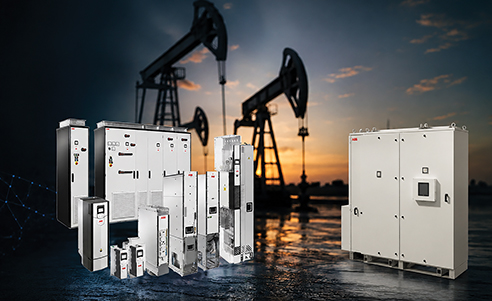
ESP motor control solutions have progressively evolved from generic control approaches toward application-driven solutions that incorporate dedicated functionalities. A good example is the Submersible Motor Control Programme (SMC) implemented within ABB’s ACS880 drive platform.
SMC is focused on delivering application-oriented motor control to ensure stable performance across a wide operating range, while also integrating key protection functions. It also supports a simplified and robust system architecture, reducing overall complexity without compromising performance or reliability.
Dynamic oilfield conditions present significant challenges for ESP systems in maintaining stability, protection and performance. Adopting intelligent motor control through a drive with dedicated built-in functionality can transform these challenges into controllable outcomes.
SMC-DRIVEN FUNCTIONS
• Kick-start & acceleration assistance: This uses current-boost-based start functions to provide sufficient torque for a PM motor at low speeds. It enables reliable startup and smooth acceleration under high load conditions without losing synchronisation
• Energy optimiser mode: This automatically optimises motor current using a Maximum-Torque-Per-Ampere (MTPA) approach. It improves power factor and energy efficiency especially at partial loads compared to conventional scalar control
• Backspin speed observer: The sensor-less observer detects motor speed and direction during backspin to enable safe startup by avoiding operation against reverse rotation. This prevents torque reversal, reduces the risk of trips, and minimises mechanical stress
• Flying start: This enables the ESP to restart in a backspin condition by synchronising with the motor’s speed and direction. It ensures smooth restart in the correct direction while avoiding mechanical stress and high inrush currents
• Pump impeller cleaning: Applying controlled motion sequences can safely remove solids buildup in pump stages. This restores performance while reducing the risk of stall, instability, mechanical failure, and downtime
• Gas lock and underload protection: This function detects gas lock conditions and dynamically adapts motor behaviour to restore flow, stabilising operation and reducing manual intervention in gas wells
• Production optimisation (PID Control): Built-in PID control continuously adjusts the motor speed based on process feedback, maintaining optimal operating conditions and maximising production efficiency
• Automatic restart: The ESP can recover quickly from transient trips by automatically restarting the drive under actual operating conditions
Read the latest issue of International Design Engineer magazine here, or visit our magazine archive for all our recent publications.