
Battery innovation is often judged by a familiar set of metrics: higher energy density, faster charging and lower cost. However, a newly published study from researchers at the City University of Hong Kong and Southern University of Science and Technology suggests another characteristic may become increasingly important as transport electrification expands, environmental safety
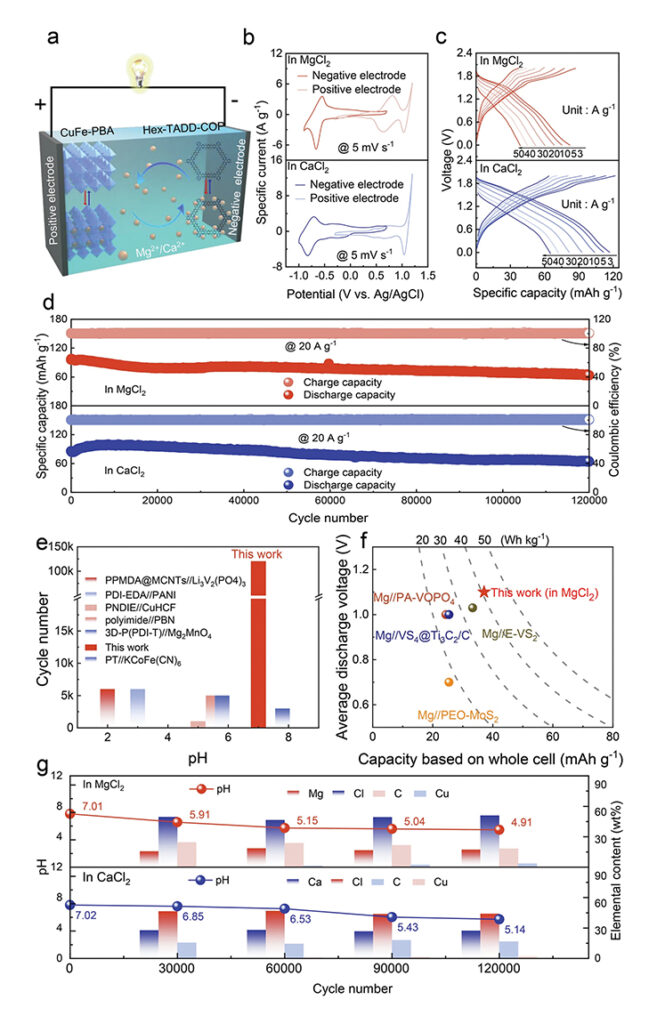
Published in Nature Communications, the research describes an aqueous battery that uses a neutral pH electrolyte rather than the acidic or alkaline electrolytes found in many existing water-based battery systems. While the study has attracted widespread attention because the electrolyte is chemically benign enough to resemble the mineral solutions used in tofu production, the more significant engineering achievement lies in demonstrating an exceptionally durable battery chemistry capable of more than 120,000 charge-discharge cycles without significant degradation.
A TRULY VIABLE ALTERNATIVE TO LITHIUM-ION?
For vehicle manufacturers, the immediate question is whether such technology represents a future alternative to lithium-ion traction batteries. The answer, at least in the near term, is probably no. The prototype’s specific energy of approximately 48.3Wh/kg is substantially lower than current automotive lithium-ion batteries, making it unsuitable for applications where vehicle range and weight remain critical design constraints.
However, that does not diminish its potential significance. Unlike conventional lithium-ion batteries, which rely on flammable organic electrolytes and require careful thermal management, the new chemistry employs a neutral electrolyte based on magnesium and calcium salts. This virtually eliminates corrosion associated with acidic or alkaline aqueous batteries while dramatically improving operational safety and environmental compatibility. According to the researchers, the electrolyte is sufficiently benign that complete battery systems could meet environmental disposal standards without requiring specialist hazardous waste treatment.
DIVING DEEPER INTO THE TECH
The research team’s breakthrough centres on the development of a covalent organic polymer negative electrode using a hexaketone-tetraaminodibenzo-p-dioxin structure. This material enables efficient magnesium and calcium ion transport while maintaining exceptional structural stability during repeated charge-discharge cycles.
Laboratory testing demonstrated capacity retention across 120,000 cycles at high current densities, an endurance figure approximately an order of magnitude greater than many commercial lithium-ion batteries. At one charge cycle per day, this equates to a theoretical operational lifetime measured in centuries rather than decades.
LOOKING AT LONGEVITY
While no transport manufacturer expects vehicles to remain in service for 300 years, longevity is becoming an increasingly valuable attribute as electrification extends beyond passenger cars into commercial vehicles, buses and supporting infrastructure.
Charging depots, renewable energy buffering systems and microgrids increasingly rely on stationary battery storage to manage fluctuating electricity demand. Unlike traction batteries, these installations prioritise cycle life, safety and low maintenance over maximum energy density. This is where aqueous battery technology could prove particularly valuable.
A depot-based battery capable of cycling multiple times each day for several decades without significant degradation would substantially reduce lifecycle replacement costs while eliminating many of the fire protection measures currently associated with lithium-ion energy storage systems.
For fleet operators managing electric buses or heavy commercial vehicles, integrating extremely long-life stationary batteries alongside renewable generation could improve energy resilience while reducing peak electricity demand and lowering operating costs.
SAFETY IN FOCUS
The chemistry may also prove attractive for transport applications operating in safety-critical environments. Airports, rail infrastructure, tunnels, ports and defence installations all require energy storage technologies with extremely low fire risk. Water-based batteries offer an inherently safer electrochemical platform than organic electrolyte systems, potentially simplifying installation requirements and reducing insurance and safety compliance costs.
OBSTACLES STILL PERSIST
Nevertheless, significant technical challenges remain before commercial deployment becomes realistic.
Energy density continues to represent the primary limitation. At approximately 48.3Wh/kg, the demonstrated cell delivers only a fraction of the energy storage available from current automotive lithium-ion chemistries, making direct substitution impractical for most vehicle propulsion applications. Manufacturing scalability also remains uncertain, with the specialised covalent organic polymer electrodes requiring further development before industrial production can be considered economically viable.
As with many laboratory battery breakthroughs, the path from scientific publication to commercial product is likely to be measured in years rather than months. Even so, the research highlights an important shift in battery development priorities. Rather than pursuing incremental increases in energy density alone, researchers are increasingly balancing performance with sustainability, safety and whole-life environmental impact.
For transport manufacturers, this broader perspective is becoming increasingly relevant. Future electrified transport systems will depend not only on vehicle batteries but also on extensive supporting energy infrastructure, including depot storage, renewable integration and grid balancing. Different battery chemistries are likely to serve different roles, with no single technology optimised for every application.
The new aqueous battery illustrates this changing landscape. Although it is unlikely to replace lithium-ion cells inside passenger cars or commercial vehicles in the foreseeable future, its combination of ultra-long cycle life, non-flammable operation and environmentally benign chemistry could make it an attractive option for the stationary energy systems that increasingly underpin electric transport operations.