A new unloading system streamlines processes
Unloading bulk produce from silo vehicles can be a big part of the role for operators in the process engineering space, and a new unloading system from CVS Engineering promises to make this part of the job more efficient. The product, called SKL-E Pack, benefits from low operating costs, quiet running and simple installation.
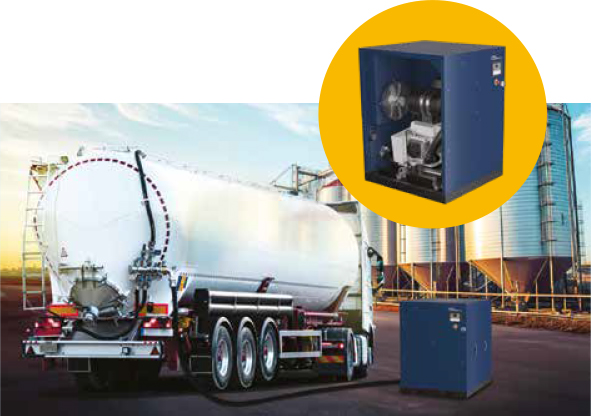
The product operates emission-free units that ensure a smooth unloading process for bulk goods. The product will be used by process engineers from the food production, construction, chemical and logistics industries as well as those working in recycling and environmental industries. One advantage of the system is that no engine or compressor of the delivering lorry needs to be running during the unloading of grain, sugar, flour, cement, lime, PVC granulates, soda or animal feed, ensuring a low emission and low-noise process. The stationary system can also be operated independently of the vehicle and is continuously available.
Advantages for freight and truck operators
The SKL-E Pack offers tangible benefits for haulage companies and fleet operators in particular. These include the fact that no onboard compressor is required and the investment costs per vehicle are reduced. In addition, there is no need for complex superstructures and maintenance costs are reduced since no additional technology is installed on the vehicle.
The system also offers flexibility in daily practice; any truck can carry any load – regardless of whether it is equipped with a compressor or not. This means that subcontractors or rental vehicles can also be used without any problems. Another plus point is that the stationary solution completely relieves the load on the truck engine, thereby extending its service life and reducing thermal and mechanical stress.
More process reliability
There are also clear advantages for bulk goods receivers. The SKL-E Pack enables consistent unloading regardless of which vehicle or subcontractor is used for delivery. The unloading process can be designed to be clean, quiet and efficient, which is particularly important in sensitive areas such as food factories, breweries or inner-city production sites.
In addition, customers remain independent of the haulage company’s technology, even if they do not use onboard compressors, unloading can still be carried out reliably. For companies with a high truck frequency, the system pays off in the long term thanks to standardised processes and the possibility of energy-efficient operation, for example when frequency converters are used.
Increasing demands on sustainability and efficiency
The unit was developed as a response to increasing demands for sustainability and efficiency. However, it also contributes to operational optimisation, as the compressed air can be used for pneumatic conveying, for example.
“Until now, unloading was mainly done via the compressor on the truck. However, truck-based systems have disadvantages such as a high noise level,” explains Patrick Zettler from CVS engineering. In addition to noise emissions, truck engine systems also lead to higher fuel costs and higher maintenance costs owing to increased mileage.
User-friendly operation
It is worth providing an overview of the product’s components. Depending on the application, the power pack consists of an oil-free screw compressor and an electric motor with 22 to 55 kilowatts. This combines the main advantages of stationary unloading in one product and offers users less downtime and reduced operating costs. An integrated control unit is used to adjust the volume flow and optimise energy consumption. Depending on the model and requirements, components such as a frequency converter, compressed air cooler and speed control are optionally included for even more efficient operation.
For more information: www.cvs-eng.de/en/