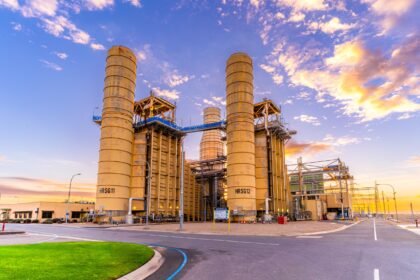
Plant managers must balance maximising uptime with essential maintenance tasks
Words by Stephen Howes, product manager – connected devices at IMI.
Unplanned downtime and operational inefficiencies significantly impact refinery profitability. Plant managers must balance maximising uptime with essential maintenance tasks, yet a lack of cost-effective solutions to tackle root causes makes this task more challenging. This not only hurts profitability – it also increases CO2 emissions.
Extensive shutdowns
Though brief shutdowns are occasionally required, evidence suggests they are often too long given the technology currently available. For example, in the first nine months of 2023, there were 124 unplanned maintenance shutdowns at US refineries, a 53% increase from the previous year. Meanwhile, Europe’s largest refinery, Shell’s Pernis in Rotterdam, experienced unplanned shutdowns in June and September 2023.
The most pressing issue here is the unplanned extension of scheduled maintenance shutdowns. Potential problems are often discovered only when critical refinery components and equipment are offline, and their condition can be analysed in greater detail. As any replacement parts need to be sourced, delivered, and installed to fix identified issues, periods of downtime can stretch on.
While some downtime is unavoidable, plant managers must seek to minimise it without sacrificing essential maintenance. Given this, proactive critical component monitoring may offer a way forward.
Steam Trap Focus
Of these critical components, steam traps stand out as an area where faults can lead to unplanned or extended shutdowns. With a failure rate of 10-25% and upwards of 10,000 included in every refinery, they can cause significant efficiency losses and safety hazards.
Despite this, steam traps are normally only inspected once a year, meaning that future component issues may not be resolved until at least the following year. Where maintenance crews cannot easily access the steam trap for inspection, they may go unchecked and written off as risk.
A steam trap costs about $380, but when it leaks, its losses equate to c.$2,300. These leaks can also hugely impact boiler efficiency – while plant managers may think their equipment is operating at 82% efficiency, component failure could reduce this to 70%. Extrapolated over an entire plant, these numbers soon add up and can hugely affect overall refinery efficiency.
The solution lies in automated, real-time asset monitoring, which offers continuous oversight and immediate issue identification, overcoming the limitations of manual inspections.
Rising Costs
Though real-time asset monitoring is becoming more widespread in refineries, it is still not commonplace. This is partly due to historical issues. Early monitoring solutions often faced challenges around battery power limitations, which required manual intervention and the expense of replacement power cells.
By contrast, IMI’s STM-10 steam trap monitoring solution, powered by thermal energy and using LoRaWAN protocols, allows refinery managers to monitor steam traps in real-time, providing instant alerts and data on inefficiencies. Its cloud-based dashboard also enables instant diagnosis of steam trap failures, allowing corrective actions before production is affected.
Real-time asset monitoring offers a promising solution for maximising refinery uptime while ensuring best possible maintenance for critical components including steam traps. Self-powered hardware advancements such as the STM-10 enable refinery managers to achieve the benefits of reduced unplanned shutdowns and improved operational efficiency, and should be sought out by plant stakeholders.