Digital twins have long promised to transform oil and gas operations, but turning sophisticated simulations into tools that can influence live operational decisions has remained a challenge. Advances in AI and physics-based modelling are now helping to bridge that gap, enabling operators to respond to changing conditions, optimise production and improve efficiency across complex industrial systems.
Greg Fallon, co-founder and CEO of Geminus AI, is working to bring this next generation of digital twins into real-world operations. By combining physics-based models with real-time optimisation and uncertainty quantification, Geminus aims to help operators move beyond isolated pilot projects towards scalable solutions that deliver measurable operational value.
In this Q&A, Fallon explains what has changed in digital twin technology, why physics matters when modelling complex assets, and what it takes to scale deployments across industrial operations. He also explores how lessons from oil and gas could help unlock new opportunities in data centres, power generation and other energy-intensive sectors.
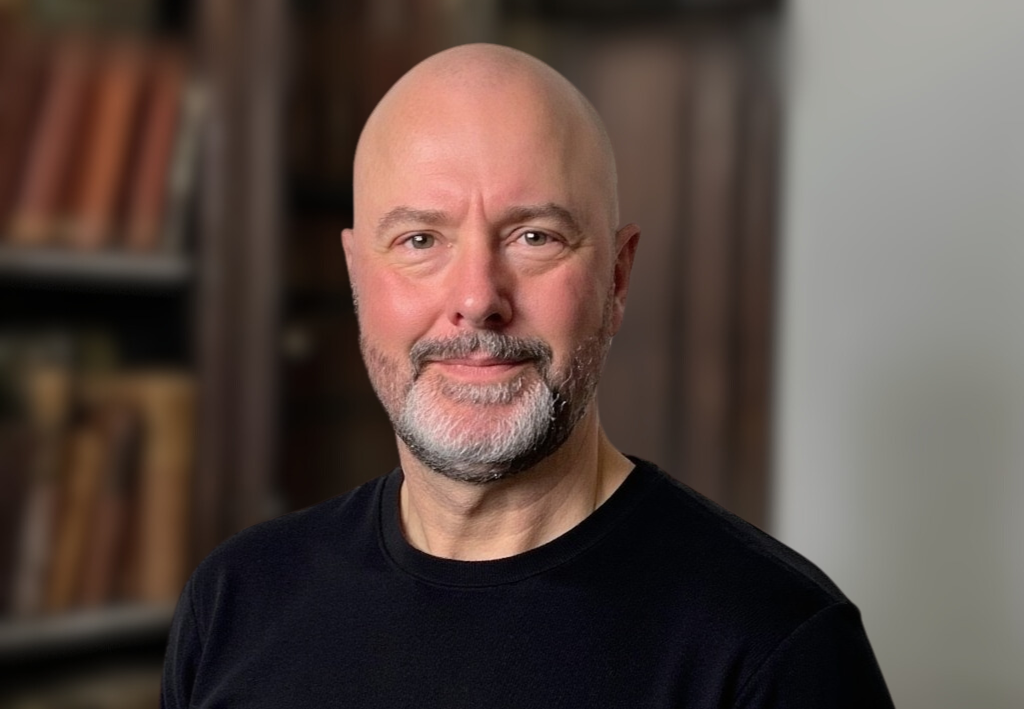
Digital twins have been discussed in oil and gas for years. Where do you think the technology stands today, and what has changed to make it genuinely useful for live operational decision-making?
The concept was never the problem. Operators understood the value of a high-fidelity model of a compressor train or a gathering network a long time ago. The economics were what stopped it. A single twin took a team of specialists the better part of a year to build; it was tuned to one asset, and by the time it was finished, the asset had changed underneath it. So the industry ended up with a portfolio of impressive pilots that never made it into daily operations, and the term itself picked up a lot of baggage.
Three things changed. The first is build time. What used to take specialist teams months or years now takes hours, because the platform designs the modelling approach itself rather than waiting for a specialist to do it by hand. The second is maintenance. A twin that cannot keep up with wear, workovers and upgrades is a snapshot, and operations end up running on yesterday. Ours update themselves as the physical system changes. The third is scope. Twins used to cover one asset, while an operator runs a system of systems, so we connect them across the value chain. Those three together are what moves a twin from an engineering study into something a control room actually uses.
What is the difference between a digital twin that can simulate an asset and one that can actually optimise it in real time?
A simulator answers one question at a time, and it usually answers it late. A specialist can spend days building and running a case to find a better compressor setpoint, and field conditions have already moved by the time the answer arrives. Work like that is valuable for design and for planning. It cannot carry daily operations.
Optimising in real time requires three capabilities a simulation on its own does not provide. Speed, because the answer has to land quickly enough to change what happens on shift. An honest treatment of uncertainty, because you never know the state of the system to perfect precision, and a recommendation that only holds under one assumed set of conditions is not safe to act on. You have to map the range of what could plausibly be true and choose the action that performs well across that range. And a decision layer, because an optimiser has to turn targets and constraints into specific setpoints an operator can act on, rather than producing a prediction and leaving the judgement to somebody else. There is also a scope difference worth naming. A simulator models the asset as designed. An optimiser has to model the asset as it is running today.
You describe Geminus’ approach as ‘physics-native’. Why is incorporating physics important when modelling complex oil and gas operations, particularly when conditions change?
Oil and gas has enormous volumes of data and is still data-poor in the way that matters. Your history tells you about the operating envelope you have already run. The questions worth asking are almost always about a state the asset has not been in, such as a heavier feed, a higher rate, an ambient temperature you rarely see, a compressor down. A purely statistical model extrapolates badly there, and it fails quietly rather than obviously. Encoding the governing equations for heat transfer, fluid dynamics and phase behaviour directly into the model keeps it anchored when it leaves the data it was trained on.
Observability is the second reason. These systems are only visible in fragments, a sensor here and a sensor there. You may measure pressure at one location when what constrains you is the temperature somewhere downstream. Physics is what fills the gap between what you can measure and what you actually need to know. The third reason is trust. An operator is not going to change a setpoint on a mission-critical unit because a black box suggested it. A physics-native model can show its reasoning in terms an engineer already uses, and that is usually the difference between a recommendation that gets adopted and one that gets ignored.
What are the biggest challenges operators face when moving from a successful digital-twin pilot to a production-scale deployment across real assets?
The first is that the next asset is not the last asset. Units built to identical designs and commissioned at the same time behave nothing alike once they have been in service, because their duty, their feed and their maintenance history diverge. A model trained on one fails on the other, which means a successful pilot has given you a twin rather than a method. Scaling requires a way to produce a twin per asset cheaply, and that is an algorithmic problem, not a staffing problem.
The second is drift. Physical systems age, get damaged, get repaired and get upgraded. If staying current means recalling the specialists for another long engagement, the programme dies quietly while operations run on a model that no longer matches reality. The third is organisational. Most operators are siloed by design, so the subsurface team optimises lift, facilities optimises throughput and processing optimises yield, and none of them can see the consequences of the others’ decisions. Lifting more oil is worth nothing if the plant cannot process it. Beyond that, I would add one discipline point. Uncertainty quantification gets treated as the step after the model is built. It is always the next step, and it never happens. It has to be a first-class part of the system from the beginning, or the model will be technically impressive and operationally unusable.
You’ve seen production gains and reductions in methane flaring from deployments. What does the technology actually change at an operational level to deliver those kinds of results?
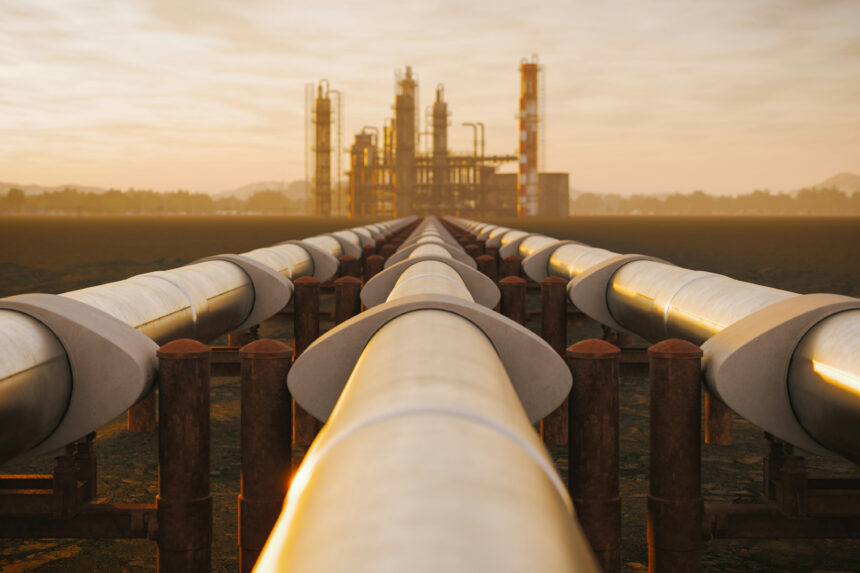
Think about a large gas gathering system, with hundreds of wells feeding compression and hundreds of miles of pipe running into the processing facilities. Wellhead pressures decline, ambient temperatures swing, equipment trips, and each of those forces the operators to flare. That is emissions exposure and lost sales at the same time, and it happens on assets that are otherwise well run.
What changes at the operational level is the setpoints, and more importantly, the cadence at which they change. Instead of a specialist producing a single answer well after conditions have moved, the twin updates compressor settings continuously against the state the field is actually in, which reduces flaring and unchokes the flow. Most of that gain comes from removing conservatism. When you cannot predict what a change will do, the safe move is always to choke back and carry a wide margin, and that margin is paid for in barrels every day. A model that quantifies its own uncertainty lets you run against the limit that actually applies today rather than the limit implied by the worst case you can imagine.
Looking beyond oil and gas, where do you see physics-based digital twins having the greatest potential, and what lessons from energy could be applied to other industrial sectors?
Data centres. Their dynamic nature, energy consumption and cost to operate make them the perfect candidate for this type of technology. Managing a data centre cooling network alongside power generation and distribution is the same class of problem as managing a gathering network. Closely related are grid and power generation. After that, chemicals and materials, mining and metals, and eventually pharmaceuticals and aerospace. The underlying requirement does not change – a physical system that is expensive, variable and only partly observable, where the decisions are made faster than the analysis can keep up.
The lessons from energy transfer fairly directly. Assets of identical design behave differently, so the unit of value is the individual asset, with a twin that maintains itself. The economics sit at the value chain level rather than the asset level, because optimising one unit inside a constrained system usually just moves the bottleneck. Uncertainty has to be designed in from the start rather than added at the end. And the answer has to reach the person making the decision. If using the system requires a data scientist, it will stay in the engineering department and never reach the floor, which is exactly where the last decade of industrial AI has stalled.