Bringing a new product to market has never been a straightforward process. While software development cycles have become increasingly agile, the journey from an initial product concept to a manufacturable design and ultimately scalable production remains complex, fragmented and often time-consuming
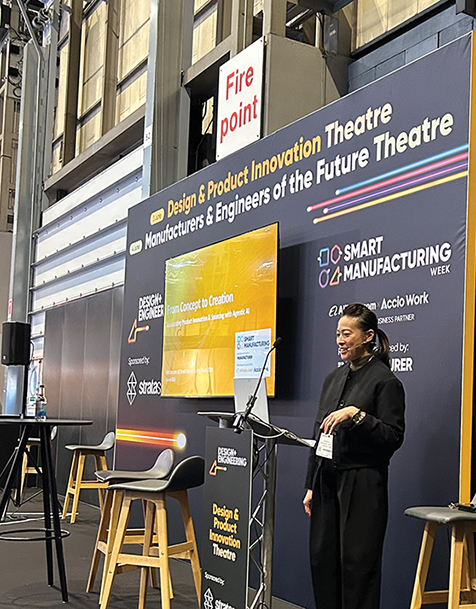
For design engineers, product developers and sourcing teams, a big challenge lies in navigating the numerous handovers, approvals, supplier interactions and procurement processes required to transform those ideas into physical products. According to Michelle Lau, managing director at Alibaba.com, agentic AI could fundamentally change how these activities are managed.
“Alibaba.com, our agentic AI platform, is bridging the gap between an initial idea from a sketch to a manufacturable prototype and ultimately into scalable global production,” says Lau.
The emergence of agentic AI represents a significant shift from conventional AI tools. Rather than simply generating content or answering questions, agentic systems are designed to execute tasks, coordinate workflows and automate complex business processes. For product development teams, this has the potential to reduce delays and accelerate decision-making across the entire product lifecycle.
TACKLING BOTTLENECKS
Despite advances in digital engineering tools, physical product development remains characterised by numerous manual processes. Lau highlights the reality facing many engineering organisations: “Turning a promising product concept into a physical product prototype. It might take weeks, if not months, or sometimes for more complex products, years.”
The underlying problem is not necessarily technical complexity, but fragmentation. “In reality, product development is a logical development track, but it’s also a very highly fractional process. Every single transition is a silo,” she explains.
From supplier identification and quotation management to procurement, manufacturing validation and logistics, product development often involves multiple disconnected systems and stakeholders. Each transition introduces delays and opportunities for miscommunication. The objective of agentic AI is to remove these barriers by creating a connected digital workflow capable of managing tasks autonomously while maintaining human oversight.
BEYOND SEARCH-BASED SOURCING
One of the most immediate impacts of agentic AI is in supplier discovery and sourcing. Traditional sourcing platforms have relied heavily on keyword searches and manual supplier evaluation. However, product developers increasingly work with richer forms of engineering data, including sketches, technical drawings and CAD files.
“Today product designers and engineers can upload 2D drawings, a sketch or a CAD file directly into our agent system,” says Lau.

Rather than requiring users to manually search for suitable suppliers, the system analyses design information and identifies potential manufacturing partners capable of producing the component or product. This capability effectively transforms sourcing from a search exercise into an engineering-driven workflow, reducing the time required to identify manufacturing options and assess production feasibility.
BUILDING DIGITAL AGENT TEAMS
Perhaps the most significant shift is the emergence of AI agents that can perform specialised functions throughout the development process.
“We are moving into the next generation of our Agent Business Platform,” says Lau. “We believe that, when we talk about product development, sourcing is only one journey along the complete value chain.”
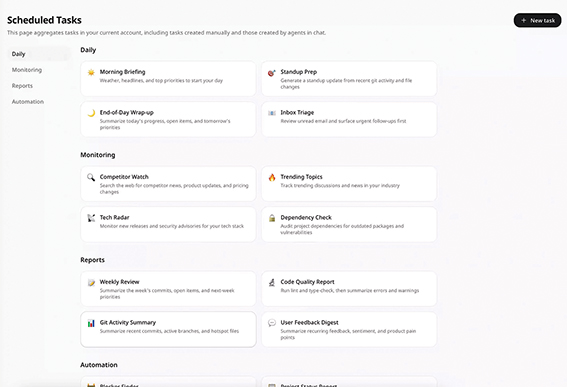
Alibaba.com’s Accio Work platform enables users to deploy multiple AI agents tailored to specific activities within the product development cycle: “Now our platform can now provide manufacturers a team of agents that can actually perform the different tasks of the value chain for you,” Lau explains.
These agents can undertake market research, competitor analysis, supplier engagement, quotation management and procurement support, allowing engineering teams to focus on higher-value activities such as design optimisation and product innovation.
ACCELERATING MARKET RESEARCH AND VALIDATION
One of the earliest stages of product development involves validating whether a concept addresses a genuine market need. Historically, this process has required significant manual effort, involving the collection and analysis of information from multiple sources.
“Every great product starts with market validation,” says Lau. “Previously, you might have needed a lot of very repetitive, time-consuming tasks to scroll through pages and information reports.”
Agentic AI can automate much of this work by gathering information, analysing trends and producing summaries that help engineering and product teams make informed decisions more quickly. “Agentic AI can actually automate the entire process,” Lau explains.
This capability enables organisations to evaluate opportunities more rapidly and potentially reduce the time between concept generation and development approval.
Engineers and product managers must continually monitor competitor activity, pricing strategies and market developments. Traditionally, this has been another labour-intensive process. Agentic AI changes this by creating autonomous monitoring systems that operate continuously.
“Accio Work’s competitive monitoring workflow can assign your agent to work 24/7 behind the scenes,” she explains. “This means that every morning, you can get automated, summarised reports that your development teams can then action throughout the day.”
AN AUTONOMOUS PRODUCT DEVELOPMENT WORKFLOW
The broader significance of agentic AI lies in its ability to connect activities that have traditionally been treated as separate functions. From market validation and competitive analysis to supplier sourcing and procurement, AI agents are increasingly capable of executing workflows that once required extensive manual coordination.
For design engineers, this could mean shorter development cycles, faster access to manufacturing expertise and more time dedicated to solving technical challenges rather than managing administrative processes.