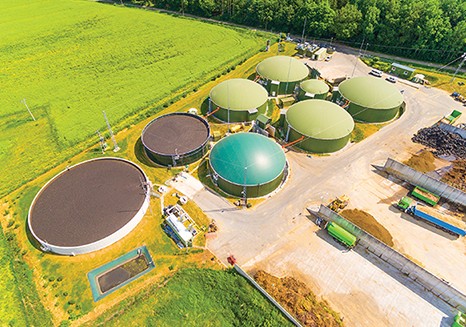
The company provided flame and gas detection for a biowaste to hydrogen plant.
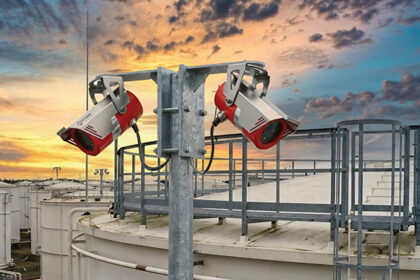
Many of the contributors to International Power Engineer are developing products for the biowaste to fuel industry, and flame and gas specialist Dräger is no exception. The company recently reported a case study regarding a hydrogen-from-biowaste production facility based in the Midlands that utilised its flame and gas detection. The company was keen to ascertain if the planned gas and flame monitoring system which covered the storage tank and compressor area of the site was both fit for purpose and in line with the appropriate standards and regulations.
Storage tanks
A total of four storage tanks and eight compressors at the site process the hydrogen at 300 times standard atmospheric pressure until it is piped onto lorries in the nearby loading bays for onward transportation.
Financial margins at the production facility were extremely tight, creating significant pressure on costs, but the project engineer wanted peace of mind that the planned fire and gas monitoring and detection provision was adequate and suitable.
Furthermore, the site owners wanted to ensure that should the worst happen, in the form of a fire or gas leak, they could be certain that they had taken every precaution to ensure that their health and safety provision was adequate and appropriate.
Mapping audit
Dräger was asked to conduct a fire and gas mapping audit to consider the planned monitoring and detection coverage across the site, as well as identify any ‘blind spots’, and advise on both the appropriateness of the current position and set up of the system’s devices and whether any further coverage was needed in order to meet coverage requirements.
Using a 3D drawn model of the site using mapping software, the coverage visibility of each flame and gas detection device could be superimposed, with the ability to move the direction of each detector in the modelling software to determine not only the optimum location for each device to achieve best coverage, but also the best directional positioning.
The eXida certified software then produced a clear visual diagram with green areas showing the site locations that were adequately covered by flame and gas monitoring, and any blind spots highlighted in red.
The project manager proposed six flame detectors, however the fire and gas mapping process not only confirmed that the flame detection coverage could be achieved with five flame detectors and delivering coverage of 99% – a coverage level that the customer felt was acceptable and would provide the required coverage. The fire and gas mapping process determined one flame detector was surplus to requirements and could be removed without any adverse impact on site safety, saving the customer several thousands of pounds.
For more information visit: www.draeger.com