Across Europe, grid congestion is no longer a technical bottleneck confined to infrastructure discussions. It is rapidly evolving into a strategic design parameter for industry
In countries such as the UK, long connection queues, rising constraint costs and regulatory reform have pushed the issue into the boardroom. This is not an isolated case, but a leading indicator of a broader European shift in which access to energy is becoming less predictable, more regulated and increasingly decisive for industrial investment.

A SHIFT IN INDUSTRIAL LOGIC
This transition is changing how industry defines performance. Competitiveness was once driven mainly by scale: more output, more speed, more power. That logic is losing relevance. Today, the best machine is no longer simply the most powerful, but the one that can deliver reliable output within increasingly tight energy limits.
Controllability, flexibility and resilience are moving from engineering concerns to board-level decision criteria. Grid constraints now influence plant location, project timelines and investment feasibility. As such, energy availability is becoming a decisive factor in industrial competitiveness.
EUROPE: ONE CHALLENGE, DIFFERENT REALITIES
The trend is pan-European, but the way congestion manifests differs by region.
In the Netherlands and parts of Germany, grid saturation has led to connection restrictions and delays, forcing companies to rethink expansion. The UK is addressing structural inefficiencies through reform but still faces long lead times for new connections. Southern Europe is balancing renewable growth with local constraints, while the Nordics are preparing for similar pressure as electrification accelerates.
Despite these differences, the strategic implication is consistent: energy availability is no longer guaranteed, and industrial resilience depends on how effectively companies can operate within these constraints.
FROM ENGINEERING FEATURE TO BUSINESS IMPERATIVE
This shift is redefining machine and system design. Capabilities such as intelligent control, energy management, buffering and regeneration are no longer incremental improvements; they are essential to maintain performance in a constrained energy landscape.
Software plays a central role as the layer that makes energy consumption visible, controllable and economically defensible. It helps companies align production with available capacity, reduce peak loads and create a more predictable operational footprint.
A pragmatic first step is to bring energy considerations earlier into the design phase. Tools such as Lenze’s Easy System Designer can help engineers model and dimension drive-based applications earlier, improving visibility into system behaviour before implementation. In that role, software is not a commercial add-on, but a practical instrument for more robust design choices.
For OEMs and machine builders, designing with constrained capacity in mind is no longer optional but a prerequisite for relevance.
THE RIPPLE EFFECT
This transformation also extends into the supplier ecosystem. As energy becomes a constraint, every component contributes to overall system behaviour. Performance is no longer defined solely by speed or output, but by how effectively energy is used, controlled and balanced over time.
OEMs increasingly expect suppliers to provide components that deliver real-time energy data, support dynamic load control and minimise peak demand. Without that transparency and controllability, suppliers risk becoming a limiting factor in system design.

Those that contribute to energy intelligence move up the value chain by enabling machines that are easier to connect, more predictable in operation and more resilient under constrained conditions. At Lenze, this ecosystem perspective is central. By combining drives technology, automation and software, Lenze works with OEMs and suppliers to ensure that machines are not only high-performing, but also energy-aware and future-proof by design.
FROM CONSTRAINT TO VALUE CREATION
The strategic question is no longer whether congestion matters, but whether current investment choices reflect the conditions under which industry will have to operate.
Companies that act early can move from reactive adaptation to proactive value creation by designing machines that are easier to connect, plants that are more resilient and production systems that respond dynamically to energy availability. Lenze supports this transition by enabling energy transparency, controllability and system-level optimisation.
DRIVING THE DIALOGUE
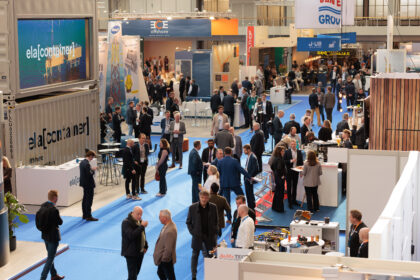
Given the strategic impact of grid congestion, awareness and dialogue remain essential. Lenze contributes to that dialogue through knowledge sessions and industry engagements, including events, alongside online sessions, workshops and one-to-one conversations. The aim is not to highlight the problem, but to accelerate understanding of practical, future-proof approaches.
LOOKING AHEAD
Grid congestion marks a structural shift in how industry operates. It challenges assumptions about growth, capacity and efficiency, but also creates opportunity.
The companies that will lead are not those waiting for infrastructure to catch up. They are the ones redesigning their systems – and their ecosystems – to operate within constraint.
Marc Vissers is at Lenze. www.lenze.com