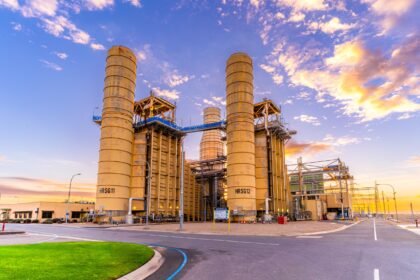

Hydrogen is emerging as a leading candidate for decarbonising gas turbines and aviation propulsion
As the energy and aerospace sectors accelerate toward net-zero emissions, hydrogen is emerging as a leading candidate for decarbonising gas turbines and aviation propulsion. Its combustion yields ner-zero carbon emissions, making it an ideal replacement for fossil-based fuels. But hydrogen’s extreme combustion properties – including high flame temperature, rapid flame propagation and complex transient behaviours – create a harsh and demanding environment for pressure sensors used in turbine development and monitoring
Conventional sensors struggle under these conditions, often producing unreliable data due to thermal drift, hydrogen embrittlement and sensitivity loss. This not only limits turbine performance optimisation but also compromises safety and the effectiveness of predictive maintenance strategies.
Enter Piezocryst, a sensor technology company by HBK, whose piezoelectric pressure sensors – based on single-crystal gallium phosphate (GaPO4) – offer a new standard in direct, high-fidelity combustion monitoring for hydrogen-fuelled systems.
CHALLENGING SENSOR TECHNOLOGY
Hydrogen’s appeal lies in its clean combustion profile, but this comes with technical challenges. For instance, flame speeds are up to 10 times faster than natural gas, increasing pressure fluctuation rates, while flame temperatures exceed 2,000°C, producing harsh thermal gradients. Additionally, hydrogen embrittlement degrades many common sensor materials over time, and high-frequency acoustic dynamics require sensors to capture detailed pressure waveforms in real-time without signal loss or distortion.
Traditional piezoelectric sensors using quartz, ceramics or tourmaline fall short under these extremes. Quartz, for example, loses piezoelectric properties above 573ºC due to an α-β transition. Piezoceramics suffer from spontaneous depolarisation (also known as the ‘popcorn’ effect) and exhibit strong pyroelectric interference under thermal gradients. Tourmaline’s high pyroelectric response generates false signals during transient thermal conditions, rendering it unsuitable for precision combustion monitoring.
ENGINEERED FOR EXTREME ENVIRONMENTS
Piezocryst solves these issues by using GaPO₄, a synthetic, single-crystalline material engineered specifically for high-temperature, high-vibration and chemically aggressive environments like hydrogen combustion. The unique properties of GaPO₄ include:
- Temperature Stability: GaPO₄ maintains a stable piezoelectric coefficient (4.5 pC/N) up to 1,000ºC, with no phase transitions or twinning effects
- No Pyroelectric Effect: Unlike ceramics or tourmaline, GaPO₄ doesn’t generate false signals during rapid thermal changes
- Hydrogen Resistance: Endurance-tested to survive 100 hours in 100% H2 at 500ºC and 3 bar with no degradation in signal fidelity or gas tightness
ELIMINATING WORKAROUNDS
Where conventional systems use remote sensing setups, such as standoff or infinite tubes, to mitigate the effects of temperature and gas exposure, Piezocryst’s sensors are designed for direct installation on combustor liners. This design strategy aims to eliminate uses such as signal attenuation due to tubing length or condensation, mechanical resonance from tubing variations, and thermal delays and accuracies from indirect measurement. Instead, Piezocryst’s sensors are engineered to provide real-time, unfiltered pressure data that supports advanced combustion tuning, safety systems and predictive maintenance analytics.
PROVEN RESULTS
In a recent test, Piezocryst’s CP515 sensors were exposed to 100% hydrogen at 500ºC and 3 bar for 100 continuous hours. According to the results, pressure sensitivity remained stable (6.48-6.55 pC-psi) above datasheet minimums, while insulation resistance stayed above 1E+11 Ω, far exceeding the 1E+9 Ω threshold. No mechanical or gas-sealing degradation was observed after destructive inspection.
This robustness is critical for next-generation hydrogen turbines, which will require long-term sensor operations under severe conditions to validate combustion models, monitor thermoacoustics and ensure safety.
DESIGN OPTIMISATIONS
Piezocryst’s sensor portfolio is engineered with both robustness and versatility in mind. Regarding crystal orientation, the sensors are available in longitudinal mode (disc shape) for maximum vibration tolerance, and transversal mode (bar shape) for increased pressure sensitivity. In terms of miniaturisation, sensor bodies as small as 5mm in diameter are possible, compatible with M5 or 10-32 UNF threads, making them ideal for integration in space-constrained turbine or aerospace environments.
The sensors are also designed to be multifunctional, with select models offering combined pressure, acceleration and temperature sensing, in addition to optional flame detection and ignition monitoring. This reduces sensor count, cabling complexity and system mass.
ADVANCED TESTING
To ensure every sensor meets the demands of hydrogen systems, Piezocryst employs rigorous in-house testing methods:
- Laser vibrometry: Visualises membrane oscillation modes and detects unwanted resonance
- Thermal cross-sensitivity testing: Assesses sensor response to radiated heat compared with competing materials
- Material endurance trials: Evaluate long-term resistance to hydrogen embrittlement and dielectric breakdown
For example, GaPO₄ sensors showed up to 10 times lower thermal sensitivity than ceramic-based sensors in side-by-side comparisons, further reinforcing their reliability under fluctuating temperatures.
READY FOR THE FUTURE
As industries shift to sustainable aviation fuel (SAF), ammonia and hydrogen, the demand for high-accuracy combustion monitoring will only intensify. Sensors must be able to cope in extreme, high-temperature, high-pressure, hydrogen-rich environments where the capabilities of conventional materials and designs currently fall short.
Piezocryst’s GaPO₄-based direct measurement technology offers a combination of thermal stability, hydrogen resistance and long-term reliability. With over two decades of field experience in harsh conditions, the company is well-positioned to support the future of clean combustion and high-efficiency turbine design.