
In recent months, deadly accidents at coal mines in China, Russia and Colombia as well as an illegal gold operation in Sumatra offered tragic reminders that mines remain among the most dangerous industrial environments.1,2,3
These incidents, all of which occurred at operations with troubled compliance records or no legal standing at all, are not reflective of the industry as a whole. The long-term safety record has genuinely improved: in the United States, the mining sector recorded 28 fatalities in 2024, one of the lowest totals in history.4 Several major producers have sustained zero fatalities over long periods.5 The industry’s progress on safety is real, and it has been hard-won.
Yet even at well-run, fully licensed mines with committed leadership, certain categories of operational risk remain underappreciated: those in which a process exists, possibly a rigorous one, but one that provides little operational visibility and limited opportunity for continuous improvement.
Shift handovers
Shift handovers provide a case in point. Occurring two or three times a day at every mine, they are the moments at which knowledge of equipment status, outstanding maintenance tasks, ongoing process anomalies and safety conditions must transfer from one crew to the next. This makes the content of a handover a trove of information for process improvement and risk visibility. However, that transfer has historically been unstructured, often relying on a mix of oral communication and unspecialised tools, such as emails and spreadsheets.
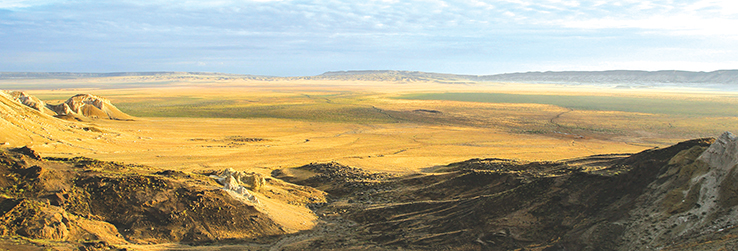
Companies that have challenged this state of affairs have seen significant benefits. At the Aktogay copper mine in easter Kazakhstan, operated by KAZ Minerals, communication between day and night shifts had long depended on paper notes, verbal briefings and scattered email exchanges.6
Yerbol Abutaliyev, concentrator operations manager at KAZ Minerals Aktogay, describes the result: “Paper notes were often lost or incomplete. Verbal handovers lacked consistency, with key details missed or interpreted differently. There was no audit trail, no reminders and no structured way to track outstanding tasks.”
The site deployed Octave’s Tempo Operations Management platform across both concentrators at Aktogay 1 and Aktogay 2. The system introduced consistent digital templates and workflows, replacing fragmented communication with a unified operational logbook accessible to operators, supervisors and engineers across shifts. “Tempo Operations Management has enhanced operational discipline and shift transparency,” Abutaliyev says. “Rather than increasing data volume, it transforms operational records into actionable information.”
The outcome was a structural redesign of the handover process, which had been a recurring source of information gaps, with direct consequences for both continuity and safety.
From alarm floods to meaningful signals
Alarm management is another critical component of safe mining operations where key information can get lost. Modern process control systems generate enormous volumes of alerts that tend to persist and accumulate, even when they are no longer relevant. Phenomena such as chattering alarms, which repeat excessively within a short interval, as well as stale or duplicate alarms, overwhelm operators with noise, burying the signals that require immediate attention.
When alarm rates reach the point at which operators cannot meaningfully respond to all of them, the system works against itself and operators may become desensitised. That problem, sometimes called alarm normalisation, is a significant one. Operators becoming accustomed to ignoring warning signals as false or irrelevant has been a documented factor in major industrial incidents, including at Pike River, where frequent methane alarms went unaddressed in the months before the 2010 explosion that killed 29 miners.7 The problem does not stop at operators: when alarms are not consolidated, prioritised and rationalised, it also prevents effective management response.
Solutions exist, and the difference they can make is significant. One of the world’s largest gold mining companies was facing alarm rates exceeding 100,000 per day, or 69 alarms per minute, handled by just three console operators. The volume was clearly unmanageable: as operators could not distinguish a critical process deviation from a nuisance alert, this led to emergency shutdowns, resulting in costly production downtime and extensive manual intervention.
Octave’s Tempo Control System Effectiveness was used to perform alarm documentation and rationalisation across the plant. The outcome was a 98% reduction in alarms per day. State-based alarming allowed the plant to isolate equipment and sustain operations during shutdowns rather than halting entirely. The project also identified more than 200 discrete engineering actions, reduced manual operator interventions and measurably improved situational awareness and operator confidence in the system.
The business case for mining safety
Improving safety not only protects workforce wellbeing and boosts morale, but also serves as a crucial competitive advantage in sustaining operations
Mining companies operate in a market where commodity prices are largely outside their control. Net profit margins among the top 40 global miners fell from 25% in 2010 to 11% in 2024, and rising energy, labour and maintenance costs continue to erode profitability.8
In this environment, operational performance is the primary lever available. McKinsey’s Global Materials Perspective found that between 30% and 50% of total shareholder return outperformance among mining companies is attributable to operating decisions rather than commodity price exposure.9 Top-quartile productivity is the mechanism by which companies protect and grow margins when prices are flat or falling.
Investments in operational digitisation, including structured shift handovers, rationalised alarm management and integrated process data, contribute directly to that performance. They reduce unplanned downtime, improve throughput consistency and lower the frequency and severity of incidents. They also create the audit trails and performance records that regulators, insurers and institutional investors increasingly expect to see.
The mining industry has made genuine progress on safety over the past generation. The next step is not a different ambition, but better management of the remaining risks, by using available technology to make a meaningful difference in both safety and financial performance.
For more information visit: www.octave.com
[REFERENCES]
1 https://www.bbc.co.uk/news/articles/c893543gn20o
2 https://www.bbc.co.uk/news/articles/cdxpe02y05go
3 https://news.mongabay.com/2026/05/nine-killed-at-illegal-mine-in-latest-sumatra-landslide-tragedy-as-gold-surge-continues/
4 https://e-t-c.com/2024-2025-safety-review-mining/
5 https://www.globaldata.com/store/report/safety-trends-in-mining/
6 https://www.octave.com/learn/resources/case-studies/aktogay-copper-mine-strengthens-shift-continuity-and-operational-visibility
7 https://nzhistory.govt.nz/page/pike-river-mine-disaster?__cf_chl_f_tk=ddmjt84hm_hFNIxAXtp91Wyr3AaW7O7wx2f08zZa5uY-1783433744-1.0.1.1-p8xFQDDA1tXgzKciQH8NXWSU5RP4BvaFbVOy0aybQ54
8 https://www.statista.com/topics/1143/mining/
9 https://www.mckinsey.com/industries/energy-and-materials/our-insights/global-materials-perspective