A scale-up of global recycling will lower the need for new mining activity
As the shift to a clean energy accelerates, substantial investments in new mines and refining capacity, especially in geographically diverse regions, will be required to produce essential minerals such as copper, lithium, nickel, cobalt and rare earths. However, recycling will also be indispensable to the security and sustainability of critical mineral supply for clean energy transitions.
With this in mind, a new IEA report finds that a successful scale-up of global recycling will lower the need for new mining activity on the world stage by 25-40%. More broadly, it looks at the importance of unlocking the potential of recycling by evaluating the current status of recycling of minerals critical to the energy transition, analysing the prospects for secondary supply, and outlining targeted policy recommendations.
Recycling fails to keep pace
Despite growing policy ambitions, the use of recycled materials has so far failed to keep pace with rising material consumption. In the case of copper, which plays a central role in all electrical applications, the share of secondary supply (including direct scrap) fell from 37% in 2015 to 33% in 2023. Similarly, the share of recycled nickel decreased from 33% to 26% over the same period. The main exception is aluminium, which benefits from well-established waste management programmes and supportive regulations, where the recycled share increased modestly from 32% to 35%.
Policy momentum
Despite this, policy momentum is gaining strength, with a surge in new policies and regulations. According to the IEA’s Critical Minerals Policy Tracker, more than 30 new policy measures related to critical mineral recycling have been introduced since 2022. These policies generally fall into four categories: strategic plans, extended producer responsibility (EPR), financial incentives and cross-border trade regulations. Some also include regulatory mandates such as industry specific targets for material recovery, collection rates and minimum recycled content. However, most strategies are not yet comprehensive. Among the 22 countries and regions surveyed, only three had a broad framework that included clear targets, implementation mechanisms, monitoring systems and economic incentives.
As stated, a successful scale-up of recycling would lower the need for new mining activity by 25-40% by 2050 in a scenario that meets national climate pledges. While accelerated clean energy deployment calls for a substantial expansion of new mines and refineries to meet material demand, it also creates an opportunity for secondary supply to play an increasingly valuable role. In the Announced Pledges Scenario (APS), which reflects national climate pledges, recycling will likely reduce new mine development by 40% for copper and cobalt, and close to 25% for lithium and nickel by 2050. The market value of recycled energy transition minerals is also predicted to grow five fold by that time reaching US$200bn. As a result, requirements for primary materials are likely to begin to decline by this time.
Nonetheless, investments in new mines will continue to be essential as supply levels required by mid-century will still be higher than today and existing mines will experience natural declines in output. Enhancing critical minerals recycling will offer substantial financial and sustainability benefits. In the APS, some US$600bn of mining investments will be required through 2040, while achieving net-zero emissions by 2050 will cost around US$800bn. Without an increase in recycling, these costs would both be 30% higher, increasing the burden of mobilising the necessary financing. Recycling will also mitigate the environmental and social ills that come from excessive mining.
Traditional metal recycling
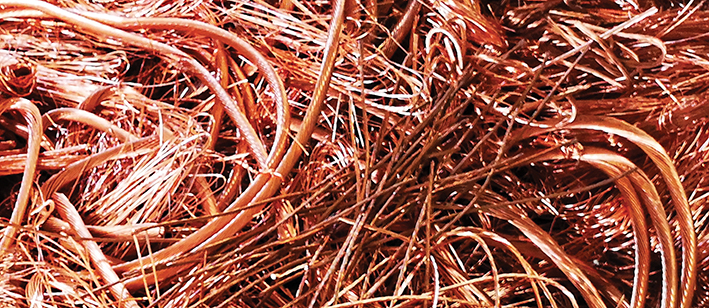
The report argues that scaling up the recycling of end-of-life scrap from traditional industries is essential to alleviate pressure on critical mineral supplies, particularly for copper since there is a supply deficit. By 2035 announced projects will only be sufficient to meet 70% of copper requirements in the APS. However. opportunities to boost secondary copper supply are rising as scrap volumes are likely to surge from around 2030. Copper scrap availability is expected to grow alongside consumption until then, when it will outpace demand growth. A combination of policies–raising collection rates for legacy applications, mandating recycling, improving sorting systems, and investing in new secondary smelters–can further elevate secondary supply’s contribution.
Untapped potential from mine waste
Mining generates around 100 billion tonnes of waste every year, in addition to the sizeable amount already existing in active, inactive and closed tailings. The accumulated waste volume is set to increase by almost 90% over 2020 levels by 2030. Reprocessing mine waste, or tailings, can reduce waste generation and mitigate environmental impacts such as water contamination, safety risks and soil pollution. For closed or abandoned sites, it also presents an opportunity for environmental remediation. Previously, the minerals left in mine waste were considered economically unviable, but declining ore quality and future supply concerns are making reprocessing more appealing. For instance, in Chile, the copper content in mine waste with higher grades than primary sources is poised to rise from 1.6Mt in 2005 to 5.6Mt by 2050. Realising this potential will require comprehensive waste resource mapping, supporting research and development for new recovery technologies, providing economic incentives, and addressing liability barriers related to mine waste at closed sites.
For more information visit: www.iea.org/reports/recycling-of-critical-minerals