How near-shore EMS can build UK supply chain resilience, by Lydia Arundel
Electronic manufacturing services (EMS) are the backbone of the electronics supply chain and absolutely central to the process industry.
The UK EMS market is expected to grow at a CAGR of 7.8% from 2025 to 2033 according to several market commentators. Yet discussions around electronics resilience often focus on components and semiconductors, overlooking the EMS layer that integrates and industrialises them. So, what exactly does EMS encompass, and why is it becoming increasingly critical?
EMS refers to companies that provide a wide range of services across the entire lifecycle of electronics production, including design and engineering, manufacturing, testing and quality control, and distribution and logistics.
The EMS industry is essential to modern electronics. It provides the following benefits:
* Companies that outsource manufacturing to EMS providers can reduce the operational costs associated with establishing and maintaining in-house production facilities.
* OEMs can focus on their core competencies while outsourcing manufacturing to specialised EMS partners.
* EMS providers can accelerate production cycles, enabling faster time-to-market.
* Specialist expertise and advanced technologies help enhance product quality and reliability.
Rethinking Europe’s EMS footprint
With this in mind, Enkeleda Kuka, CEO of Atronix, gave a presentation entitled: ‘Why Europe needs new electronic manufacturing services geography’ at Southern Manufacturing last month.
Atronix is an EMS provider based in Albania and highlights its geographic position as a strategic advantage, enabling efficient transport links between Albania and wider European markets while operating in a comparatively less saturated landscape.
During her presentation, Kuka argued that European manufacturing must make a strategic shift, prioritising resilience, proximity, flexibility and sovereignty over pure cost optimisation.
To achieve this, she advocated expanding near-shore EMS capacity, particularly in high-potential regions such as the West Balkans (Albania, Bosnia and Herzegovina, Kosovo, Montenegro, North Macedonia and Serbia). This, she suggested, would provide manufacturers with a balanced approach – strengthening supply-chain stability while maintaining competitive economics.
Kuka believes that the sooner the industry moves beyond simply identifying near-shore opportunities and instead recognises the West Balkans as an integral extension of Europe’s electronics manufacturing ecosystem, the stronger and more resilient the region’s supply chains will become.
The importance of EMS reshoring
EMS reshoring is becoming increasingly important to the UK as it redefines its supply chains and industrial autonomy post-Brexit.
Several factors are driving this shift:
* Geopolitical instability, including rising tensions between China and Taiwan, including trade wars and export controls.
* Freight logistics challenges include container shortages, disruptions in the Red Sea and Suez Canal, and rising shipping costs.
* Lead-time volatility, with UK companies facing delays of up to 10–14 weeks from Asia compared with two to five days from Southern Europe.
* Hidden costs, including higher buffer stock requirements, expensive revisions due to quality mismatches, IP and compliance risks, and longer lead times that hinder innovation and responsiveness.
A call to action
Kuka has called on UK manufacturers to diversify their EMS partnerships. She identified Southern Europe as a near-shore buffer against dependence on Asian supply chains, with the Western Balkans positioned as a strategic addition to the UK’s agile EMS network.
For more information visit: www.atronix.com
CAPTION:
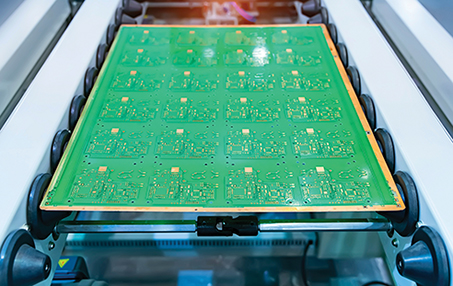
Image top right page 20 – The Balkans may be a more viable EMS partner for the UK than Asia