
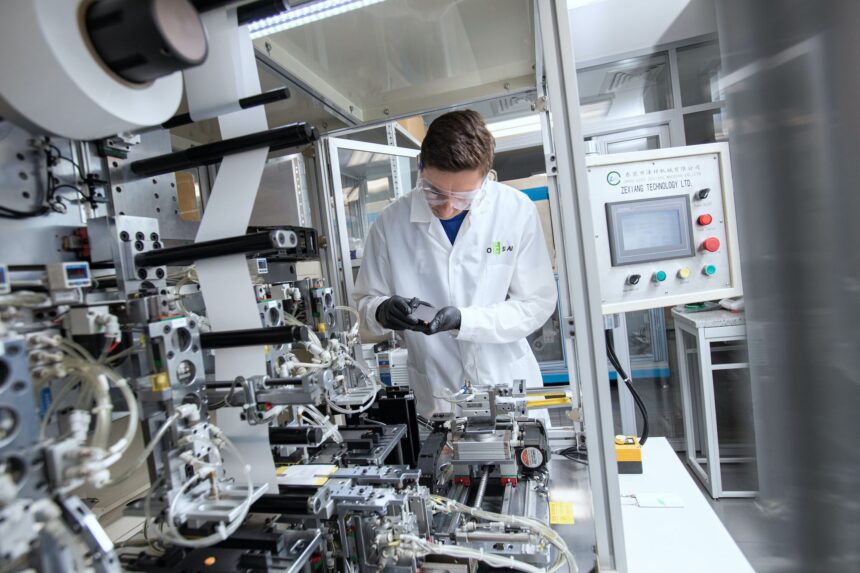
Designed for high-performance electrodes and emerging battery chemistries
OCSiAI has developed a new portfolio of TUBALL single-wall carbon nanotube products to address the evolving requirements of next-generation batteries
Beyond EV and 3C applications, the growth of energy storage systems (ESS), uninterruptible power supplies (UPS), and battery backup units (BBU) is increasing demand for batteries with ultrafast response, high power density, and exceptional reliability, where performance is defined by advanced cell design and electrochemical engineering.
TUBALL single-wall carbon nanotubes have become a key enabler across a range of chemistries in the battery market due to their high G/D ratio and consistent batch-to-batch quality. OCSiAI has taken this forward by introducing a new portfolio of products to address emerging battery performance demands:
Anodes
- Advanced dispersions with ultralong SWCNTs form robust conductive networks at lower dosages in silicon-rich anodes
- New dispersions for Li-ion systems using Li-CMC binders improve first-cycle efficiency and enhance C-rate performance
Cathodes
- NMP-based ultrafine dispersions ensure superior SWCNT stabilisation, delivering higher power and overall performance to high-energy cathodes
Solid-state batteries
- Ready-to-use dispersions compatible with SSB chemistries support the development of emerging chemistries
To support the rollout of new nanotube-based products for battery applications, OCSiAI is expanding its global network of SWCNT dispersion production, including partner and in-house facilities across Europe and Asia. This downstream scale-up is also supported by an expansion of nanotube synthesis capacity.
The launch of a second nanotube synthesis unit in 2026 will double the company’s production capacity, while the commissioning of the third and fourth units within the next year is expected to increase total nanotube capacity fourfold. An upcoming project in Luxembourg is also set to further expand OCSiAI’s global footprint, supporting a total SWCNT production capacity of up to 1,000 tonnes.