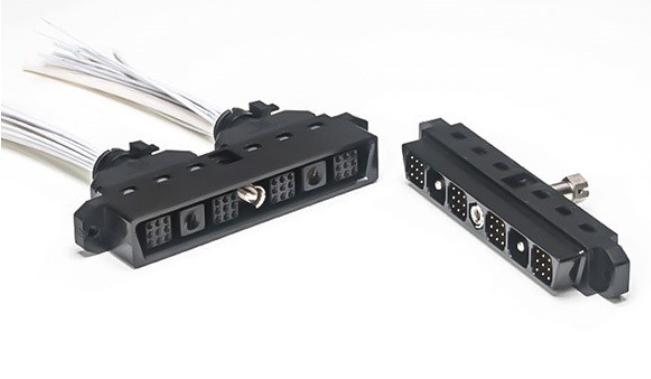
Rail 4.0 is aided with PEI-Genesis connectors
PEI-Genesis's Karen James, product manager at the connector specialist, explains connectors importance in the automation of rail. Connectors are being used globally, such as Japan and Germany, to improve rail services and introduce driverless trains and bullet trains.
Trainlines can offer tough conditions for connectors to operate in, with constant vibrations, harsh temperatures, and high humidity. Temperatures can range from -40°C to 85°C. Further to this, connectors need to be immune to dust, oil, and de-icing agents.
Electromagnetic interference can also pose a hazard for connectors, which is generated by traction drives and overhead cables, jeopardising signal integrity. This can be prevented if connectors are properly shielded.
For rail applications, international standards have been established to ensure safety, including EN 50155 and EN 45545-2. These give peace of mind to customers and service providers and benchmark the connector's ability to withstand shock, vibration, fire exposure, and long-term environmental issues.
Automated trains have even higher demands, such as high-speed data transmission protocols. For this, Gigabit and 10-Gigabit Ethernet, normally Cat 6A and Cat 7, are required with USB 3.1 and fibre optic interfaces.
Without these protocols, real-time data streams from sensors can not be handled, as well as LiDAR systems, onboard diagnostics, and communication networks, meaning the train does not operate. Data rates can exceed 10Gbps, especially when multiple high-bandwidth systems are being used.
Despite the move to AI, mechanical resilience remains critical with connectors typically using bayonet or threaded coupling systems to maintain secure connections during vibrations. Longevity is a key focus when designing contact retention mechanisms.
Contacts are usually gold-plated to reduce corrosion and reduce contact resistance for a prolonged time.
Maintenance is important for retrofit applications. Using a modular connector design and coding schemes allows engineers to install parts quickly with quick error checking, whilst minimising downtime required for servicing.