chargecloud, a European provider of cloud-based software solutions for charging infrastructure, and Hubject, a specialist in e-roaming and Plug & Charge infrastructure, have formed a technical partnership at ICNC[DQ1.1] 2026 in Berlin
chargecloud will integrate Hubject’s Public Key Infrastructure (PKI) into its Charge Point Management System (CPMS) to enable Plug & Charge for AC charging points. chargecloud’s CPO customers will also receive this feature automatically without additional integration or effort.
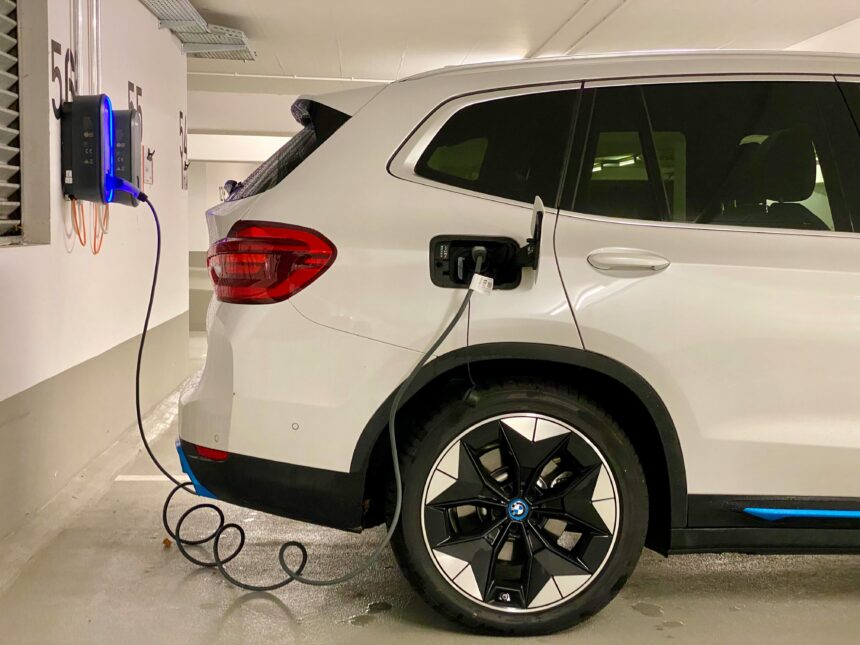
In practice, DC fast chargers have been almost the only ones to support Plug & Charge, despite the vast majority of all charging taking place on AC infrastructure: at fleet depots, in company car parks, on municipal networks and at retail outlets.
Plug & Charge has been defined for AC charging for years. In this application, it is often the same users who charge their vehicles daily and who benefit the most from seamless, automated authentication.
Integrating the Hubject PKI into the chargecloud operating system (OS) enables the company to close this gap. As soon as a vehicle is connected to a compatible AC charging point, it automatically authenticates itself using a certificate stored in the vehicle.
No app, RFID card, or display interaction is required. This requires an ISO 15118-2-compatible charging point, a suitably equipped vehicle and a valid contract stored in the vehicle by a Plug & Charge-enabled e-mobility provider (EMP).
Hubject operates the PKI, which forms the technical foundation for Plug & Charge. Without this central ‘trust anchor’, a standards-compliant implementation under ISO 15118 is not possible. Hubject also certifies hardware and vehicles and maintains publicly accessible lists of certified manufacturers and vehicle models.
chargecloud integrates this infrastructure into the chargecloud OS and provides Plug & Charge as a ready-to-use feature for CPO customers. Charging infrastructure operators do not need to implement their own technical integration. The feature is activated as part of the roll-out for all charging points whose hardware meets the requirements; ideally, Hubject-certified devices with ISO 15118-2 implementation. A pilot phase with the first CPOs is already running.
For chargecloud’s CPO customers, this integration enables users to use a convenient and secure authentication method: charging starts automatically when the cable is plugged in. This helps charging infrastructure operators create a better user experience for their end customers. Fewer sources of error also mean less support work for the CPO. Most EVs already support Plug & Charge.

Oliver Adrian, COO & CRO of chargecloud, said, “Plug & Charge has proven itself on DC fast chargers, but its real potential lies in the AC sector, where most of all charging takes place and where the same vehicles often charge on a regular basis. By integrating the Hubject PKI into our OS, we are now making the technology accessible for this segment too, without any additional integration effort for our CPO customers. This is an important step towards making charging as simple as possible and eliminating potential sources of error such as counterfeit cards and faulty or reflective displays: simply plug in, charge, and drive on.”
Christian Hahn, CEO of Hubject, said, “Most drivers charge at home or work, not on the road. Extending Plug & Charge to chargecloud’s AC network brings that seamless experience to where people actually charge most often. That’s a significant step toward Plug & Charge becoming available everywhere drivers charge.”