Aiming to streamline the crop supply chain, the company gets to the root of the problem
As crops make their way down the supply chain, each stop they make contributes to emissions and raises their prices.
From the soil to harvesters, silos and processing and packaging facilities, crops follow many steps before arriving at the kitchen table.
Depending on growth conditions and individual requirements, a crop’s journey can vary.
The common use of pesticides occasionally adds an extra step to the process. Some supply chains may include a washing procedure to rid the crops of pesticide residue.
Crops requiring refrigeration may also face further difficulties, depending on the temperature technology used and the distance between facilities.
Overall, the supply chain is unsteady and subject to outside influences. Greater crop yields make a difference in how many survive the supply chain.
To influence these aspects, what goes in the soil matters – especially now that climate change is throwing its own curveballs into the mix.
Nature’s natural sponge
One company that aims to prevent crop loss from drought conditions is CroBio, a UK-based soil regeneration company.
CroBio’s formula comprises freeze-dried bacteria dropped into liquid, which becomes a sprayable concentrate.
Once the formula is in the soil, sugars from the plants feed the bacteria, which colonise the root system and produce a glucose-based, sponge-like material called cellulose.
“It is native to the soil, so bacteria already produce a form of cellulose, mainly biofilm,” said cofounder and chief scientific officer Ross Mulhall. “It already happens there. We're just boosting that process so there's a lot more of it around the root systems.”
 Cofounder and chief scientific officer Ross Mulhall created CroBio with his father Wayne Mulhall.
As cellulose is produced, the physical characteristics of the soil change to hold more water and create a new carbon sink within the soil.
“Soils are slowly degrading and they're losing their carbon contents,” said Mulhall. “And ultimately, that's kind of nature's natural sponge.”
Carbon is drawn from the plant and stored the biomaterial. Eventually, the cellulose breaks down, releasing a carbon-rich form into the soil that microbes can then feed off.
This process boosts biodiversity in the soil, and the result is that the same amount of water can go further with more crops, combatting volatile climate change symptoms, increasing yield and boosting the supply chain.
Fewer fertilisers, fewer steps
With every step in the supply chain accumulating costs and emissions, the idea that farmers could achieve better results with fewer chemical fertilisers is necessary to explore.
“What farmers are really struggling with in the UK is the runoff of chemical fertilisers into the environment,” said Mulhall.
Regaining soil’s nutrient retention could offer a reduction in the use of chemical fertilisers. This may lead to skipping washing procedures in the supply chain and enabling more resilient crops to survive transportation.
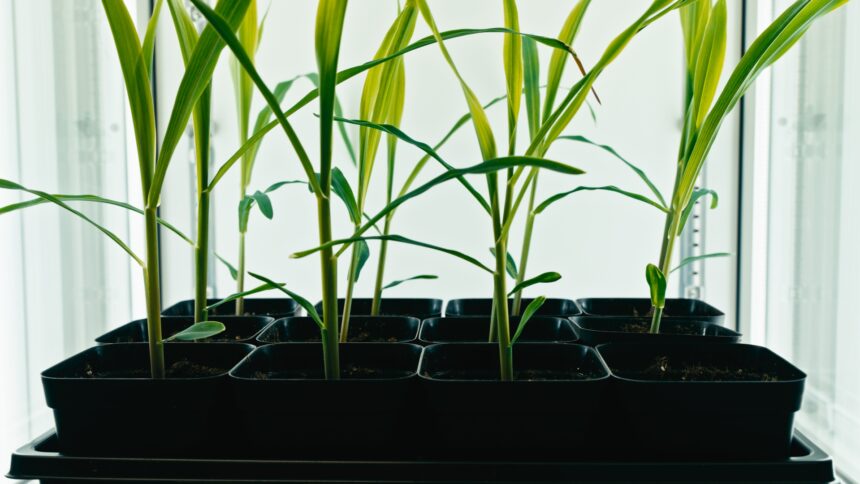
CroBio is currently conducting trials of its liquid formula in three locations in Sao Paulo, analysing corn sugar cane and cotton, and later in the year, soybean.
Analysing different locations and crops allows the company to continue adding to its research and commercialise on a larger scale to impact the supply chain.
Field trials in Europe and the US are also set to take place this spring.
CroBio is featured in a London exhibition titled Taste of tomorrow: What will we be eating in 2050?. Located at The Mills Fabrica, the free exhibition is running until 31st July 2025.