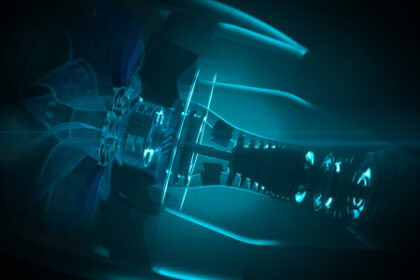
The European Union’s Clean Aviation programme has selected Rolls-Royce to lead the ELEVATED project, which aims to demonstrate a hybrid-electric gas-turbine propulsion system for future ultra-efficient short- to medium-range aircraft
ELEVATED is one of 19 Clean Aviation projects announced to further decarbonise aviation while reinforcing EU competitiveness and industrial leadership. The initiatives also include solutions for hydrogen-powered and ultra-efficient regional aircraft architectures, and will receive up to €290 million in EU funding, contributing to a public and provate investment of €664 million* across the Clean Aviation Call 4 projects.
The Clean Aviation Joint Undertaking (CAJU) is the EU’s leading research and innovation programme for transforming aviation towards a sustainable and climate-neutral future.
The Rolls-Royce Deutschland-led ELEVATED consortium combines industry, academic, and research partners across France, Germany, the Netherlands, Norway, Spain, and the United Kingdom. Each partner contributes unique capabilities across hybridisation, electrification, engine integration, electrical machines and drives, powerplant integration, high-voltage harnesses, aircraft integration, modelling and academic research.
Subject to successful grant preparation, the project will embed a hybrid-electric subsystem into a donor engine, enabling integration, control, and testing under realistic boundary conditions. The hybrid-electric subsystem is expected to contribute to the goal of achieving at least a 20% reduction in aircraft-level CO2 emissions.
ELEVATED will assess the potential impact of hybrid-electric elements on the UltraFan 30 technology demonstrator and is an essential part of the path to Technology Readiness Level 6 (TRL6).
The UltraFan technology programme covers the development of next-generation geared ducted engine solutions for widebody and narrowbody applications, combining the maturation and validation of novel and proven technologies.
UltraFan 30 is Rolls-Royce’s narrowbody technology demonstrator, created to validate these technologies for future short- and medium-range aircraft. Planned for ground testing in 2028, it combines advances in engine core architecture, fan systems, materials and manufacturing to deliver significant improvements in fuel burn, efficiency, emissions, and durability, while remaining compatible with 100% sustainable fuel from day one.
Alan Newby, director, research and technology, Rolls-Royce, said, “We are proud that Rolls-Royce has been selected to lead the ELEVATED project as part of the EU’s successful Clean Aviation programme.
By integrating and demonstrating an innovative hybrid-electric system under realistic conditions, we will generate data to validate our modelling and inform technology selection, product development, certification planning and industrialisation. Together with the turbomachinery work being advanced through the ongoing UNIFIED project, it will help bring together the key technology paths needed to validate future UltraFan capability and support best-in-class performance in thrust, fuel burn, noise, emissions and durability.”
Additionally, Rolls-Royce will participate in two other Clean Aviation projects: FARMAN (Fuelling Aviation Research for the Management of Advanced distribution systems with hydrogen) and H-ELENA (Hydrogen Engine for Low-Emission NOx Architecture).