More robust roads
German vehicle monitoring specialist monalysis offers commercial vehicle manufacturers as well as local transport authorities and road maintenance departments significant potential for optimising their vehicles, roads and cost structures
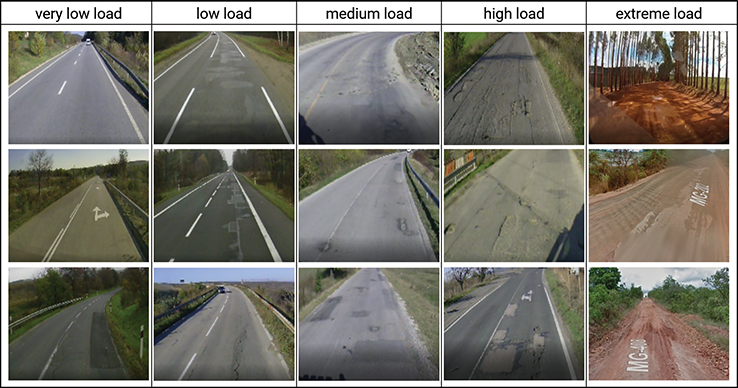
Extremely robust, high-precision analogue and digital ASC accelerometers of superior data acquisition and processing capabilities are utilised in the bespoke process, developed to record, evaluate and categorise diverse road conditions: the so-called Road Quality Procedure.
ROAD CONDITION-BASED VEHICLE OPTIMISATION
“Innovative manufacturers offer a broad portfolio of trucks, buses and other commercial vehicles for use in the most diverse parts of the world,” says Benedikt Mundl, engineer at monalysis, a spin-off from Kempten University of Applied Sciences, Germany. “Road types, surfaces and environmental conditions vary greatly, however. Therefore, they want to know how these local conditions impact their products and components.”
By adapting components to those typical stress loads and patterns expected in the field, developers can ensure that their vehicles and equipment keep operating safely for longer. This will also improve ride comfort, reduce breakdowns, wear and tear and help schedule necessary maintenance timely. “Manufacturers can hand over to their customers a vehicle optimised by real-life conditions, for the longest possible service life,” says Mundl.
ACCELEROMETERS REDUCE TESTING COSTS
On board test drives around the globe: ASC 5525MF triaxial capacitive accelerometers. With measuring ranges from ±2 to ±200g and a wide frequency response, they are particularly suitable for capturing low and medium frequencies. The robust design in a stainless-steel housing ensures high resistance to repetitive shock loads of up to 6,000g. They work accurately and reliably at temperatures up to +125°C. To that end, this analogue sensor is ideally suited for precise data acquisition under widely varying, sometimes unexpected and adverse terrain, environmental and climatic conditions.
REAL-TIME ROAD SURFACE TRACKING
Analogue sensors are typically installed in vehicle prototypes alongside comprehensive test equipment, for temporary test drives. While public buses, for example, can conveniently be retrofitted with ASC’s digital accelerometers to scan for and regularly transmit road quality data during active service.
“In its digital adaptation, our method is also relevant to local transport and road maintenance authorities,” Mundl confirms, as many German roads are in a poor state. Following cold winters in particular, cracks, potholes and progressive road damage tend to spread.
To change that, the town of Kempten is running the ErNeSt pilot, in which the Kempten University of Applied Sciences and monalysis are developing and analysing approaches to continuously monitor road conditions. To realise this, monalysis integrated digital ASC DiSens ECO-3321 accelerometers with CAN interface into public transport buses. While moving along standard bus routes, the triaxial accelerometers constantly measure for deviations in road surface quality caused by obstacles or emerging damage. This happens throughout the day, autonomously, without burden on operators nor disrupting schedules. Road conditions are recorded and classified along a desired scale. The acceleration events on relevant route sections are categorised into various frequency ranges and evaluated accordingly.
FIXING ROAD DAMAGE BEFORE IT PROGRESSES
The digital interface options and filter settings of this sensor allow for smooth data transfer. While the repetition of consistent conditions – same day to day routes, traffic volumes, vehicle condition, driving behaviour, etc. – provides a stable basis for evaluating deviations from normal state. “On that basis, road departments can intervene quickly to fix problematic areas before more serious damage occurs.” Which also keeps public buses running along these routes in better condition, and repair costs at bay.
Written by Oliver Stohlmann on behalf of ASC Sensors