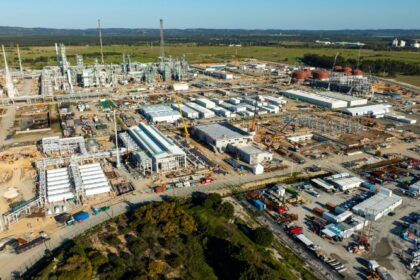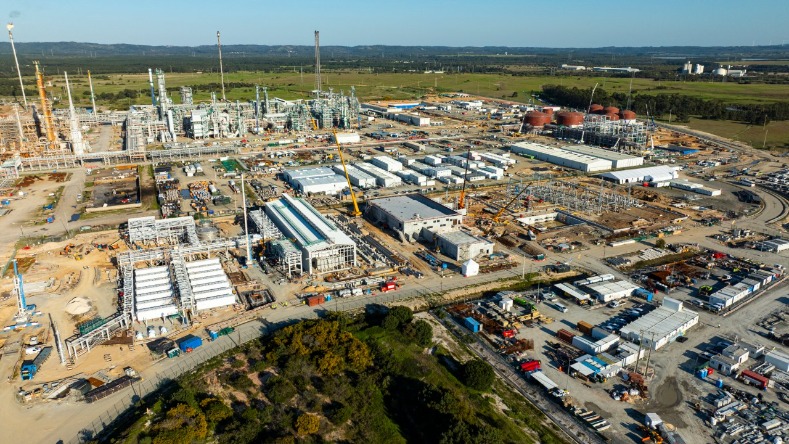
Siemens and Galp Energia are collaborating to digitalise GalpH2Park in Sines, Portugal. Once operations commence, the plant will be one of Europe’s largest renewable hydrogen plants
For the 100MW hydrogen facility in the first project phase, Siemens is deploying its hydrogen-industry software portfolio to enable smarter operations and optimise the plant’s value.
Digital twin
Siemens’ Hydrogen Performance Suite (HPS), an advanced digital cockpit designed to continuously enhance renewable hydrogen plant operations, is central to the collaboration.
The HPS features a predictive Digital Process Twin, a high-fidelity model built on physics-based modelling that delivers operational insights through real-time optimisation for faster, data-driven decision-making. To power the digital twin, Siemens deploys an integrated software stack for process modelling, data analytics, and real-time visualisation, translating plant data into insights for operators.
By integrating the digital twin with live plant data and external sources, such as grid operators and energy markets, the HPS gives Galp’s operators end-to-end visibility into their facility, enabling smarter production scheduling and optimised energy procurement. Siemens estimates that the HPS can deliver energy savings up to 15%, a significant lever for cost competitiveness and sustainability.
Axel Lorenz, executive vice president, Automation Process Industries at Siemens, said, “GalpH2Park is a lighthouse for Europe’s energy transition. We are convinced that digital innovation is the key to making renewable hydrogen economically viable and accelerating the decarbonization of industry. Siemens is turning this ambition into industrial reality, at scale.”
Reducing greenhouse gas emissions
Powered by renewable electricity sourced through long-term supply agreements and Galp’s renewable generation capacity, the GalpH2Park plant can produce up to 15,000 tonnes of renewable hydrogen per year. This is expected to reduce greenhouse gas emissions by 110,000 tonnes of CO2, contributing to Portugal’s and Europe’s decarbonisation targets.